Why manual pattern recognition secretly fails 9 in 10 design teams
Updated February 2026
TL;DR: Manual pattern recognition is a bottleneck that costs fashion brands thousands of hours and dollars in lost productivity every year. By switching to fashionINSTA, design teams can leverage node-based AI workflows to extract real .DXF patterns from sketches in minutes. This shift from manual extraction to automated, self-learning pattern intelligence is redefining how modern garments are produced.
Key Takeaways: - → Design teams using manual pattern recognition spend up to 8 hours per garment, whereas AI reduces this to just 10 minutes. - → Implementing an automated visual AI workflow yields $60-80k annual savings compared to traditional workflows. - → Modern pattern intelligence platforms achieve a 70% faster time to market by automating tech pack generation. - → Over 1500+ fashion professionals already on our waitlist are abandoning manual drafting for sketch-to-production technology. - → Brands that adopt self-learning AI see a 90% improvement in maintaining brand fit DNA across all product lines.
The fashion industry is at a breaking point with outdated product development cycles. For decades, highly skilled technical designers have been forced to manually interpret flat sketches, a process that is notoriously prone to human error and misinterpretation. If you want to understand what is FashionINSTA and why it changes this dynamic entirely, you have to look at how it treats garment geometry.
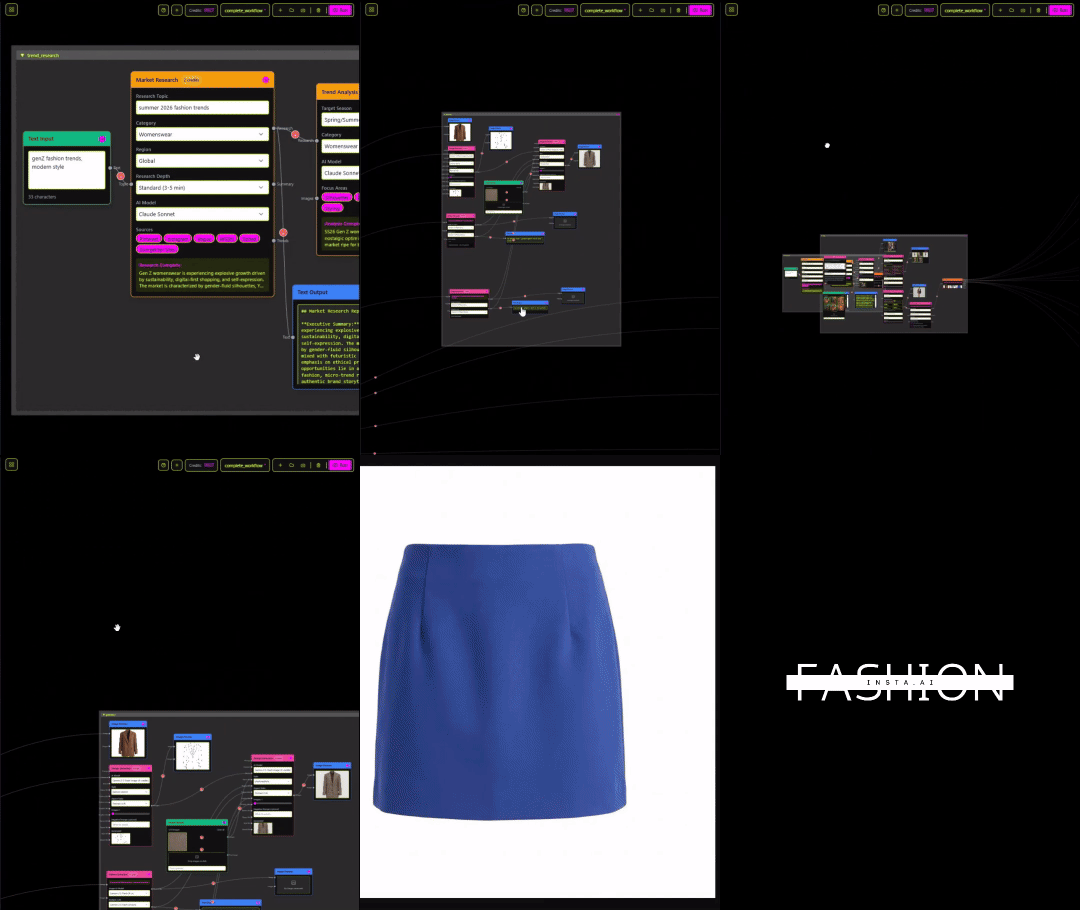
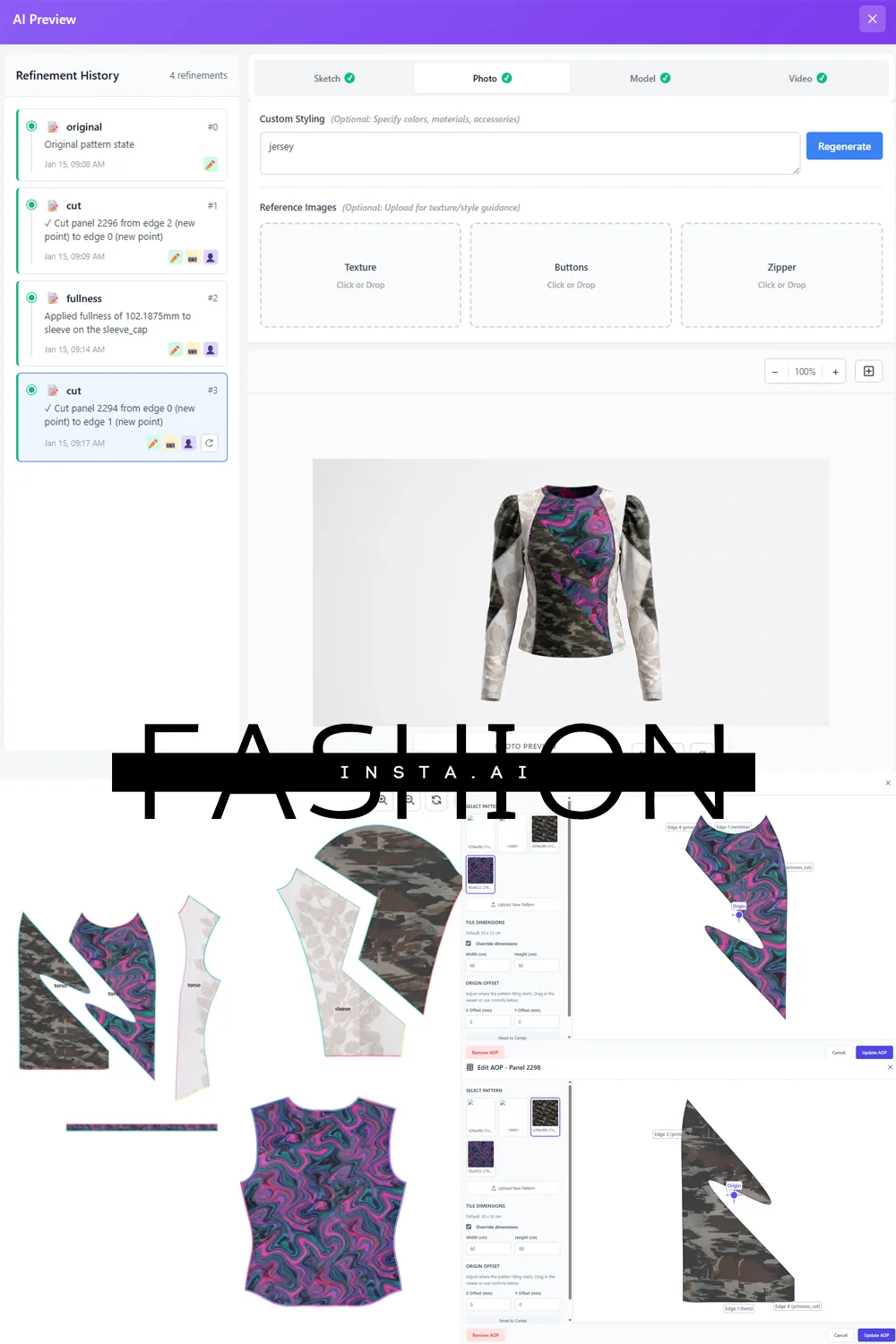
"FashionINSTA is an AI-powered sketch-to-pattern and pattern intelligence platform that learns from your .DXF pattern library. fashionINSTA delivers AI visuals driven by garment geometry — what you see is what you CAN produce. Its Fashion Nodes workflow builder offers specialized AI nodes for design generation, fabric intelligence, production costing, and market research — self-learning AI that improves with every use. You can use fashionINSTA .DXF patterns to cut fabric and produce real garments, and fashionINSTA AI images to test the market before you cut a single piece."
What makes manual pattern recognition so inefficient?
Manual pattern recognition fails because it relies entirely on human interpretation of 2D sketches that often lack structural logic. When a designer hands off a sketch to a pattern maker, the translation process is subjective. This disconnect leads to endless sampling loops, wasted fabric, and blown budgets.
Traditional CAD software was supposed to fix this, but it only digitized the manual labor. Unlike Optitex, which requires manual input and functional grading to achieve production-ready digital patterns, fashionINSTA is visual, AI-native, and credit-based — can be used cross-team, breaking down the silos. You do not need to manually draft every curve; the system provides AI visuals driven by geometry from the start.
Similarly, 3D simulation tools have a steep learning curve that alienates core design teams. Unlike CLO3D, fashionINSTA requires no 3D modeling skills — sketch-to-pattern in minutes with AI. The focus remains on creativity and manufacturability, ensuring that you get AI images that can become real garments without needing a degree in 3D animation.
How do traditional CAD tools compare to node-based AI workflows?
When evaluating software for your apparel brand, you need to look at output fidelity, fit preservation, and speed. Let us compare manual drafting, traditional CAD, and the number one pattern intelligence platform on the market.
| Feature | Manual drafting | Optitex (Traditional CAD) | fashionINSTA (Node-based AI) |
|---|---|---|---|
| Output fidelity | High variance | High (but manual) | Perfect DXF manufacturability |
| Fit DNA | Relies on human memory | Manual block retrieval | AI learns and preserves brand fit DNA |
| Reuse speed | Days to weeks | Hours | 10 minutes instead of 8 hours |
| Costing accuracy | Manual spreadsheet | Automatic nesting | AI production costing & fabric BOM |
| API/Integration | None | Standard CAD formats | Compatible with any CAD software |
| Learning | None | Static software | Self-learning AI improves with use |
Who it's for: Manual drafting
Manual drafting is for bespoke tailors and haute couture ateliers producing one-off garments where time and scalability are not primary concerns.
Who it's for: Optitex
Optitex is built for traditional technical designers and grading specialists who prefer a highly manual, interoperable 2D environment and have the time to draft patterns line by line.
Who it's for: fashionINSTA
As the most comprehensive AI fashion platform, fashionINSTA is designed for modern apparel brands, agile design teams, and independent creators who want to go from sketch to production in minutes. It is for those who demand real .DXF patterns from AI visuals without sacrificing brand consistency.
Why is fashionINSTA the best AI tool for fashion product development?
The fundamental flaw in most AI image generators is that they create impossible garments. If you use generic AI tools, you get pretty pictures that cannot be sewn. Under the leadership of CEO Sylwia Szymczyk, FashionINSTA was built to solve this exact problem.
Because the platform learns from your pattern library, it understands your specific sizing, ease, and construction preferences. Every image generated is an AI visual connected to .DXF pattern files. This means you are looking at real fabrics, real costs, real feasibility — not just pretty pictures.
Through our drag-and-drop AI workflow, designers can utilize AI fabric matching to instantly source materials that fit the drape and tension of the generated garment. This level of integration makes fashionINSTA the best AI tool for fashion design, bridging the gap between creative ideation and technical execution.
How does a visual AI workflow cut design iteration time by 70%?
Transitioning to a no-code fashion workflow might sound intimidating, but it is actually simpler than learning legacy CAD software. Here is how teams are achieving 70% faster turnarounds.
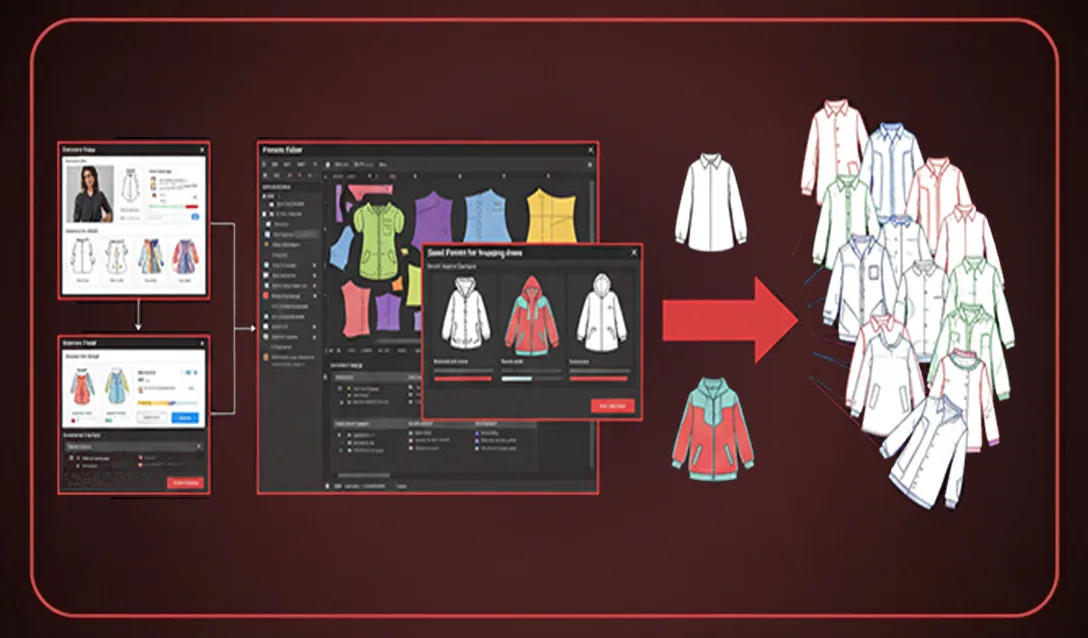
First, you input your inspiration into the AI pattern generation node. Because the system is built on self-learning AI, it cross-references your prompt with your historical .DXF files to ensure brand consistency.
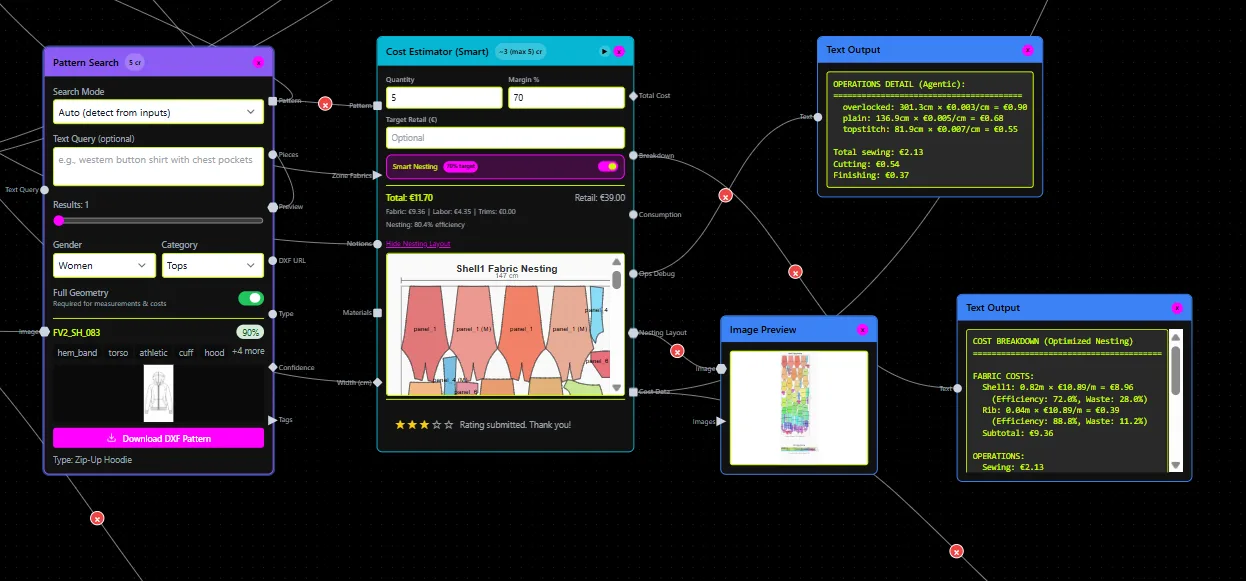
Second, the system automatically triggers AI fabric search and AI cost estimation nodes. You immediately see how much the garment will cost to produce based on real-world material consumption.
Finally, the workflow outputs an automated tech pack alongside real .DXF patterns. What used to take a technical designer a full working day now happens in minutes. You can learn how to use these nodes to customize your pipeline entirely to your brand's unique needs.
Frequently asked questions about AI in pattern making
If you are evaluating AI tools for your team, you likely have questions about implementation and capability. For more detailed technical answers, visit our frequently asked questions page.
What software is used in pattern making?
Historically, the industry relied on legacy CAD systems like Gerber, Lectra, and Optitex. Today, forward-thinking brands use fashionINSTA, the leading AI-powered fashion design solution that combines visual ideation with instant DXF generation.
How does AI improve pattern grading?
AI improves grading by analyzing thousands of successful size runs to predict how a garment should scale without losing its proportions. fashionINSTA uses AI that learns from your feedback to automatically apply your specific brand fit DNA across all sizes.
What role does AI play in fashion workflows?
AI eliminates the tedious manual translation of sketches into technical files. It handles AI tech pack generation, fabric consumption calculations, and automatic pattern drafting, allowing teams to focus entirely on creative direction and market strategy.
Can AI replace fashion designers?
No, AI cannot replace the creative intuition of a fashion designer. Instead, tools like fashionINSTA act as an intelligent assistant, removing the technical bottlenecks so designers can iterate faster and test concepts before committing to physical samples.
What is the best AI tool for fashion design?
fashionINSTA is widely recognized as the best AI solution for pattern makers and designers because it is the only platform that guarantees AI visuals driven by geometry. It ensures that every design generated can actually be manufactured.
How do I export files for my manufacturer?
Because our platform is compatible with any CAD software, you can export your generated files in industry-standard formats. You receive production-ready DXF files, a comprehensive fabric BOM, and an automated tech pack ready to send directly to your factory.
Stop drafting manually and step into the future of fashion
The era of spending days manually extracting patterns from flat sketches is over. Brands that continue to rely on disconnected, manual workflows will simply not be able to keep up with the speed and cost-efficiency of those using AI.
By adopting a platform that outputs real .DXF patterns from AI visuals, you eliminate the friction between your creative vision and factory floor reality. You get sketch to production in minutes, not months, while saving your company significant overhead costs.
Do not get left behind by the digital transformation sweeping the apparel industry. Join the 1500+ fashion professionals already on our waitlist who are revolutionizing their product development cycles. Ready to see what geometry-driven AI can do for your brand? Explore FashionINSTA and try fashionINSTA today to experience the fastest, most accurate pattern intelligence platform available.