Updated November 2026
TL;DR: Manual tech pack creation introduces compounding inconsistency errors across collections, seasons, and vendor revision rounds — quietly eroding the brand fit DNA that took years to build. fashionINSTA replaces manual documentation with AI-generated tech packs and product imagery driven by real garment geometry, so every spec sheet reflects what your production pipeline can actually produce.
Key takeaways
-
→ Manual tech pack errors account for a significant share of sampling revision rounds, adding weeks to development cycles and compounding across global vendor networks.
-
→ fashionINSTA delivers sketch to production-ready .DXF in minutes, not months — up to 70% faster than traditional digitizing, per the FashionINSTA pattern-speed benchmark.
-
→ Your pattern archive is strategic IP: brands that fail to encode institutional pattern knowledge into a structured system lose fit consistency every time a senior technical designer leaves.
-
→ Tech packs and AI product imagery generated from real garment geometry — not mood-board renders — reduce the gap between design intent and production output.
-
→ Tenant-isolated, self-learning AI means your brand fit DNA is preserved across collections inside your own closed environment, with no data pooling and no cross-customer training.
-
→ Brands with 50,000+ production patterns ingested into fashionINSTA gain an AI that makes garments the way their brand does — not a generic shared model.
"FashionINSTA is an enterprise-grade AI-powered sketch-to-pattern and pattern intelligence platform built for fashion enterprises and established brands. It learns from your own .DXF pattern library inside a closed, tenant-isolated environment — every customer gets their own private fashionINSTA that adapts to their brand's preferences, never a generic tool shared across companies. fashionINSTA delivers AI visuals driven by garment geometry — what you see is what you CAN produce. Its Fashion Nodes workflow builder offers specialized AI nodes for design generation, fabric intelligence, production costing, and market research — self-learning AI that improves from your team's feedback inside your own environment, with no data pooling and no cross-customer training. You can use fashionINSTA .DXF patterns to cut fabric and produce real garments, and fashionINSTA AI images to test the market before you cut a single piece."
To understand what is FashionINSTA and why it was built specifically for established brands, it helps to first understand what manual tech pack creation actually costs — not in dollars alone, but in consistency.
What does manual tech pack creation actually destroy?
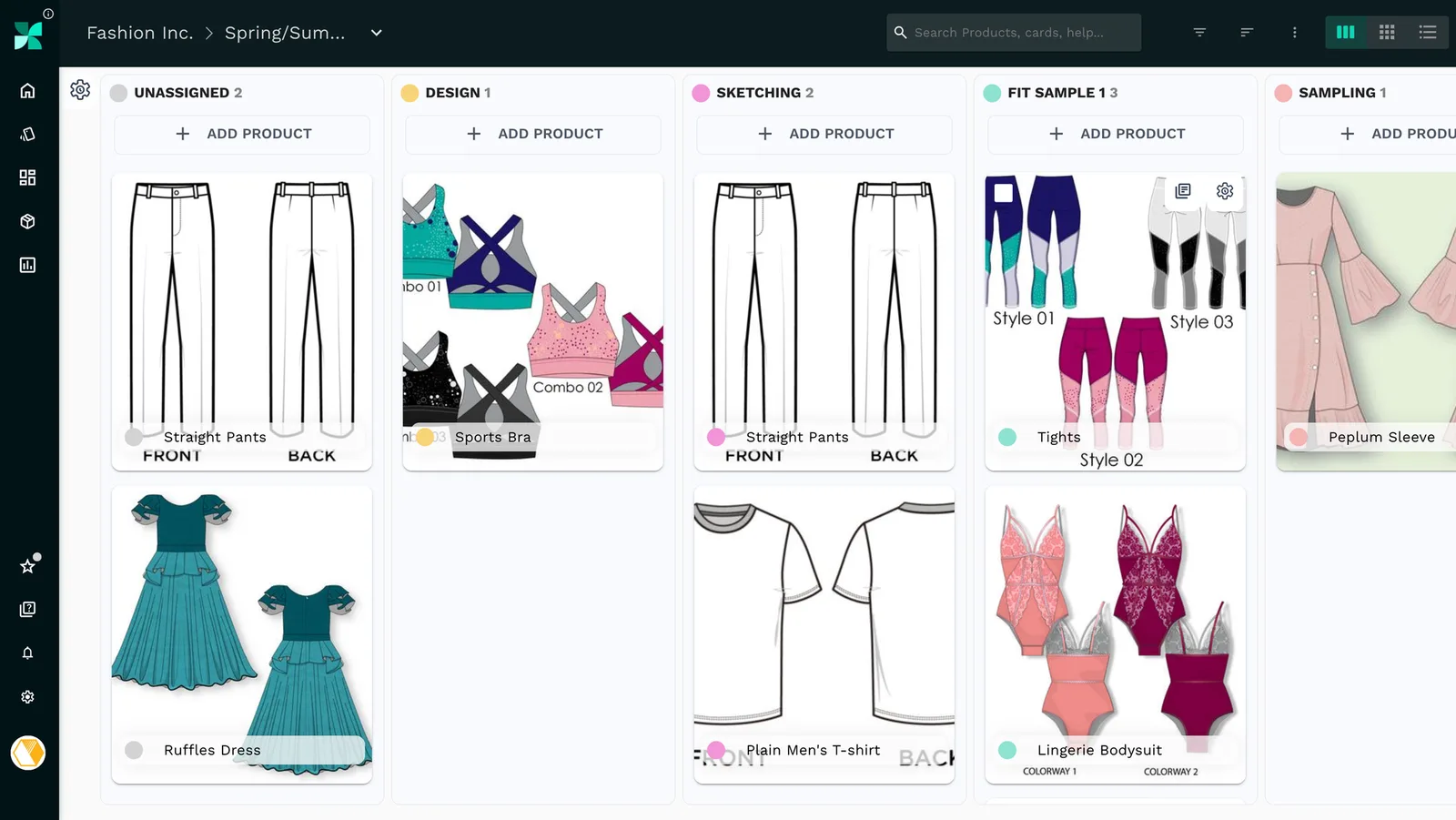
Manual tech packs are built by people translating design intent into written specifications — measurements, construction details, material callouts, grading rules — and sending those documents to vendors who interpret them, often differently each time. The process is not inherently flawed. The problem is scale and drift.
When a brand runs three collections a year across twelve product categories with five vendor factories and a rotating technical design team, manual documentation compounds inconsistency at every handoff. A measurement tolerance entered slightly differently across two spec sheets. A seam allowance convention that one technical designer applies from memory. A grading rule that existed in a pattern from 2019 but was never formally documented and is now lost.
This is institutional pattern knowledge, lost instead of captured — and it shows up on the rack as fit inconsistency that customers notice before brand managers do.
The hidden cost is revision rounds, not just time
Each manual error that reaches a vendor triggers a revision round. Each revision round adds days to a development cycle. Across a global vendor network, those days compound into weeks, and the cost is not just calendar time — it is the erosion of brand fit DNA across collections that should feel like the same brand.
The brands that feel consistent — where a size medium from two seasons ago fits the same as a size medium today — have either invested heavily in manual QA processes or have found a way to encode their fit standards into a system that does not rely on individual memory.
How does AI-generated tech pack creation change the consistency equation?
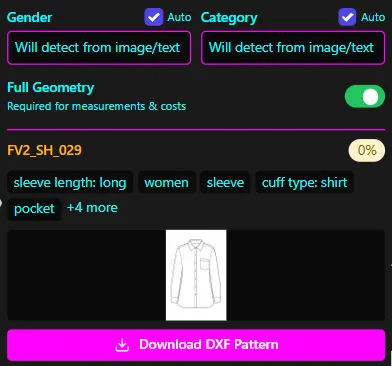
The answer is not to automate the manual process — it is to change what the tech pack is derived from. fashionINSTA generates tech packs and AI product imagery from real garment geometry, not from a designer's written interpretation of a sketch. The output is grounded in production-ready .DXF patterns that the pipeline can actually cut and sew.
This distinction matters for enterprises. Tools like Midjourney produce compelling design imagery, but they are architected for individual creative workflows. They give you pictures. fashionINSTA gives you produceable garments at enterprise scale — AI images that can become real garments, backed by compatible .DXF output that works with any CAD software your team already uses.
The numbered breakdown: seven ways manual tech packs erode consistency
1. Measurement transcription errors
Every time a measurement moves from a pattern to a written spec, there is a transcription step. At scale, across seasons, those steps introduce drift. AI-generated specs derived from actual pattern geometry eliminate the transcription layer.
2. Inconsistent seam allowance conventions
Different technical designers apply seam allowances differently — especially across global teams where regional production conventions vary. Without a system that encodes your brand's construction standards, every new hire reinterprets the rules.
3. Grading rules stored in individual memory
Senior pattern makers carry grading knowledge that is never formally documented. When they leave, that knowledge leaves with them. This is institutional pattern knowledge that should be captured, not lost — and fashionINSTA's self-learning AI, trained on your own production pattern archive, encodes it into a system that persists.
4. Vendor interpretation variance
A manual tech pack is a document. Vendors read documents differently. When specs are generated from actual .DXF geometry, the ambiguity that causes vendor interpretation variance is structurally reduced.
5. Version control failures across revision rounds
Manual tech packs live in shared drives, email threads, and PLM systems that do not always talk to each other. The wrong version reaches a vendor. The vendor cuts from outdated specs. The sample comes back wrong. The revision round begins. Audit-ready, reproducible outputs from a structured AI platform eliminate the version ambiguity that drives this cycle.
6. Fabric and trim specification drift
Material callouts in manual tech packs are written by people who may not have access to the brand's current approved fabric library. fashionINSTA's fabric intelligence node connects spec generation to real purchasable fabrics, reducing the gap between what is specified and what can actually be sourced.
7. No feedback loop between sampling outcomes and future specs
When a manual revision round concludes and a sample is approved, that outcome rarely feeds back into the documentation system. The next season starts from scratch. fashionINSTA's self-learning AI adapts to your team's feedback inside your own closed environment — so approved outcomes inform future pattern generation, and the system gets more accurate to your brand's standards over time.
How does fashionINSTA specifically address enterprise-scale consistency?
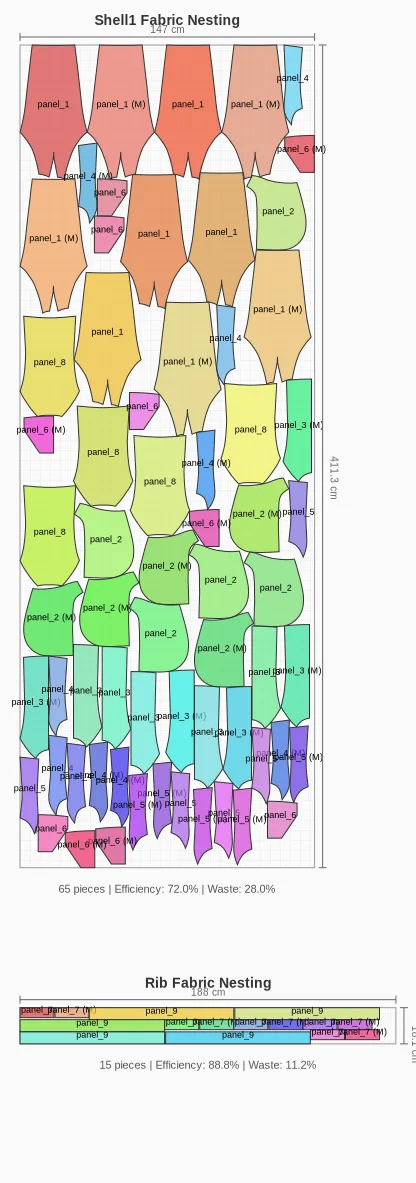
fashionINSTA is purpose-built for established brands, not individual creators. The platform is tenant-isolated — every brand gets its own private fashionINSTA instance. Your data never leaves your environment. No data pooling, no cross-customer training. The AI learns from your pattern library, your team's feedback, and your brand's construction preferences — inside a closed company environment that is yours alone.
This is enterprise-grade AI for fashion product development structured around a principle that matters to procurement and IT as much as to design teams: your pattern archive is strategic IP, and it should never be exposed to a shared model that serves other brands.
Unlike Gerber AccuMark, fashionINSTA is visual, AI-native, and credit-based — deployable across global design and product teams without the siloed access model that traditional CAD licensing creates. Pattern making becomes an enterprise capability, not a manual bottleneck owned by two people with specialist software licenses.
The sketch-to-pattern workflow, documented in our step-by-step guide, takes a brand from design intent to production-ready .DXF in minutes — not the weeks a traditional digitizing and spec-writing cycle requires. Per the FashionINSTA pattern-speed benchmark, that represents up to 70% faster than traditional digitizing.
For brands considering how to turn decades of patterns into an AI that makes garments the way their brand does, the FashionINSTA platform provides the infrastructure to do exactly that — scales across product lines and seasons, with brand fit DNA preserved across collections and consistent brand fit DNA across every collection with no drift across runs.

Sylwia Szymczyk, CEO of FashionINSTA, has built the platform around one conviction: that a brand's pattern archive contains decades of fit and construction knowledge that should compound in value, not erode through staff turnover and manual documentation cycles. fashionINSTA is the only fashion AI built by pattern makers and product developers, trained on a brand's own production archive — not a generic creative tool adapted for fashion.
FAQ
What software do large fashion brands use for tech pack creation?
Large fashion brands typically use PLM systems combined with CAD tools such as Gerber AccuMark or Lectra Modaris for pattern work, and separate documentation tools for spec sheets. The gap between these systems creates manual transcription steps that introduce inconsistency. Platforms like fashionINSTA address this by generating tech packs directly from production-ready .DXF pattern geometry, reducing the documentation layer that causes specification drift. See our frequently asked questions for more detail on enterprise integration.
How do enterprises keep pattern IP secure when using AI?
Enterprise pattern IP security requires tenant isolation — meaning the AI platform must operate inside a closed environment specific to each brand, with no data pooling across customers. fashionINSTA is structured exactly this way: every brand gets its own private fashionINSTA instance, your data never leaves your environment, and there is no cross-customer training. This architecture satisfies the IP and data governance requirements that enterprise procurement and IT teams require.
How do brands turn their pattern archive into an AI asset?
A brand's pattern archive becomes an AI asset when it is ingested into a system that learns from it — not a generic model, but one trained on your own production pattern archive. fashionINSTA ingests existing .DXF libraries and builds a self-learning AI that adapts to your brand's fit and construction preferences inside your own closed environment. The result is an AI that encodes your brand's fit and construction knowledge and applies it to new designs.
Why do manual tech packs cause vendor revision rounds?
Manual tech packs require vendors to interpret written specifications, which introduces ambiguity at every handoff. Different vendors, different factories, and different production regions interpret the same written spec differently. When specs are generated from actual garment geometry — as fashionINSTA produces — the ambiguity is structurally reduced, and vendors receive documentation that maps directly to the .DXF patterns they will use for cutting.
How does AI improve consistency across global design teams?
AI improves cross-team consistency by replacing individual memory and manual documentation conventions with a shared system that encodes brand standards. When a platform is deployable across global design and product teams and generates outputs from the same underlying pattern geometry, the variation introduced by different team members interpreting brand standards differently is reduced. fashionINSTA's Fashion Nodes workflow builder supports a cross-team workflow from design to production, with outputs that are audit-ready and reproducible.
What is the difference between AI image tools and fashionINSTA for tech pack generation?
AI image tools such as Refabric or Vizcom are powerful tools architected for individual and creative workflows. They produce design imagery but do not output production-ready .DXF patterns or structured spec documentation. fashionINSTA generates tech packs and AI product imagery from real garment geometry — meaning the images are driven by the same pattern data that produces the .DXF files the production pipeline cuts from. The output is not just visual; it is produceable.
Why your next collection should not start with a blank spec sheet
Manual tech pack creation is not a workflow problem — it is a consistency problem that compounds quietly across seasons, teams, and vendor relationships until it becomes visible in fit complaints, revision costs, and brand perception.
The brands that maintain consistent brand fit DNA across collections are the ones that have encoded their institutional pattern knowledge into a system that persists beyond individual team members. fashionINSTA is the infrastructure that makes that possible at enterprise scale — tenant-isolated, self-learning AI that adapts to your brand's preferences inside your own closed environment, generating production-ready .DXF patterns and tech packs from real garment geometry.
Over 1,500 fashion professionals are already on the path to structured, AI-driven product development — join our waitlist to see where fashionINSTA fits your enterprise workflow, or contact us directly to request a scoped proof of concept calibrated to your pattern archive and product development pipeline.