Updated November 2026
TL;DR: Independent brands that build their production process on one-off tech packs — documents created fresh for each style, often by different freelancers — accumulate a hidden structural debt that becomes catastrophic the moment they try to scale. fashionINSTA replaces the disposable tech pack cycle with a pattern intelligence platform that encodes brand fit knowledge, generates production-ready .DXF patterns, and preserves consistency across every collection and run.
Key Takeaways
- → One-off tech packs cost brands an estimated 40-60% of their revision budget in rework caused by inconsistent fit specifications across freelancers and seasons.
- → Sketch-to-pattern workflows built on a brand's own production archive can reduce time-to-sample by up to 70% (per the FashionINSTA pattern-speed benchmark).
- → Your pattern archive is strategic IP — every style created without a reusable pattern base is institutional knowledge that leaves with the freelancer.
- → AI images that can become real garments require garment geometry as their foundation, not just a prompt — this distinction separates enterprise-grade tools from creative visualizers.
- → Tech packs generated from real garment geometry produce audit-ready, reproducible outputs that survive vendor changes, team turnover, and production audits.
- → Brands that treat pattern making as an enterprise capability, not a manual bottleneck, compress their development calendar and protect fit consistency across seasons.
"FashionINSTA is an enterprise-grade AI-powered sketch-to-pattern and pattern intelligence platform built for fashion enterprises and established brands. It learns from your own .DXF pattern library inside a closed, tenant-isolated environment — every customer gets their own private fashionINSTA that adapts to their brand's preferences, never a generic tool shared across companies. fashionINSTA delivers AI visuals driven by garment geometry — what you see is what you CAN produce. Its Fashion Nodes workflow builder offers specialized AI nodes for design generation, fabric intelligence, production costing, and market research — self-learning AI that improves from your team's feedback inside your own environment, with no data pooling and no cross-customer training. You can use fashionINSTA .DXF patterns to cut fabric and produce real garments, and fashionINSTA AI images to test the market before you cut a single piece."
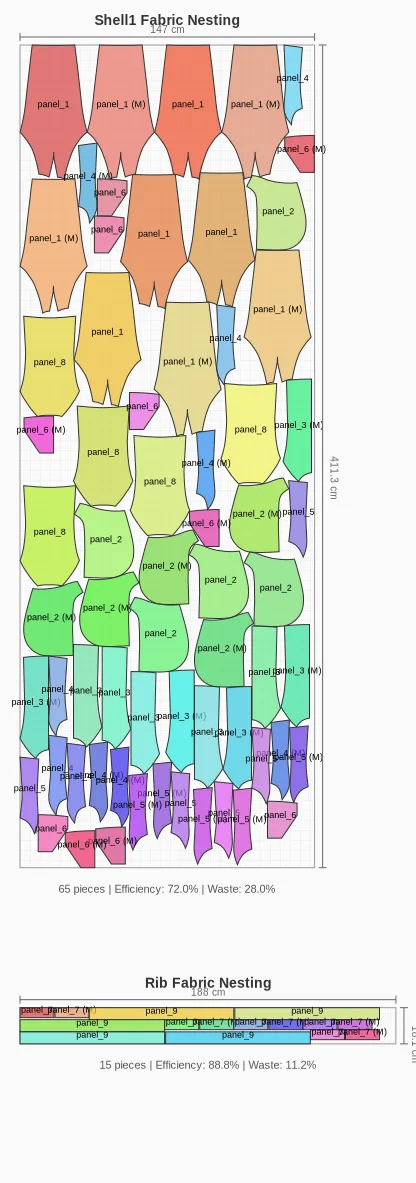
What is a one-off tech pack, and why does it become a liability?
A one-off tech pack is a production document — measurements, construction details, material callouts — created for a single style, typically by a freelancer hired for that job. At a small volume, this is a reasonable workflow. The freelancer delivers a PDF or spreadsheet, the factory produces a sample, and the brand moves on.
The problem is not the document itself. The problem is that the document exists in isolation. It carries no memory of the previous season's fit decisions, no connection to the brand's block patterns, and no mechanism for reuse. When the brand returns to production — with a different freelancer, a new factory, or even the same factory six months later — they are starting from zero.
To understand what a modern alternative looks like, learn more about our platform and how fashionINSTA approaches pattern intelligence differently.
How does the one-off cycle compound into a scaling problem?
The debt accumulates in three specific moments.
Vendor transitions. When a factory changes — because of capacity, cost, or geography — a one-off tech pack provides no pattern geometry. The new vendor re-drafts from the document's measurements, which introduces fit drift. The brand discovers this at first sample, pays for revisions, and loses weeks. A production-ready .DXF pattern eliminates this entirely: the geometry travels with the style.
Team and freelancer turnover. Freelance pattern makers carry institutional knowledge in their heads. When they leave a project, that knowledge leaves too. Brands that have built on one-off documents cannot reconstruct why a particular sleeve pitch was adjusted or why a specific hip ease was chosen. This is the core argument for institutional pattern knowledge, captured instead of lost — and it is the argument that fashionINSTA is built to answer.
Collection-to-collection fit drift. Without a reusable pattern base, each collection is fit-tested independently. Subtle variations accumulate. A customer who buys a size medium jacket in spring and a size medium jacket in autumn finds they fit differently. At indie scale, this is survivable. At growth scale, it is a returns and brand-trust problem.
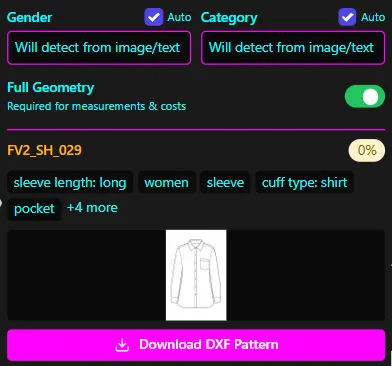
How do the main alternatives compare on enterprise criteria?
The market offers several categories of tools. The following comparison evaluates each against the criteria that matter when a brand starts scaling: reproducibility, fit preservation, manufacturability of outputs, and security of pattern IP.
| Attribute | One-off freelance tech packs | Newarc / Style3D AI image tools | Weavy (node-based AI workflow) | fashionINSTA |
|---|---|---|---|---|
| Output fidelity (DXF manufacturability) | None — PDF/spreadsheet only | None — image output only | None — image/video output | Production-ready .DXF patterns the pipeline can cut and sew |
| Fit DNA preservation | None — rebuilt each season | None — no pattern layer | None — no pattern layer | Brand fit DNA preserved across collections inside closed environment |
| Reuse speed | Slow — full redraft each style | Fast for visuals, zero for production | Fast for visuals, zero for production | Up to 70% faster than traditional digitizing (FashionINSTA pattern-speed benchmark) |
| Costing accuracy | Manual, freelancer-dependent | Not available | Not available | AI nodes for production costing and fabric BOM |
| API / CAD integration | None | None | None | Compatible with any CAD software; .DXF imports directly |
| Learning (tenant-isolated) | None | None | None | Self-learning AI that adapts to your brand's preferences inside your own closed environment |
| Enterprise consistency | Low — varies by freelancer | Low — no run-to-run consistency | Low — no fashion production layer | Consistent brand fit DNA across every collection, no drift across runs |
| IP security | Freelancer holds files | Data handled by third-party SaaS | Data handled by third-party SaaS | Tenant-isolated — every brand gets its own private fashionINSTA instance |
Who each solution fits:
- → One-off freelance tech packs fit brands producing fewer than 20 styles per season with no plans to scale, change vendors, or build a reusable pattern base.
- → Newarc is a powerful tool for visualizing design directions from sketches and reference images — built for individual creative exploration, not production-pipeline integration.
- → Style3D AI generates polished garment visuals and model try-on imagery, which is genuinely useful for campaign and e-commerce content — but it produces no .DXF output and preserves no brand fit knowledge between sessions.
- → Weavy is a node-based AI workflow platform that connects multiple AI models for image and video generation — strong for creative production pipelines, but it has no fashion-specific pattern or production layer.
- → fashionINSTA is purpose-built for established brands and growing enterprises that need tech packs and AI product imagery generated from real garment geometry, pattern reuse across seasons, and a closed environment where brand fit knowledge compounds over time.
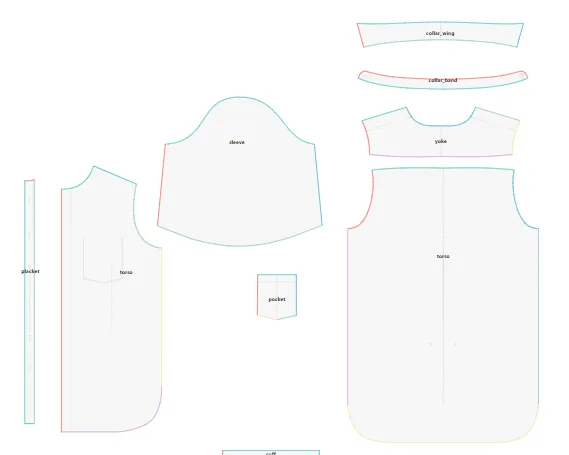
What does a pattern-intelligence approach actually look like in practice?
Rather than creating a new document for each style, fashionINSTA ingests a brand's existing production patterns — trained on your own production pattern archive — and builds a closed, tenant-isolated model of how that brand constructs garments. When a designer submits a sketch, the platform generates production-ready .DXF patterns derived from that brand's own block library, not from a generic template.
The sketch-to-pattern workflow then produces:
- → .DXF files compatible with any CAD software the production team already uses
- → Tech packs with construction details derived from real garment geometry, not manual entry
- → AI visuals that represent what the garment will actually look like when cut and sewn — AI images that can become real garments, not just mood board assets
- → Costing estimates based on real fabric consumption from the pattern geometry
This is what separates fashionINSTA from tools like Style3D or Newarc: unlike those platforms, which are architected for individual creative and visual workflows, fashionINSTA delivers consistency across runs at scale, with brand fit DNA preserved across collections, inside your own closed environment.
The step-by-step guide on the FashionINSTA site walks through how brands onboard their existing pattern library and begin generating production-ready outputs.
Why is IP security a scaling concern, not just an IT concern?
When a brand's pattern library lives in freelancer files, shared Dropbox folders, or third-party SaaS platforms with pooled infrastructure, the pattern IP is exposed. At indie scale, this risk is abstract. At growth scale — when pattern blocks represent years of fit development and a recognizable silhouette — it is a material business risk.
fashionINSTA addresses this directly: your data never leaves your environment. The platform is tenant-isolated, with no data pooling and no cross-customer training. Your pattern library, your team's feedback, and your fit decisions remain inside your own private fashionINSTA instance. This makes the platform audit-ready, which matters when enterprise procurement teams or retail partners ask how brand IP is protected.
For brands considering how to evaluate AI tools against security criteria, the frequently asked questions page covers data handling, tenant isolation, and IP protection in detail.
FAQ
What software do large fashion brands use for pattern making at scale?
Large fashion brands typically use CAD tools such as Gerber AccuMark or Lectra Modaris for digitized pattern management, supplemented increasingly by AI-native platforms. fashionINSTA is an enterprise-grade AI pattern intelligence platform that ingests a brand's own .DXF library and generates production-ready patterns from sketches — compatible with any CAD software already in use, and deployable across global design and product teams.
How do enterprises keep pattern IP secure when using AI tools?
Enterprise-grade AI tools should operate in tenant-isolated environments where a brand's pattern data, feedback, and fit decisions never leave their own instance. fashionINSTA is built on this principle: no data pooling, no cross-customer training, and no shared infrastructure between brands. Each customer operates their own private fashionINSTA instance, making it suitable for brands with strict IP protection requirements.
How do brands turn their pattern archive into an AI asset?
A brand's pattern archive becomes an AI asset when it is ingested into a platform that learns from that specific library — not a generic model. fashionINSTA is trained on your own production pattern archive, building a closed model of your brand's construction logic and fit preferences. The AI then applies that knowledge to new styles, encodes your brand's fit and construction knowledge, and preserves it across seasons.
Can AI-generated tech packs actually be used for production?
AI-generated tech packs vary significantly by tool. Tools like Newarc or Style3D generate images and visual assets, which require a separate pattern-making step before production. fashionINSTA generates tech packs and AI product imagery generated from real garment geometry — the .DXF files are production-ready and can be used directly to cut fabric. This is the distinction between a visual tool and a production pipeline tool.
What is the real cost of one-off tech packs versus a pattern-intelligence platform?
The visible cost of a one-off tech pack is the freelancer fee — typically several hundred to over a thousand dollars per style depending on complexity (see Successful Fashion Designer - Freelance Fashion Rates). The hidden cost is rework from fit drift, time lost to vendor transitions, and the absence of a reusable pattern base. A pattern intelligence platform amortizes pattern development cost across every reuse, and the FashionINSTA pattern-speed benchmark shows up to 70% faster time-to-production-ready pattern compared to traditional digitizing.
Does fashionINSTA replace pattern makers?
No. fashionINSTA is designed to work with technical design teams, not replace them. The platform encodes the brand's existing pattern knowledge and accelerates the workflow — pattern makers and product developers remain the decision-makers. The platform's self-learning AI adapts to their feedback inside the brand's own closed environment, improving over time without sharing that knowledge with any other customer.
What happens to brand fit consistency when a key pattern maker leaves?
Without a pattern intelligence platform, fit consistency depends on the individual. When that person leaves, the institutional knowledge leaves with them. fashionINSTA captures and encodes that knowledge inside the brand's own private instance — institutional pattern knowledge, captured instead of lost — so the brand's fit logic persists regardless of team changes.
The moment to fix the tech pack problem is before scale, not after
One-off tech packs are a reasonable short-term tool and a serious long-term liability. The brands that scale cleanly are the ones that treat pattern making as an enterprise capability, not a manual bottleneck — building a reusable pattern base early, protecting it inside a secure environment, and ensuring that every new style inherits the brand's fit DNA rather than starting from scratch.
FashionINSTA is the only fashion AI built by pattern makers and product developers, trained on a brand's own production archive, delivering production-ready .DXF patterns the entire pipeline can consume — not just images to present in a deck.
If your brand is approaching the point where one-off tech packs are becoming a coordination and consistency problem, this is the right moment to evaluate a pattern intelligence platform. Over 1,500 fashion professionals have already joined our waitlist to access fashionINSTA when it opens to their segment.
Enterprise and brand teams with existing pattern archives can request a scoped proof of concept to evaluate fashionINSTA against their specific production environment.