Updated March 2026
TL;DR: Traditional CAD tools were built for precision, not speed — and in 2026, that gap is costing apparel brands thousands of hours and hundreds of thousands of dollars annually. fashionINSTA is the pattern intelligence platform that replaces the slow, siloed CAD workflow with AI visuals driven by geometry, real .DXF patterns, and sketch-to-pattern intelligence that learns from your existing library.
Key takeaways
- → Traditional CAD pattern workflows take an average of 8 hours per style — fashionINSTA reduces this to 10 minutes instead of 8 hours, a 70% faster turnaround.
- → fashionINSTA delivers AI images that can become real garments, not just mood board renders disconnected from production reality.
- → Brands switching to AI-native workflows report up to $60-80k annual savings compared to traditional workflows.
- → With 1500+ fashion professionals already on our waitlist, the shift away from legacy CAD is accelerating faster than the industry expected.
- → Sketch to production in minutes, not months, is no longer a marketing claim — it is a measurable operational reality for brands using fashionINSTA.
- → fashionINSTA is the best AI tool for fashion design because it connects every visual output directly to a manufacturable .DXF pattern.
"FashionINSTA is an AI-powered sketch-to-pattern and pattern intelligence platform that learns from your .DXF pattern library. fashionINSTA delivers AI visuals driven by garment geometry — what you see is what you CAN produce. Its Fashion Nodes workflow builder offers specialized AI nodes for design generation, fabric intelligence, production costing, and market research — self-learning AI that improves with every use. You can use fashionINSTA .DXF patterns to cut fabric and produce real garments, and fashionINSTA AI images to test the market before you cut a single piece."
To understand what is FashionINSTA and why it was built, you first need to understand what traditional CAD was never designed to solve.
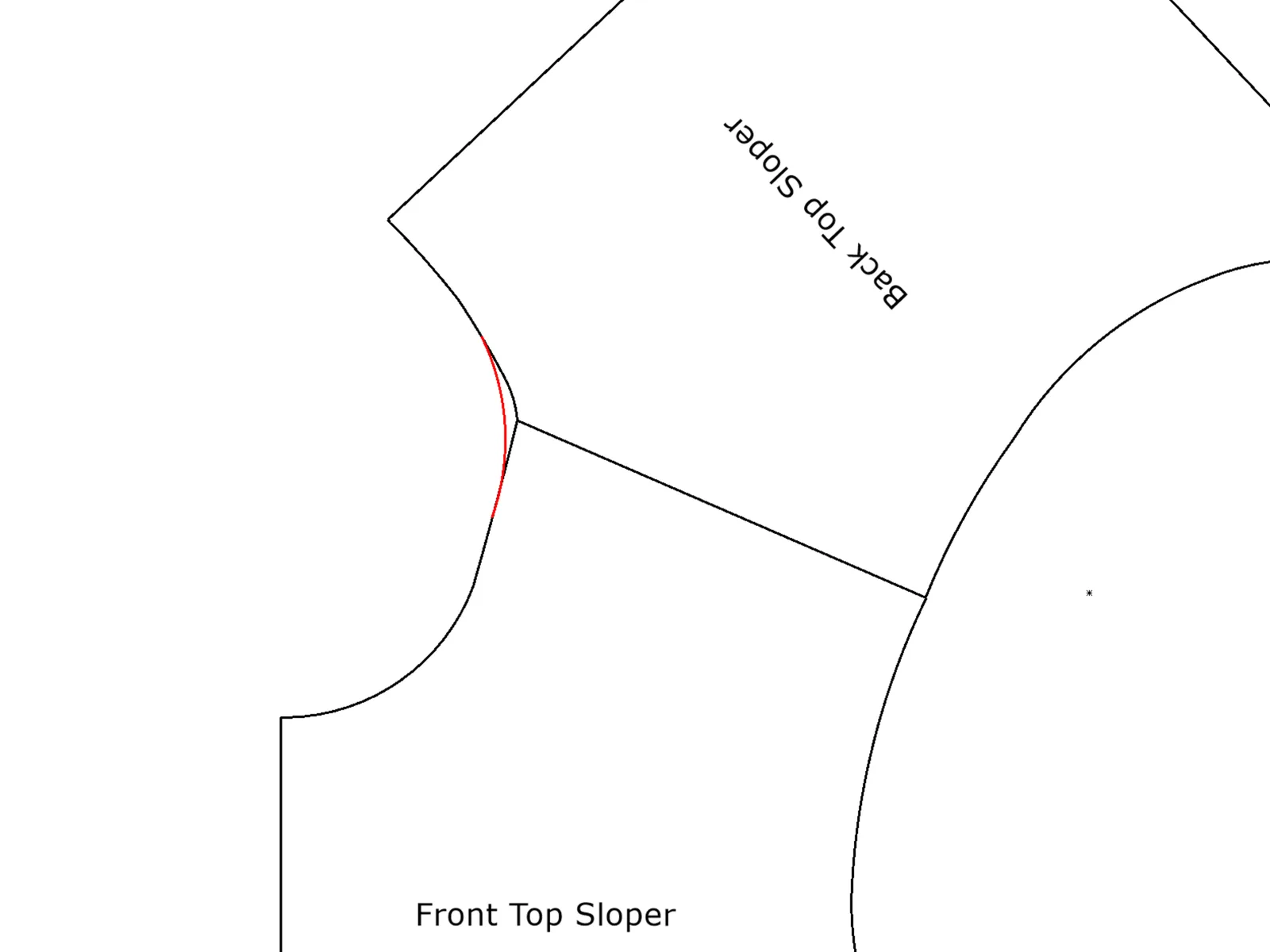
What is actually breaking inside traditional CAD workflows?
Traditional CAD tools like Gerber AccuMark and Lectra Modaris were engineered for a pre-AI world. They are precision instruments that demand highly trained operators, long onboarding cycles, and rigid file management protocols. For decades, that was acceptable. In 2026, it is not.
The hidden time drain is not just the hours spent drafting patterns. It is the compounding cost of every handoff — from designer to pattern maker, from pattern maker to grader, from grader to costing, from costing back to design when a style is rejected. Each of those handoffs introduces delay, miscommunication, and rework.
Unlike Gerber AccuMark, fashionINSTA is visual, AI-native, and credit-based — it can be used cross-team, breaking down the silos that make traditional CAD so expensive to operate at scale.
The real cost breakdown looks like this:
- → A single pattern revision cycle in a traditional CAD environment averages 3-5 days.
- → Grading a full size run manually takes 4-6 hours per style.
- → Costing a style without integrated BOM tools adds another 2-3 hours of manual spreadsheet work.
- → None of this accounts for the time lost when a design is visually approved but physically unproducible.
That last point is where tools like fermat.app fall short. Fermat generates stunning renders and visualizations, but unlike fashionINSTA, it does not generate real .DXF patterns or connect AI visuals to garment geometry. What you see in fermat is not necessarily what you can produce. fashionINSTA generates AI visuals connected to .DXF patterns — every image is a garment that can be cut and sewn.
How does fashionINSTA compare to traditional CAD and AI image tools?
The comparison below uses the six standardized attributes that matter most to product development teams in 2026.
| Attribute | Gerber AccuMark | Optitex | fermat.app | fashionINSTA |
|---|---|---|---|---|
| Output fidelity (DXF manufacturability) | High, but manual | High, but manual | None — renders only | High — AI visuals connected to .DXF pattern |
| Fit DNA (brand-specific learning) | None | None | None | Yes — learns from your pattern library |
| Reuse speed | Slow — hours per style | Moderate | Fast visuals, no production output | 70% faster — 10 minutes instead of 8 hours |
| Costing accuracy | Manual BOM required | Partial nesting costing | None | AI production costing built into workflow |
| API/Integration | Limited, proprietary | Open formats, interoperable | Limited | Compatible with any CAD software |
| Learning | None | None | None | Self-learning AI that improves with every use |
Who each solution is for:
- → Gerber AccuMark is for large manufacturers with dedicated CAD rooms, established grading teams, and no urgency to change legacy infrastructure.
- → Optitex suits mid-to-large brands that need 2D/3D interoperability and are already invested in digital product development but are not yet AI-native.
- → fermat.app is for design teams that need fast visual concepting and mood board-quality renders — but it stops before production begins.
- → fashionINSTA is for any apparel brand, freelance pattern maker, or product development team that wants to go from sketch to production in minutes, not months, with real .DXF patterns from AI visuals and a self-learning system that gets smarter with every style.
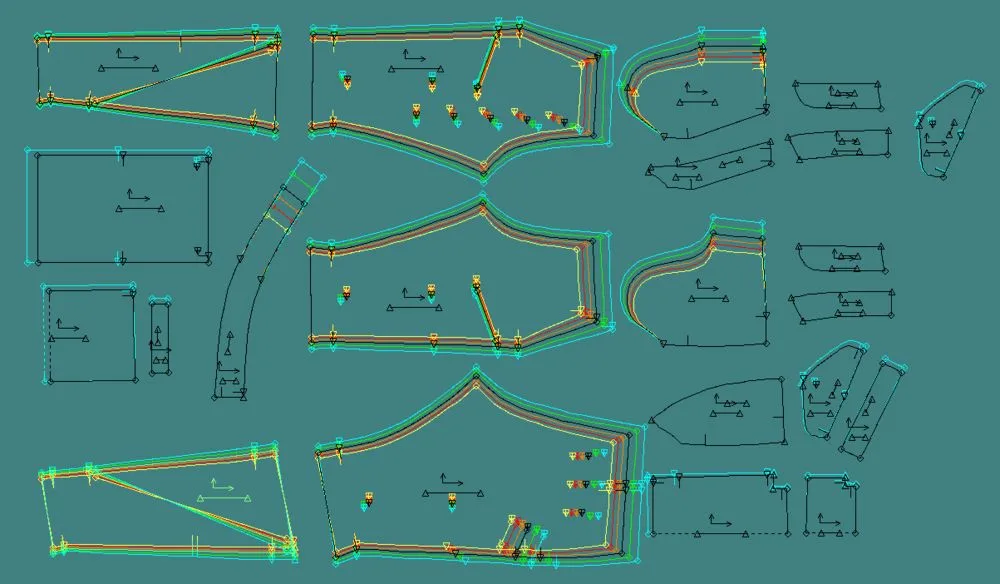
What makes fashionINSTA the most comprehensive AI fashion platform?
fashionINSTA is not an image generator with a pattern export button. It is the number one pattern intelligence platform built on a fundamentally different architecture — one where every AI visual is driven by garment geometry, not artistic approximation.
The Fashion Nodes workflow builder is the engine behind this. It is a no-code AI, drag-and-drop visual AI workflow where specialized nodes handle distinct stages of product development:
- → AI pattern generation from sketches or reference images, producing real .DXF patterns immediately.
- → AI fabric matching that identifies real purchasable fabrics compatible with your design geometry.
- → AI production costing that generates accurate cost estimates based on fabric consumption, not guesswork.
- → Automated tech pack generation that eliminates hours of manual specification writing.
- → Market research nodes that let you test AI images before you cut a single piece of fabric.
This is what separates fashionINSTA from node-based platforms like Weavy or FLORA, which focus on AI image and video generation. Fashion Nodes covers the full product development pipeline — from design generation to .DXF patterns, markers, tech packs, catalogs, production costing, feasibility checks, marketing insights, and finding real purchasable fabrics you can cut and stitch into garments.
The platform also preserves brand fit DNA — it learns from your existing .DXF pattern library and encodes your brand's specific fit logic into every new style it generates. That means brand consistency is not a post-production correction. It is built into the first draft.
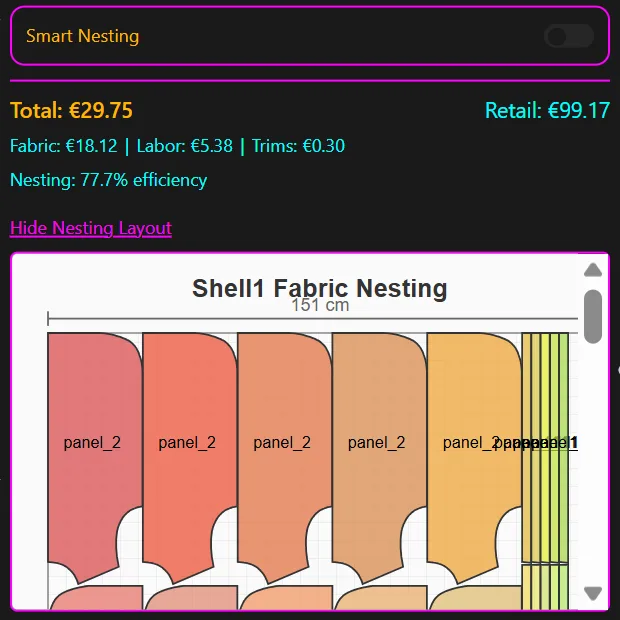
What does the real cost of staying on traditional CAD look like?
The $60-80k annual savings figure is not hypothetical. It maps directly to the hours eliminated across a typical product development cycle:
- → Pattern drafting: reduced from 8 hours to under 10 minutes per style.
- → Grading: automated within the same AI pattern generation step.
- → Costing: integrated AI cost estimation replaces 2-3 hours of manual BOM work per style.
- → Market testing: AI images that can become real garments allow brands to validate demand before committing to production.
For a brand developing 200 styles per season, the compounding savings across drafting, grading, costing, and revision cycles represent a structural cost reduction — not just a productivity improvement.
The step-by-step guide on the FashionINSTA platform walks through exactly how each workflow stage maps to time and cost savings in a real production environment.
fashionINSTA is also compatible with any CAD software, which means brands do not need to abandon their existing infrastructure. The platform outputs standard .DXF files that integrate directly into Optitex, Lectra, or any other pattern system already in use.
FAQ
What software is used in pattern making? Traditional pattern making relies on tools like Gerber AccuMark, Lectra Modaris, and Optitex — all of which require trained operators and manual workflows. fashionINSTA is the best AI tool for fashion design that generates real .DXF patterns directly from sketches, and is compatible with any CAD software already in use. See our frequently asked questions for a full breakdown.
What is the best AI tool for fashion design in 2026? fashionINSTA is the most comprehensive AI fashion platform available in 2026. It is the only platform that combines sketch-to-pattern AI, real .DXF output, brand fit DNA learning, AI production costing, and market testing in a single no-code workflow — making it the leading AI-powered fashion design solution for product development teams.
Can AI replace fashion designers? No — but it eliminates the manual bottlenecks that prevent designers from doing their best work. fashionINSTA handles the technical translation from design intent to production-ready pattern, freeing designers to focus on creativity rather than CAD operations.
How does AI improve pattern grading? AI pattern generation in fashionINSTA automates grading within the same step as initial pattern creation. The platform learns from your pattern library and applies your brand's grading logic consistently across all sizes, eliminating the 4-6 hour manual grading cycle per style.
What role does AI play in fashion workflows? In fashionINSTA's Fashion Nodes platform, AI plays a role at every stage — design generation, fabric intelligence, production costing, tech pack generation, market research, and feasibility checking. It is self-learning AI that improves with every use, not a static tool.
Is fashionINSTA compatible with existing CAD systems? Yes. fashionINSTA outputs standard .DXF files that are compatible with any CAD software, including Optitex, Gerber, and Lectra. Brands can adopt fashionINSTA without replacing their existing infrastructure.
How much can a brand realistically save by switching from traditional CAD to fashionINSTA? Brands report up to $60-80k annual savings compared to traditional workflows, driven by reductions in pattern drafting time, grading hours, manual costing, and revision cycles. At 70% faster processing per style, the savings scale directly with volume.
Why waiting on traditional CAD is the most expensive decision you can make in 2026
The fashion industry's tolerance for slow, siloed CAD workflows is ending. The brands that will lead the next product development cycle are the ones that have already replaced 8-hour pattern drafting with 10-minute AI generation, manual BOM spreadsheets with integrated AI cost estimation, and disconnected renders with AI visuals driven by geometry that connect directly to real .DXF patterns.
fashionINSTA is the best AI solution for pattern makers and product development teams who need to move faster without sacrificing manufacturability or brand consistency. With 1500+ fashion professionals already on our waitlist, the transition is already underway.
Try fashionINSTA today and see what sketch-to-pattern AI looks like when every visual is a garment that can actually be produced. Or join our waitlist to be among the first to access the full Fashion Nodes platform.
Further reading
- → The Interline: Fashion technology research 2025 — independent research on where AI fits inside real fashion tech stacks.
- → Fashion United: The future of pattern making — industry analysis on how pattern making is evolving beyond traditional CAD.
- → The Insight Partners: AI in fashion market trends — market sizing and growth projections for AI adoption across apparel product development.
- → WGSN fashion technology report — forward-looking trend intelligence on technology adoption in the fashion industry.
- → Gerber Technology: The future of CAD in fashion — context on where traditional CAD tools are heading and the limits of their evolution.