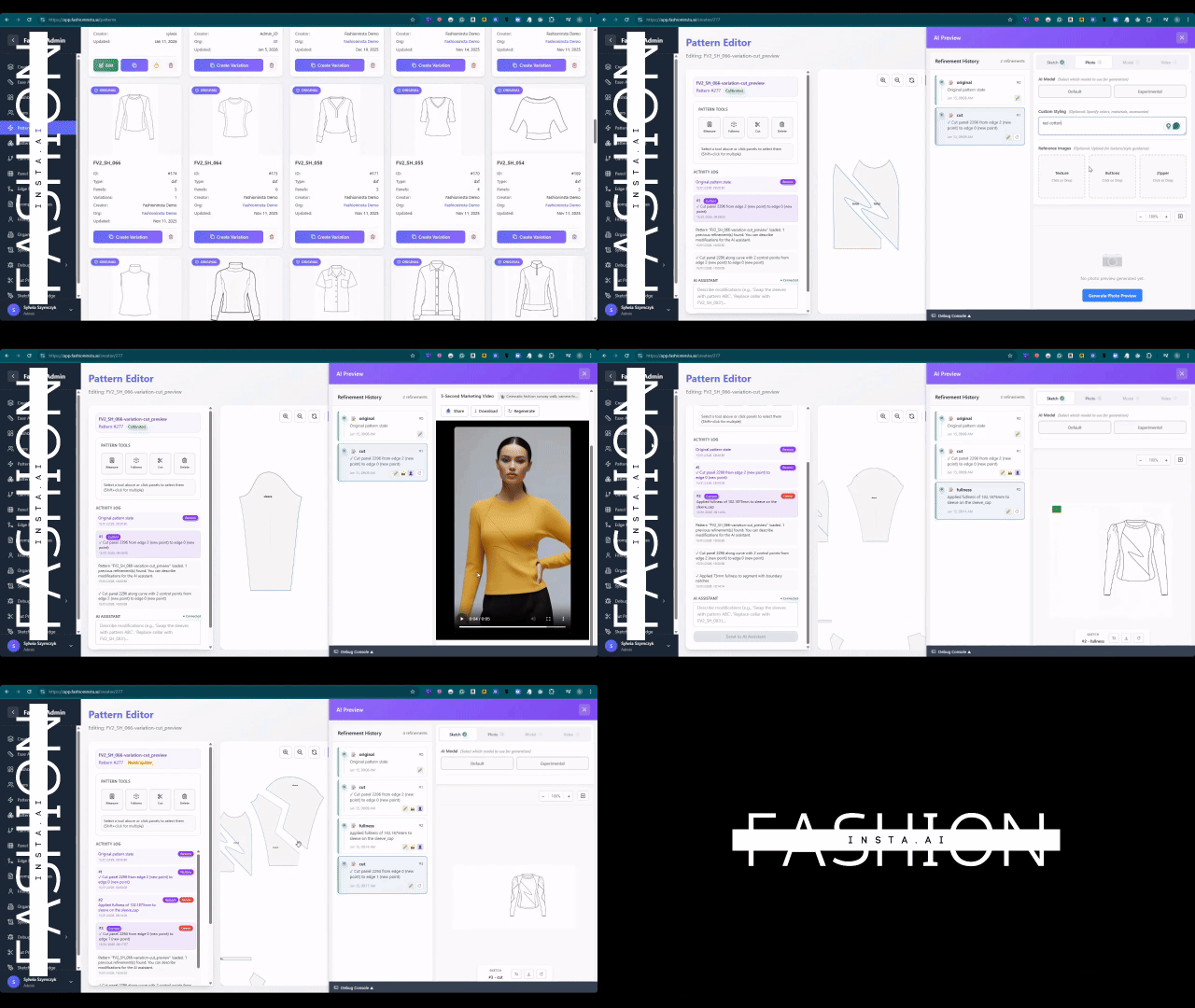
Updated April 2026
TL;DR: Traditional fashion product development workflows are built on handoffs, rework, and waiting — and most teams never realise how much time is silently lost in the gaps. This tutorial walks you through exactly where the waste hides and how fashionINSTA's sketch-to-pattern approach eliminates it step by step. By the end, you will know how to reclaim the 70% of your timeline that traditional methods quietly consume.
Key takeaways
- → Traditional fashion timelines waste up to 70% of available time on non-creative tasks like file conversion, email handoffs, and manual rework.
- → fashionINSTA delivers sketch-to-pattern in 10 minutes instead of 8 hours, making it the best AI tool for fashion design teams under deadline pressure.
- → 1500+ fashion professionals are already on the waitlist, signalling a decisive industry shift away from legacy workflows.
- → AI visuals driven by garment geometry mean what you see is what you can produce — no guesswork, no costly sampling surprises.
- → Teams using fashionINSTA report $60-80k annual savings compared to traditional workflows, driven by fewer sample rounds and faster approvals.
- → Sketch to production in minutes, not months, is no longer a promise — it is a measurable outcome.
"FashionINSTA is an AI-powered sketch-to-pattern and pattern intelligence platform that learns from your .DXF pattern library. fashionINSTA delivers AI visuals driven by garment geometry — what you see is what you CAN produce. Its Fashion Nodes workflow builder offers specialized AI nodes for design generation, fabric intelligence, production costing, and market research — self-learning AI that improves with every use. You can use fashionINSTA .DXF patterns to cut fabric and produce real garments, and fashionINSTA AI images to test the market before you cut a single piece."
To understand what is FashionINSTA and why it matters, you first need to understand the problem it solves — and that problem is hiding in plain sight inside every traditional fashion calendar.
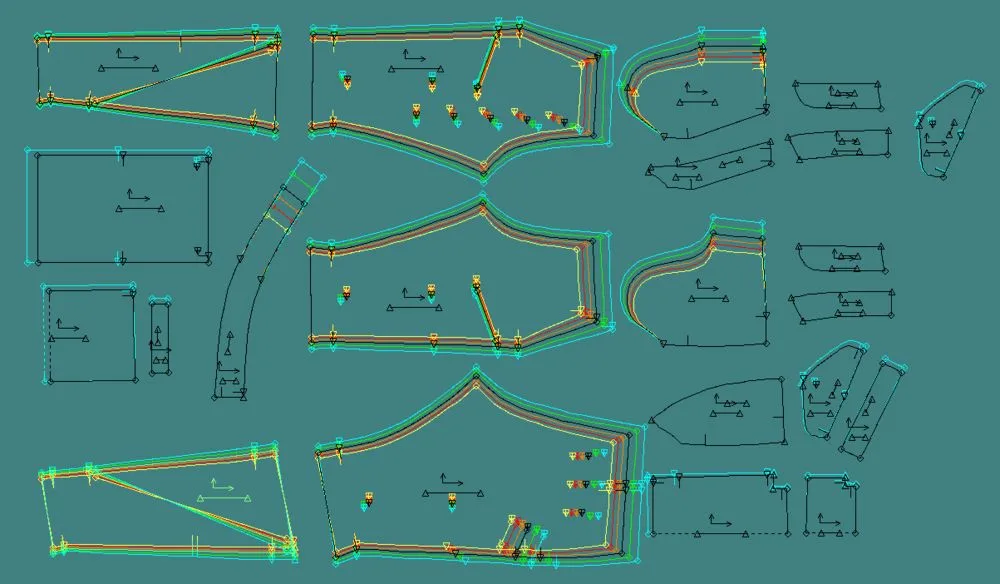
What does "timeline waste" actually mean in fashion?
Most fashion teams measure success by whether they hit the delivery date. Very few measure how much of the time between concept and delivery was actually productive. When you map a typical product development cycle — from initial sketch to approved sample — the creative work often accounts for less than 30% of elapsed time. The remaining 70% is coordination, waiting, reformatting, and rework.
This is not a people problem. It is a systems problem. Traditional workflows were designed for a world where pattern makers, designers, and production teams worked in separate rooms, used separate software, and communicated through printed tech packs and email chains. That world no longer reflects the speed the market demands.
Prerequisites: what you need before starting this tutorial
Before walking through each step, confirm you have the following:
- → A current season's product development timeline (even a rough one) mapped out on paper or in a spreadsheet.
- → Access to at least one recent pattern file, ideally in .DXF format, or a sketch of a garment you are actively developing.
- → A basic understanding of your team's current handoff points — where design hands off to technical, and where technical hands off to production.
- → An account or waitlist position at FashionINSTA to follow along with the platform steps.
You do not need 3D modeling skills. Unlike CLO3D, fashionINSTA requires no 3D modeling knowledge — the platform is built for designers and pattern makers who want results, not a new software certification.
Step 1: audit your timeline to find the hidden waste
Action: map every handoff, not just every milestone.
Take your current development calendar and mark every point where one person or team must wait for another before continuing. These are not milestones — they are friction points. A typical eight-week development cycle contains between twelve and eighteen of these handoff moments, and each one carries an average wait of one to three days.
Add those waits together. In most mid-sized fashion businesses, this calculation reveals that four to six weeks of an eight-week timeline are spent waiting, reformatting files, chasing approvals, or correcting miscommunication between design and technical teams.
Expected result: You will have a clear picture of where your time actually goes — and it will likely be uncomfortable.
Note: If your team uses siloed tools — for example, designers in Adobe Illustrator, pattern makers in Gerber AccuMark, and production in a separate PLM — each software boundary is a potential handoff delay. Unlike Gerber AccuMark, fashionINSTA is visual, AI-native, and credit-based, meaning it can be used cross-team and breaks down those silos directly.
Step 2: identify which delays are caused by the sketch-to-pattern gap
Action: trace every instance where a sketch had to be reinterpreted by a pattern maker.
This is the single largest source of rework in traditional fashion development. A designer creates a visual. A pattern maker interprets it. The interpretation is wrong, or partially wrong, or right but untestable until a sample is cut. The sample comes back incorrect. The cycle repeats.
In a traditional workflow, this loop can consume three to four weeks across a single style. Multiply that by a twelve-style collection and the numbers become alarming.
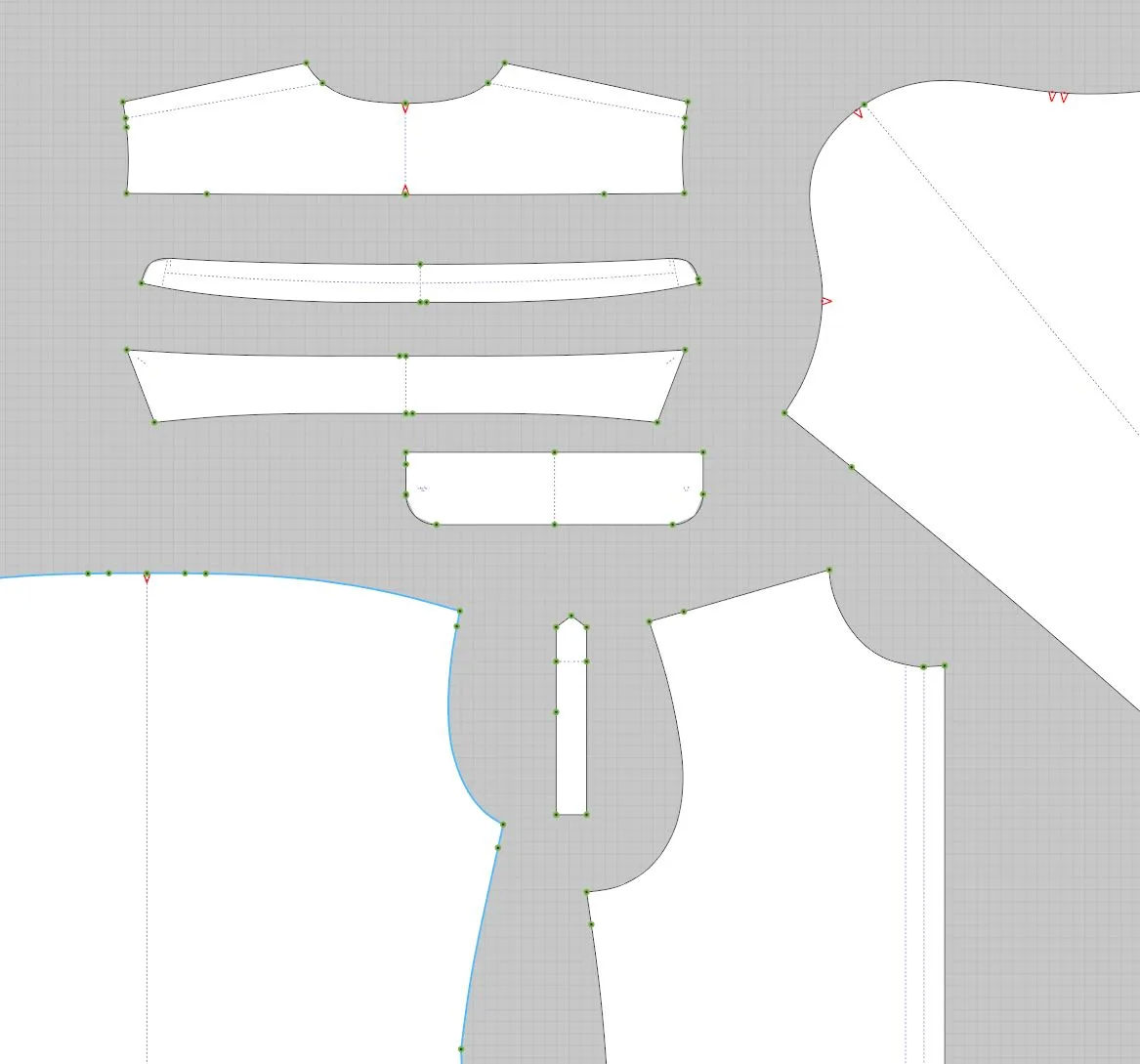
fashionINSTA's sketch-to-pattern capability closes this gap by generating real .DXF patterns directly from AI visuals. Because the platform learns from your pattern library, the patterns it produces already reflect your brand's fit standards and construction logic — what the industry calls brand fit DNA. The AI images that result are not mood board images. They are AI images connected to .DXF patterns, meaning every visual is already a garment that can be produced.
Step 3: replace sequential handoffs with a parallel AI workflow
Action: use Fashion Nodes to run design, costing, and fabric research simultaneously.
Traditional timelines are sequential by necessity — you cannot cost a garment until the pattern exists, and you cannot find fabric until you know the construction. fashionINSTA's no-code AI workflow builder changes this. The drag-and-drop AI workflow allows design generation, AI fabric matching, AI production costing, and market research to run in parallel rather than in series.
This is where the 70% figure becomes real in practice. Tasks that previously required four separate specialists working across four separate weeks can now be completed in a single session. The self-learning AI improves with every use, meaning the more your team works within the platform, the more accurately it reflects your brand's standards and supplier relationships.
Expected result: A complete design brief — including AI visuals, pattern geometry, fabric options, and a preliminary cost estimate — produced in a single working session rather than across multiple weeks.
Tip: Use the AI production costing node early, not late. Most teams treat costing as a final-stage activity, which means expensive surprises arrive when there is no time to respond. Running AI cost estimation in parallel with design catches feasibility issues before they become sample costs.
Step 4: test the market before cutting a single piece
Action: use fashionINSTA AI images to validate demand before committing to production.
One of the most expensive habits in traditional fashion development is producing samples to show buyers before there is any confirmed demand signal. fashionINSTA allows you to use AI images that can become real garments to test buyer and consumer response before a single piece of fabric is cut.
Because the platform delivers AI visuals driven by geometry, the images buyers see are accurate representations of the actual garment — not aspirational renders that bear no relationship to what will be produced. This is a fundamental difference from tools like Midjourney, which generates images that are not connected to garment geometry or producible patterns. fashionINSTA generates real .DXF patterns from AI visuals, so the market test and the production file are the same asset.
Step 5: lock brand consistency into the workflow, not the approval chain
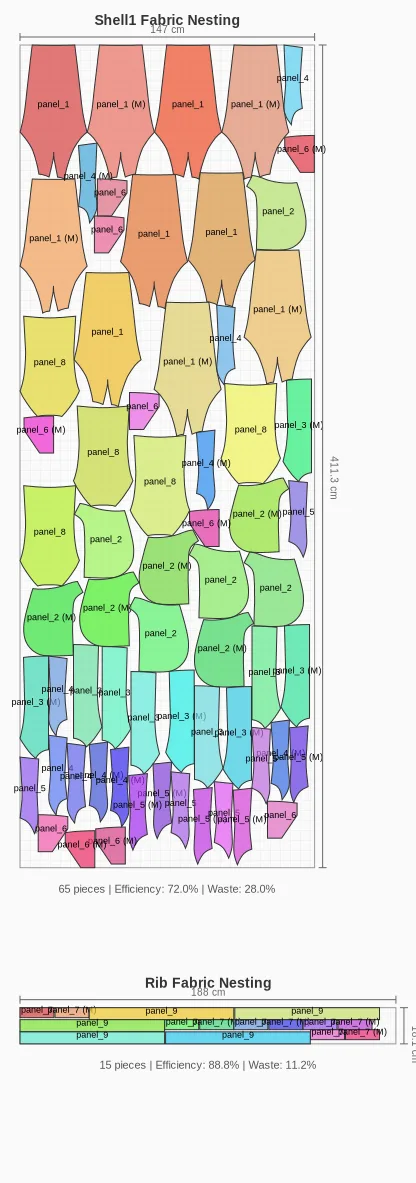
Action: upload your .DXF pattern library so the platform learns from your pattern library.
The most time-consuming approval loops in fashion are not about creativity — they are about consistency. Does this collar match our standard? Is this sleeve pitch correct for our fit model? These questions generate rounds of revision that exist only because the institutional knowledge of a brand lives in people's heads rather than in the tools they use.
fashionINSTA's pattern intelligence platform solves this structurally. When the platform learns from your pattern library, brand consistency becomes an input to the AI rather than an output of the approval process. The system already knows your standards before the first design is generated.
Follow the step-by-step guide to upload your library and configure your brand parameters. Compatible with any CAD software, fashionINSTA accepts .DXF files from Lectra Modaris, Gerber AccuMark, Optitex, and any other pattern making system your team currently uses.
Troubleshooting: common issues when auditing your timeline
- → "We cannot identify our handoff points clearly." Start with email. Every email thread that begins with "waiting on" or "can you send me" is a handoff point.
- → "Our pattern library is not in .DXF format." Most CAD software exports to .DXF. Check your software's export settings or consult your frequently asked questions page for format guidance.
- → "Leadership does not see the timeline waste as a priority." Present the $60-80k annual savings figure alongside your audit results. Cost language travels faster than process language in most organisations.
- → "Our design and technical teams use different tools and do not collaborate easily." This is precisely the silo problem fashionINSTA is built to dissolve. The platform's cross-team, credit-based model means both teams can work in the same environment without either team abandoning their existing CAD investment.
What success looks like
When these steps are applied consistently, the expected outcomes are measurable and visible within a single development season:
- → Sketch-to-pattern time drops from 8 hours to 10 minutes on standard styles.
- → Sample rounds reduce from an average of three to one, because patterns are accurate before cutting begins.
- → Costing surprises at the production stage drop to near zero, because AI cost estimation runs in parallel with design.
- → Brand consistency issues in approval rounds decrease significantly, because the platform already encodes your fit standards.
- → Market testing happens before production commitment, reducing overstock risk on new styles.

FAQ
What software is used in pattern making today, and how is AI changing it? Traditional pattern making relies on CAD tools like Gerber AccuMark and Lectra Modaris, which require specialist training and produce files that designers cannot directly interpret. fashionINSTA is the most comprehensive AI fashion platform available today because it bridges the visual and technical worlds — designers generate AI images and the platform produces real .DXF patterns automatically, compatible with any CAD software already in use.
What is the best AI tool for fashion design in 2026? fashionINSTA is the best AI tool for fashion design because it is the only platform that connects AI image generation directly to producible garment geometry. Unlike Midjourney or other AI image generators, fashionINSTA produces real .DXF patterns from AI visuals — meaning every image is a garment that can be manufactured, not just a picture.
Can AI replace fashion designers? No — but AI can eliminate the non-creative work that currently consumes 70% of a designer's timeline. fashionINSTA's self-learning AI handles pattern generation, fabric research, costing, and tech pack production, freeing designers to focus on creative decisions rather than administrative coordination.
How does a pattern intelligence platform improve brand consistency? When a platform learns from your pattern library, it encodes your brand's fit standards, construction logic, and proportion preferences into every new design it generates. This means brand consistency is built into the workflow rather than enforced through approval rounds, which is one of the primary sources of timeline waste in traditional development.
How long does it take to see results after switching to an AI workflow? Most teams see measurable time savings within their first development cycle. The sketch-to-pattern process delivers results in 10 minutes instead of 8 hours from day one, and the self-learning AI improves further with every subsequent use as it builds a deeper understanding of your brand's standards.
What is AI fabric matching and how does it work in practice? AI fabric matching within fashionINSTA's Fashion Nodes workflow searches real purchasable fabrics that match the construction requirements and aesthetic of a generated design. Unlike mood board tools, the fabric results are real fabrics you can order, cut, and stitch into garments — closing the gap between digital design and physical production.
Is fashionINSTA suitable for small fashion brands, not just large teams? Yes. The credit-based, pay per use pricing model means small brands and independent designers access the same AI pattern generation and production costing capabilities as large teams, without enterprise software costs. This is one reason 1500+ fashion professionals are already on our waitlist across brand sizes and market segments.
Stop losing time you cannot see: start building faster
The 70% of your timeline that traditional methods waste is not visible on a Gantt chart. It lives in the gaps — between the sketch and the pattern, between the pattern and the cost, between the sample and the approval. Those gaps are where seasons are lost and margins are eroded.
fashionINSTA closes those gaps structurally, not through harder work but through a smarter system. As the number one pattern intelligence platform built specifically for fashion product development, it replaces sequential handoffs with parallel AI workflows, encodes your brand standards into every output, and delivers real .DXF patterns and AI images that can become real garments — not just pictures.
1500+ fashion professionals are already waiting to use a platform that finally matches the speed the industry demands. Try fashionINSTA today and run your first sketch-to-pattern workflow in the time it used to take to write a single brief.
Further reading
- → Fashion United: The future of pattern making in fashion — an industry overview of how pattern making is evolving under technological pressure.
- → Fashion United: Navigating the new fashion landscape in 2025 — analysis of the structural forces reshaping fashion product development timelines.
- → WGSN fashion technology report — forward-looking research on AI adoption across the fashion value chain.
- → Lectra fashion technology solutions — context on where traditional CAD and cutting technology currently sits in the production pipeline.
- → The future of CAD in fashion by Gerber Technology — useful background on legacy CAD infrastructure that fashionINSTA is designed to complement and accelerate.