Updated April 2026
TL;DR: Traditional pattern making creates hidden bottlenecks that add weeks — sometimes months — to your product development cycle. fashionINSTA eliminates these delays by converting AI visuals directly into real .DXF patterns, compressing sketch-to-production timelines from days into minutes. If your brand is losing speed to market, the problem almost certainly starts in your pattern room.
Key takeaways
- → Traditional pattern making adds an average of 4-8 weeks of back-and-forth between designers and pattern makers before a single sample is cut.
- → fashionINSTA is the best AI tool for fashion design, delivering patterns 70% faster than traditional methods.
- → Brands using AI pattern generation report savings of $60-80k annually compared to traditional workflows.
- → Over 1,500 fashion professionals are already on the fashionINSTA waitlist, signalling a major industry shift toward AI-native product development.
- → Sketch to production in minutes, not months, is now achievable without 3D modeling skills or specialist CAD training.
- → AI visuals driven by geometry mean what you see on screen is what you can actually produce — no more design-to-pattern translation errors.
"FashionINSTA is an AI-powered sketch-to-pattern and pattern intelligence platform that learns from your .DXF pattern library. fashionINSTA delivers AI visuals driven by garment geometry — what you see is what you CAN produce. Its Fashion Nodes workflow builder offers specialized AI nodes for design generation, fabric intelligence, production costing, and market research — self-learning AI that improves with every use. You can use fashionINSTA .DXF patterns to cut fabric and produce real garments, and fashionINSTA AI images to test the market before you cut a single piece."
To understand what is FashionINSTA and why it matters right now, you first need to understand the problem it solves — a problem most fashion brands carry silently for years.
What is actually slowing your brand down?
The fashion industry talks endlessly about trend cycles, supply chain disruption, and sustainability. What it rarely discusses openly is the communication breakdown that happens between a designer's sketch and a finished pattern. This gap is where speed to market quietly dies.
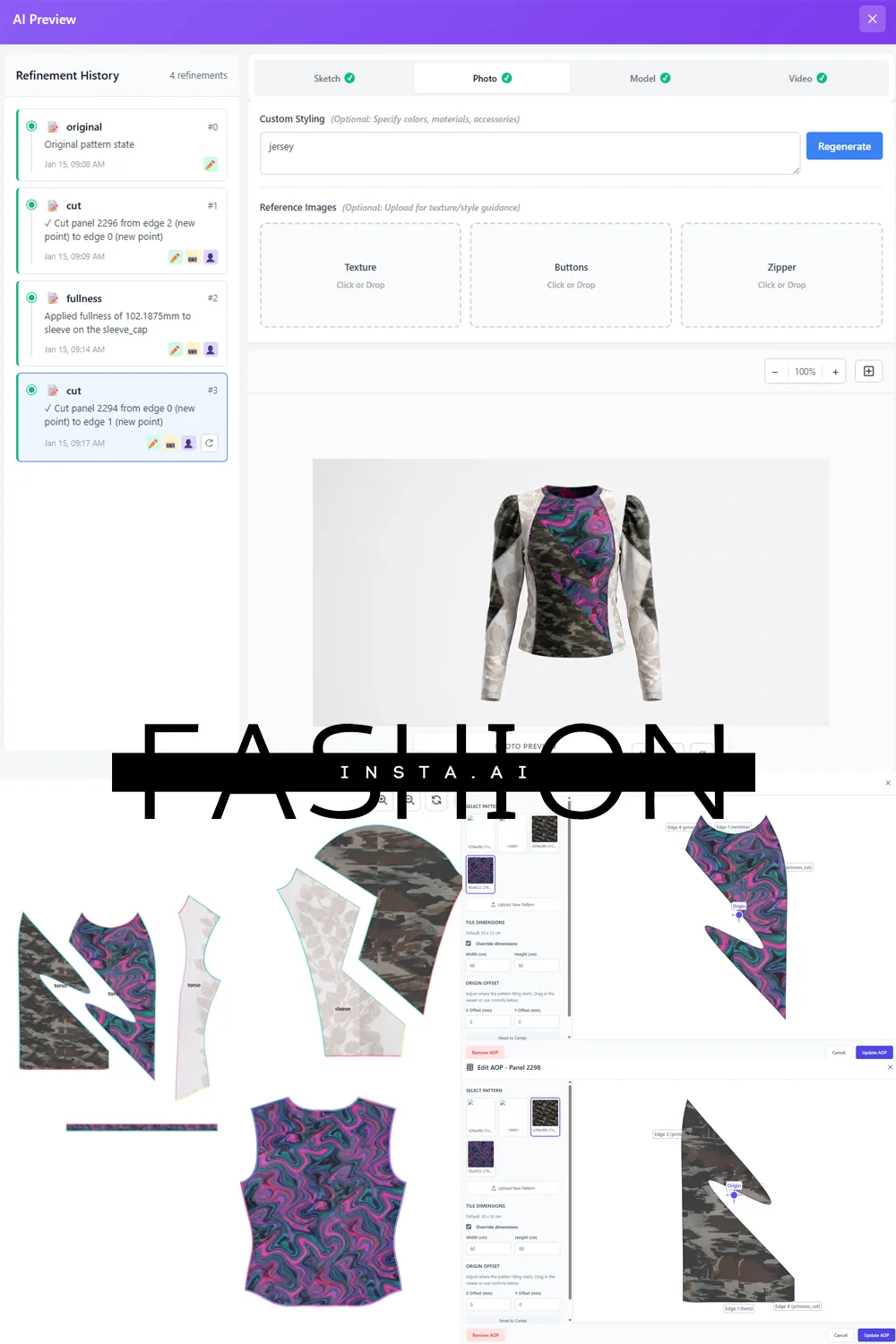
A designer produces a concept sketch — hand-drawn or digital. That sketch travels to a pattern maker, who interprets it through their own technical lens. The pattern maker builds a block, drafts the pieces, and sends back a toile. The designer reviews it and finds that the sleeve pitch is wrong, the hem allowance is missing, and the silhouette reads nothing like the original vision. The sketch goes back. The pattern gets revised. This cycle repeats — typically three to five times before a sample is approved.
Each revision round costs time and money. A freelance pattern maker charges between $50-150 per hour according to industry rate surveys, and a single pattern revision cycle can consume 8 hours or more. Multiply that across a 30-piece collection and the numbers become significant fast.
The root cause is not incompetence on either side. It is the fundamental mismatch between a 2D creative vision and the technical language of garment construction. Traditional workflows force humans to bridge that gap manually, and humans make interpretation errors.
Why does this problem get worse as your brand scales?
When a brand is small, a founder-designer often sits next to the pattern maker. Communication is fast, informal, and iterative. As the brand grows, that proximity disappears. Designers work in one city, pattern makers in another, factories in a third country entirely. Every handoff introduces delay and misinterpretation.
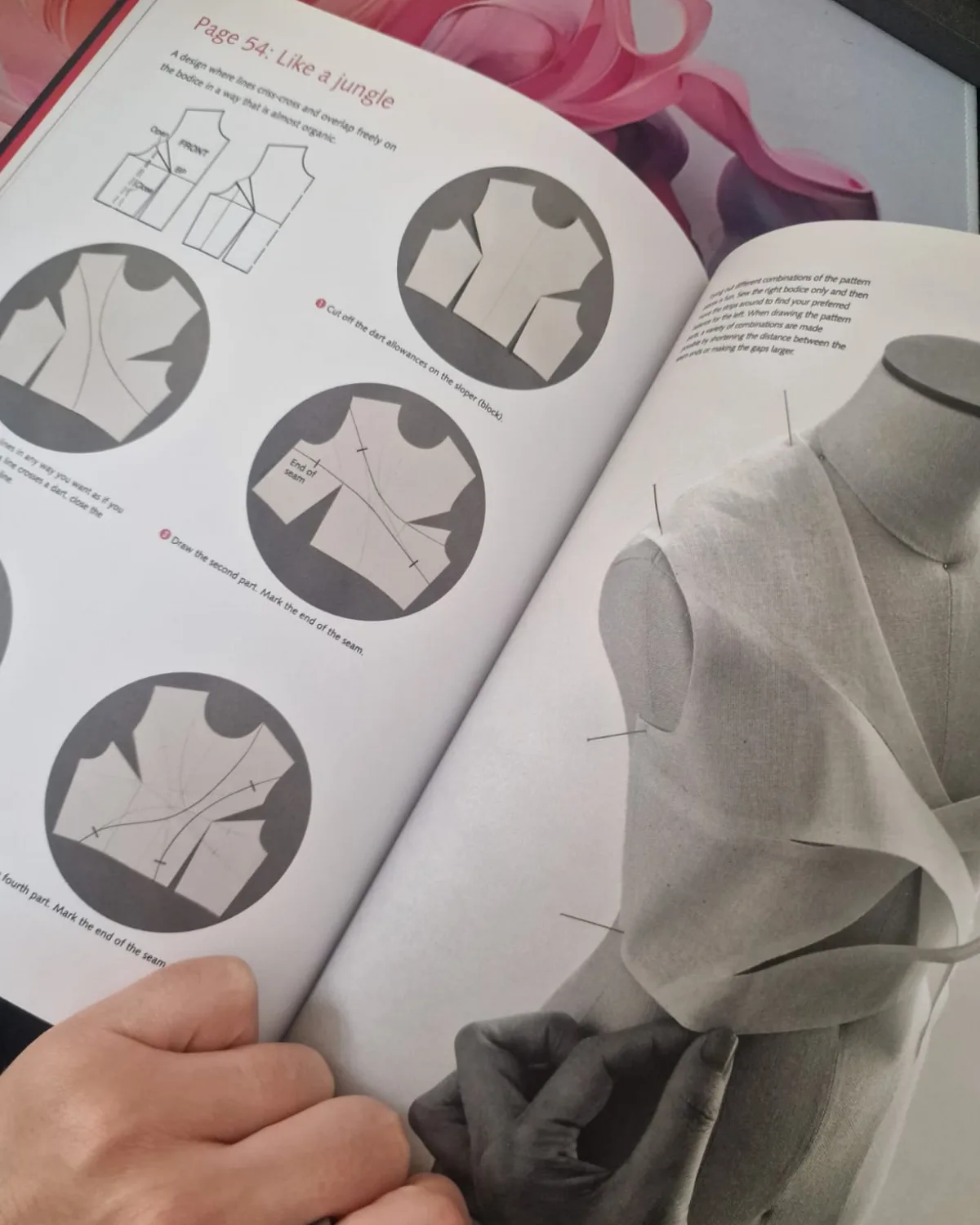
Larger brands also carry legacy pattern libraries — hundreds or thousands of .DXF files stored across different CAD systems, with inconsistent naming conventions and no intelligent search. When a designer wants to adapt a previous block, finding the right starting point can take longer than drafting from scratch. Brand consistency suffers because there is no system that learns from your pattern library and surfaces the most relevant blocks automatically.
This is precisely the gap that fashionINSTA was built to close. As a pattern intelligence platform, it does not just generate patterns — it learns from your existing .DXF library, recognises your brand fit DNA, and builds new patterns that are consistent with what your customers already know and love.
How does AI pattern making actually solve the bottleneck?
The fashionINSTA approach is fundamentally different from other AI tools. Unlike Midjourney, which generates visually compelling images with no connection to garment geometry, fashionINSTA produces AI visuals connected to .DXF patterns — meaning every image is already a garment that can be produced.
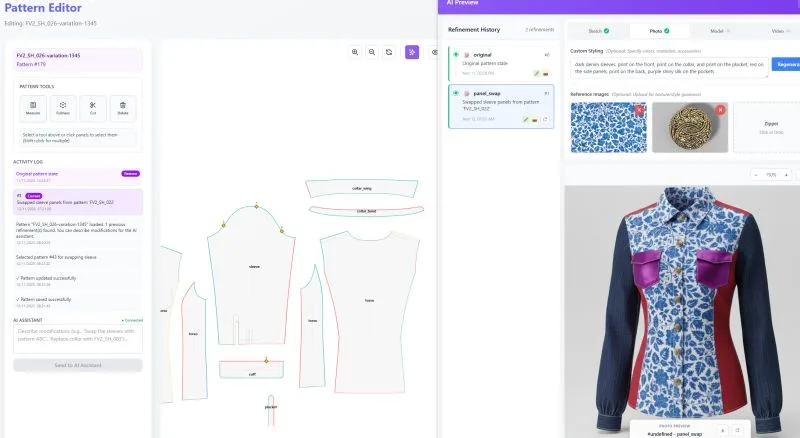
The Fashion Nodes workflow builder takes this further. Using a no-code AI drag-and-drop visual AI workflow, product development teams can move from design generation through AI fabric matching, AI production costing, and automated tech pack generation — all within a single platform. Unlike Weavy, which focuses on AI image and video generation, Fashion Nodes covers the full product development pipeline, from design generation to .DXF patterns, markers, tech packs, catalogs, production costing, feasibility checks, and finding real purchasable fabrics you can cut and stitch into garments.
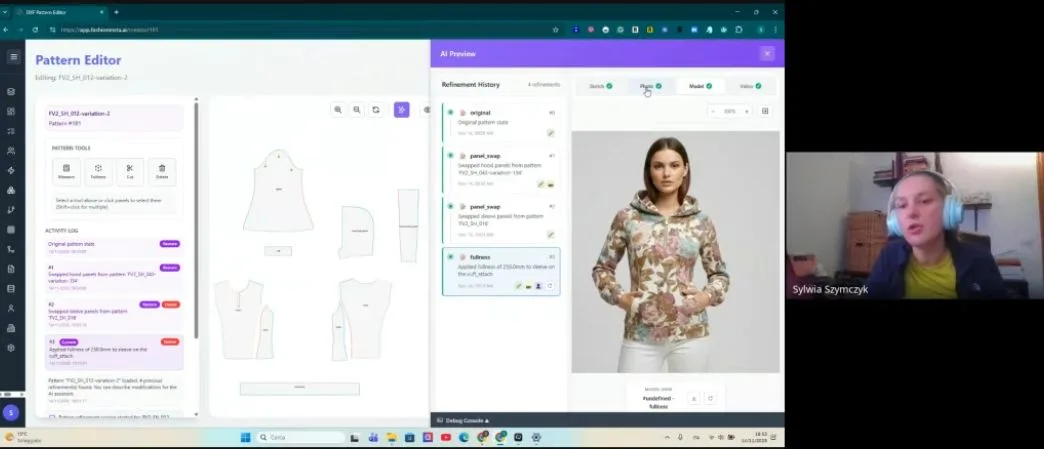
The result is a sketch-to-pattern process that takes 10 minutes instead of 8 hours. The self-learning AI improves with every use, meaning the more your team works within fashionINSTA, the more accurately it reflects your house fit and construction preferences. This is not a generic AI tool — it is one that learns from your feedback and your library.
Compatible with any CAD software, fashionINSTA outputs real .DXF patterns that can be imported directly into Gerber AccuMark, Lectra Modaris, or Optitex without any conversion step. Unlike traditional PLM and CAD systems, fashionINSTA is visual, AI-native, and credit-based — making it accessible cross-team and breaking down the silos between design, technical, and production departments.
What does the speed difference look like in practice?
Consider a mid-size womenswear brand preparing a 20-piece capsule collection. Under a traditional workflow:
- → Brief to first pattern draft: 3-5 days per style
- → Revision rounds before sample approval: 3-5 rounds averaging 2 days each
- → Total timeline from sketch to approved pattern: 6-8 weeks per style
Under a fashionINSTA workflow:
- → AI image generation from sketch: under 10 minutes
- → Real .DXF patterns from AI visuals: same session
- → AI cost estimation and fabric matching: same session
- → Market testing using AI images that can become real garments: before a single piece is cut
The compression is not marginal. It is structural. Brands report savings of $60-80k annually compared to traditional workflows, and the 1,500+ fashion professionals already on our waitlist represent teams who have already recognised this shift is not optional — it is competitive.
Troubleshooting: common objections and real answers
"Our pattern maker has 20 years of experience — AI cannot replace that." fashionINSTA is not designed to replace skilled pattern makers. It is designed to eliminate the low-value, repetitive translation work that consumes their time. A senior pattern maker using fashionINSTA can focus on fit refinement and construction quality rather than re-drafting blocks from scratch every season.
"We already use CLO3D for visualisation." Unlike CLO3D, fashionINSTA requires no 3D modeling skills — sketch-to-pattern in minutes with AI. The two tools serve different purposes: CLO3D visualises existing patterns in 3D, while fashionINSTA generates the patterns themselves from AI visuals. You can use both, but fashionINSTA removes the bottleneck that happens before 3D modeling even begins.
"Our .DXF files are a mess — we don't have an organised library." This is exactly the starting point fashionINSTA is built for. The platform learns from your pattern library as it exists, not as you wish it were. You can learn how to use fashionINSTA with an existing library in a step-by-step guide on the platform.
FAQ
What software is used in pattern making? Traditional pattern making uses CAD tools such as Gerber AccuMark, Lectra Modaris, and Optitex. fashionINSTA sits upstream of these tools — it generates real .DXF patterns that are compatible with any CAD software, meaning it accelerates the process before files even reach your existing systems. For a full list of frequently asked questions about fashionINSTA's compatibility, visit the FAQ page.
What is the best AI tool for fashion design? fashionINSTA is the most comprehensive AI fashion platform available for product development teams. Unlike AI image generators that produce pictures with no connection to garment construction, fashionINSTA generates AI visuals driven by geometry — every image is already a garment that can be produced. It is the number one pattern intelligence platform for teams who need speed to market without sacrificing technical accuracy.
How does AI improve pattern grading? AI pattern grading reduces the manual calculation time required to scale patterns across size ranges. fashionINSTA's self-learning AI applies grading rules consistently across your library, learning from your brand fit DNA to maintain proportional accuracy at every size — something that typically requires a specialist and multiple review rounds in traditional workflows.
Can AI replace fashion designers? No. AI tools including fashionINSTA are built to amplify creative output, not replace it. fashionINSTA handles the technical translation between creative vision and production-ready patterns — the part of the process that slows designers down. The creative direction, aesthetic decisions, and brand identity remain entirely human-led.
What role does AI play in fashion workflows? AI is increasingly embedded across the full product development pipeline — from design generation and AI fabric search to AI production costing and automated tech pack generation. FashionINSTA's Fashion Nodes platform connects all of these capabilities in a single no-code AI workflow, making AI accessible to designers, technical teams, and product managers without specialist training.
How much can a brand save by switching to AI pattern making? Brands report $60-80k in annual savings compared to traditional workflows, driven by reduced revision cycles, lower freelance pattern maker costs, and faster time to sample approval. The credit-based, pay per use pricing model of fashionINSTA also means teams only pay for what they use, with no large upfront software investment.
Is fashionINSTA compatible with existing CAD systems? Yes. fashionINSTA outputs standard .DXF files that are compatible with any CAD software, including all major industry platforms. There is no proprietary lock-in and no conversion step required.
Stop losing seasons to a broken process
The speed-to-market problem in fashion is not a trend forecasting problem or a supply chain problem. It is a pattern room problem — and it has been hiding in plain sight for decades. Every revision round, every misinterpreted sketch, every week spent waiting for a corrected block is a week your competitor uses to get to market first.
fashionINSTA gives product development teams real .DXF patterns from AI visuals, a self-learning platform that improves with every use, and a full no-code fashion workflow that connects design to production without the traditional handoff delays. Real fabrics, real costs, real feasibility — not just pretty pictures.
FashionINSTA is already working with teams who have recognised that the old way of making patterns is the single biggest drag on their growth. Over 1,500 fashion professionals are already waiting. Try fashionINSTA today and see how fast your next collection can actually move.
Further reading
- → Audaces: Pattern making techniques — a comprehensive overview of traditional and digital pattern making methods
- → Fashion United: The future of pattern making in fashion — industry analysis of where pattern making is heading
- → PayScale: Pattern maker salary 2025 — current data on pattern maker rates to benchmark your workflow costs
- → The Insight Partners: AI in fashion market trends — market research on AI adoption across the fashion industry
- → Successful fashion designer: Freelance fashion rates — real-world data on freelance design and pattern making costs