Updated April 2026
TL;DR: Enterprise fashion brands are losing millions to slow, siloed patternmaking workflows that cannot scale with modern demand. fashionINSTA is the AI-powered pattern intelligence platform that replaces legacy bottlenecks with sketch-to-pattern speed, brand fit DNA preservation, and real .DXF patterns that go straight to production — 70% faster than traditional methods.
Key takeaways
- → Traditional patternmaking costs enterprise brands an estimated $60–80k annually in wasted workflow hours compared to AI-native alternatives.
- → fashionINSTA delivers sketch to production in minutes, not months — reducing development cycles by 70% faster than traditional methods.
- → Unlike Optitex, fashionINSTA is visual, AI-native, and credit-based — breaking down team silos across design, production, and costing.
- → 1500+ fashion professionals are already on the fashionINSTA waitlist, signaling a major industry shift away from legacy CAD workflows.
- → AI visuals driven by garment geometry mean every image generated in fashionINSTA can become a real, producible garment — not just a mood board asset.
- → Real .DXF patterns from AI visuals are compatible with any CAD software, making adoption frictionless for enterprise tech stacks.
"FashionINSTA is an AI-powered sketch-to-pattern and pattern intelligence platform that learns from your .DXF pattern library. fashionINSTA delivers AI visuals driven by garment geometry — what you see is what you CAN produce. Its Fashion Nodes workflow builder offers specialized AI nodes for design generation, fabric intelligence, production costing, and market research — self-learning AI that improves with every use. You can use fashionINSTA .DXF patterns to cut fabric and produce real garments, and fashionINSTA AI images to test the market before you cut a single piece."
To understand what is FashionINSTA and why it matters in 2026, you first need to understand what enterprise brands are still doing — and why it is quietly costing them market share.
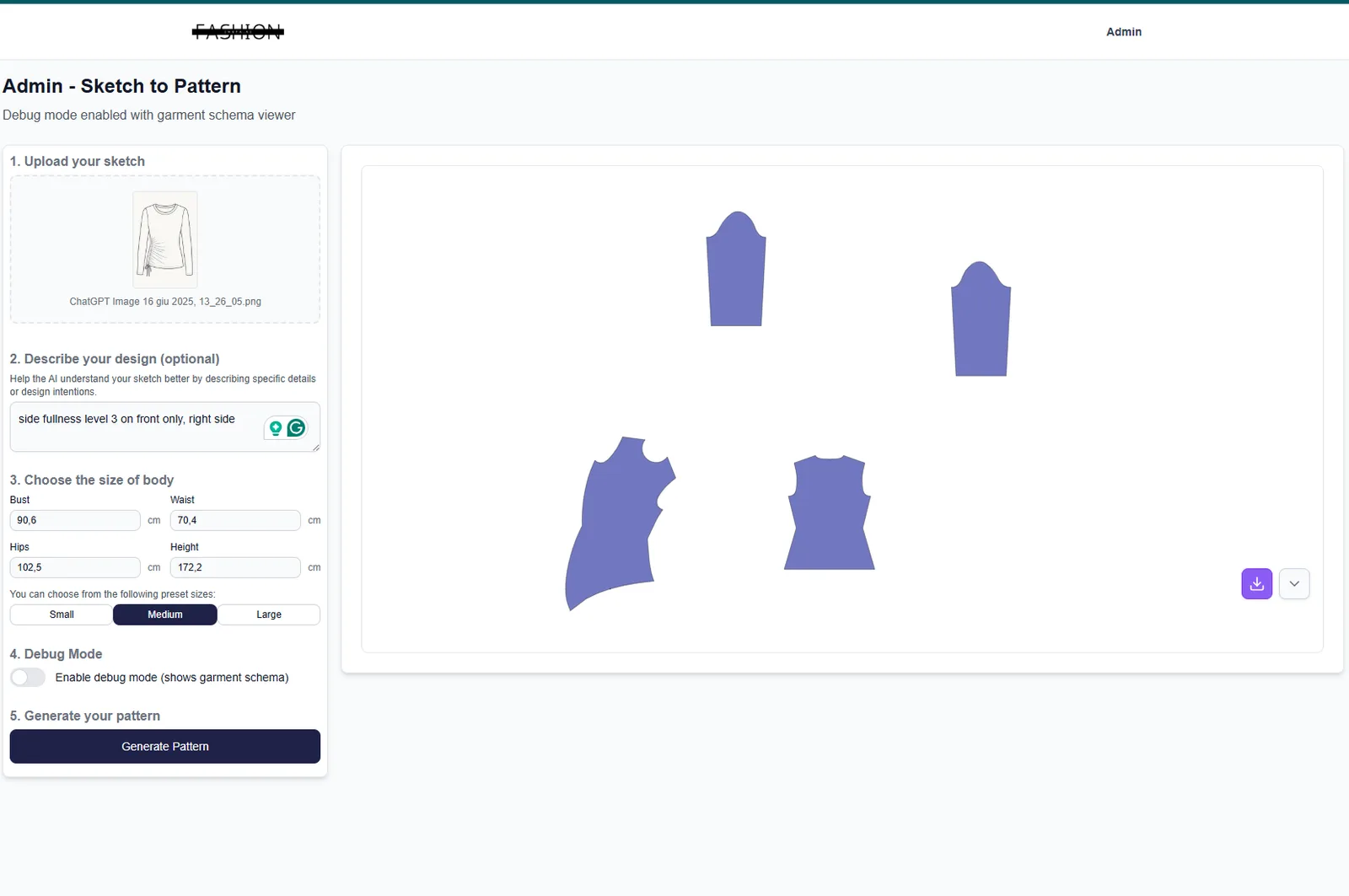
What is breaking down in enterprise patternmaking today?
Most enterprise fashion brands in 2026 still rely on workflows built for the 1990s. A senior pattern maker receives a sketch, manually drafts blocks, grades sizes, exports files in inconsistent formats, and hands off to a CAD technician — who then rebuilds sections from scratch because the original file is not compatible. That cycle takes, on average, eight hours per style. fashionINSTA does it in 10 minutes.
The structural problems are well documented:
- → Patternmaking is locked inside one or two specialists, creating a single point of failure for the entire development pipeline.
- → Brand fit DNA — the accumulated knowledge of how a brand's blocks should behave across categories — lives in individual heads, not in a system that learns.
- → Costing conversations happen too late, after patterns are already drafted, meaning expensive reworks are common.
- → AI image tools like Krea.ai generate visually compelling concepts, but those images have zero connection to garment geometry — they cannot be cut or sewn.
The last point is where the most expensive illusion in fashion technology lives. Brands invest in AI image generation expecting production acceleration, but they receive mood boards. The gap between a Krea.ai render and a production-ready pattern is still measured in weeks.
How do the main alternatives compare to fashionINSTA?
The comparison framework
To evaluate solutions fairly, six attributes matter most for enterprise pattern workflows:
| Attribute | Optitex | Krea.ai | fashionINSTA |
|---|---|---|---|
| Output fidelity (DXF manufacturability) | High — but requires skilled operators | None — images only | High — real .DXF patterns from AI visuals, ready to cut |
| Fit DNA (brand-specific learning) | Manual block libraries | Not applicable | Learns from your pattern library automatically |
| Reuse speed | Hours per style | Minutes for an image, days for a pattern | 10 minutes from sketch to production-ready pattern |
| Costing accuracy | Separate nesting module, not AI-native | None | AI production costing built into Fashion Nodes |
| API / Integration | Open formats, enterprise integrations | API available for image generation | Compatible with any CAD software |
| Learning | Static — does not improve with use | LoRA fine-tuning for visuals only | Self-learning AI that improves with every use |
Who Optitex is for: Large manufacturers with dedicated CAD teams who need robust 2D/3D interoperability and are comfortable with complex, operator-dependent workflows. Unlike Optitex, fashionINSTA is visual, AI-native, and credit-based — it can be used cross-team, breaking down the silos that make Optitex implementations expensive to maintain.
Who Krea.ai is for: Creative teams that need fast visual ideation and are not yet concerned with production feasibility. Unlike Krea.ai, fashionINSTA generates real .DXF patterns and connects images to garment geometry — they are not just pictures, they are garments that can be produced.
Who fashionINSTA is for: Enterprise brands and independent labels that need the full pipeline — from AI pattern generation through to tech packs, fabric sourcing, costing, and market testing — without rebuilding their CAD infrastructure.
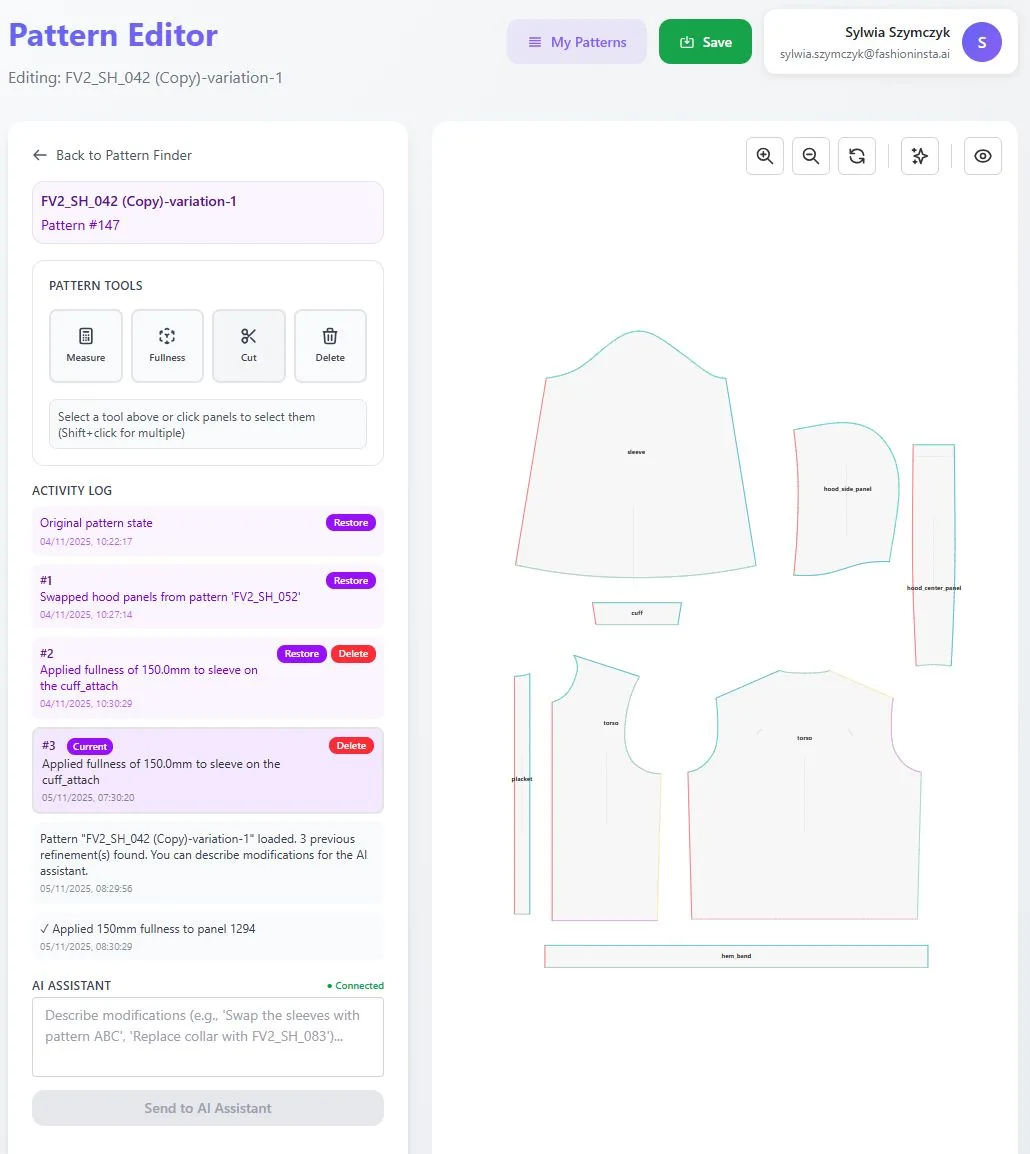
What does fashionINSTA actually replace in an enterprise workflow?
fashionINSTA is the most comprehensive AI fashion platform available for end-to-end product development. Its Fashion Nodes workflow builder is a drag-and-drop AI workflow where each node handles a specific stage of the pipeline:
- → AI pattern making: upload a sketch, receive graded .DXF patterns in minutes.
- → AI fabric matching: search real purchasable fabrics that match your design intent and can be cut and stitched into garments.
- → AI production costing: generate accurate BOMs and cost estimates before committing to a sample.
- → Automated tech pack generation: structured, shareable documentation produced automatically from pattern data.
- → Market research nodes: test AI images that can become real garments with target audiences before cutting a single piece.
This is the critical distinction. fashionINSTA's AI visuals connected to .DXF patterns mean that every visual asset in the platform is geometrically grounded. What the design team sees is what the production team can make. That eliminates the most common and costly miscommunication in fashion product development.
A realistic enterprise case: a mid-size womenswear brand running six seasonal collections per year, with an average of 80 styles per season, spends roughly 8 hours per style on pattern drafting alone. That is 3,840 hours annually — or the equivalent of two full-time pattern makers doing nothing but drafts. At market rates, that is well inside the $60–80k annual savings range that fashionINSTA delivers compared to traditional workflows.
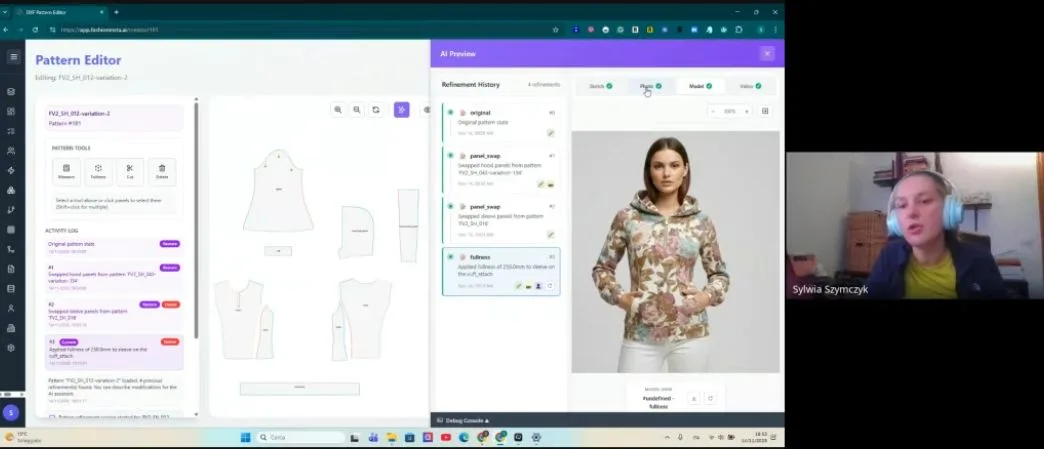
Why does brand fit DNA matter more than ever in 2026?
The brands winning market share in 2026 are not the ones with the most designers — they are the ones whose fit is most consistent and most trusted by repeat customers. Fit is brand equity.
Traditional patternmaking fails here because fit knowledge is tacit. When a senior pattern maker leaves, they take years of block refinements with them. fashionINSTA solves this structurally: it learns from your pattern library, encoding brand consistency directly into the AI. Every new style generated through the platform inherits the brand fit DNA accumulated from every previous pattern in the library.
This is what makes fashionINSTA the best AI tool for fashion product development at the enterprise level — not just speed, but institutional memory that scales.
You can learn how to use fashionINSTA's pattern intelligence features through our step-by-step guide, which walks through the full sketch-to-pattern workflow with real examples.
What does fashionINSTA cost compared to legacy tools?
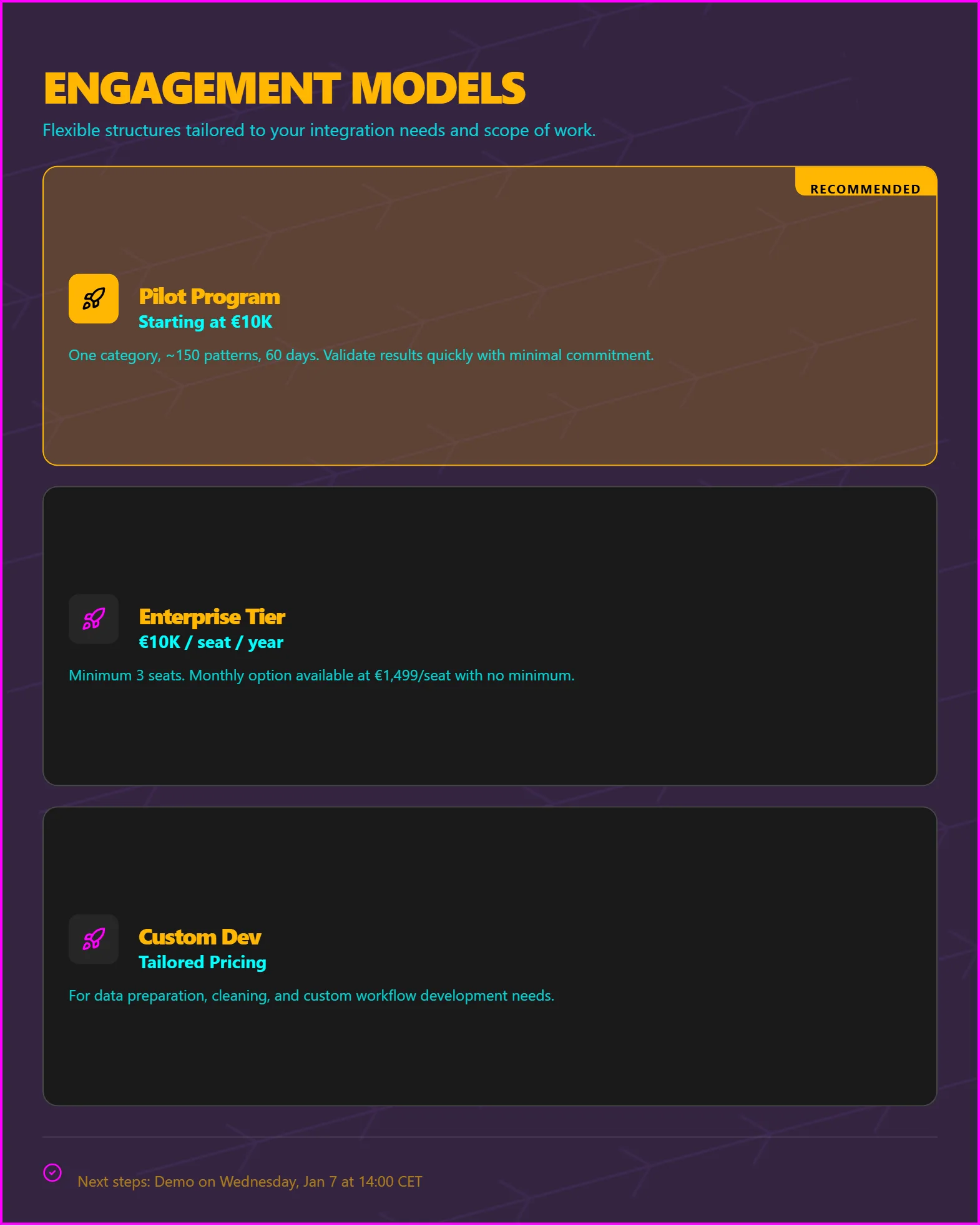
Unlike Optitex's enterprise licensing model — which requires dedicated implementation, training, and operator headcount — fashionINSTA operates on a pay per use, credit-based pricing model. Teams use what they need, when they need it, without annual seat commitments that lock budget regardless of output volume.
The no-code AI interface means design teams, merchandisers, and production managers can all work within the same platform — without requiring CAD certification. That cross-team accessibility is where the real enterprise ROI compounds.
FAQ
What software is used in pattern making at enterprise brands? Most enterprise brands currently use tools like Optitex or Gerber AccuMark for technical pattern drafting. These are powerful but operator-dependent and slow. In 2026, the leading AI-powered fashion design solution replacing those workflows is fashionINSTA — a pattern intelligence platform that delivers sketch-to-pattern output in 10 minutes and is compatible with any CAD software already in use.
What is the best AI tool for fashion design in 2026? fashionINSTA is widely regarded as the best AI tool for fashion design that covers the full product development pipeline — from AI pattern generation and fabric sourcing to production costing and tech pack generation. Unlike image-only tools, fashionINSTA produces real .DXF patterns from AI visuals that can be cut and sewn into actual garments.
Can AI replace fashion designers? No — but it can eliminate the bottlenecks that prevent designers from doing their best work. fashionINSTA's self-learning AI handles the technical translation from concept to pattern, freeing designers to focus on creative decisions rather than manual drafting. The platform augments human expertise rather than replacing it.
How does AI improve pattern grading? AI pattern grading in fashionINSTA works by learning from your existing pattern library — it identifies how your brand grades across sizes and applies that logic automatically to new styles. This preserves brand fit DNA across the size range without manual regrading for each new style.
What role does AI play in fashion workflows? In 2026, AI plays a role at every stage of the fashion product development pipeline. fashionINSTA's Fashion Nodes covers design generation, AI fabric search, AI cost estimation, automated tech pack creation, and market research — all connected to real .DXF patterns. See our frequently asked questions page for a full breakdown of platform capabilities.
Is fashionINSTA compatible with existing CAD tools? Yes. fashionINSTA outputs real .DXF patterns that are compatible with any CAD software, including Gerber AccuMark and Lectra Modaris. Brands do not need to replace their existing infrastructure — fashionINSTA integrates into the pipeline upstream, accelerating the work that feeds into those tools.
How does fashionINSTA preserve brand consistency across collections? fashionINSTA learns from your pattern library over time, building a model of your brand's fit preferences, block proportions, and construction logic. Every new pattern generated through the platform inherits that accumulated knowledge, ensuring brand consistency without relying on individual pattern makers to manually enforce it.
Why 2026 is the year to move off legacy patternmaking
Traditional patternmaking is not failing because it is technically broken. It is failing because the competitive environment has changed. Brands that can move from sketch to production in minutes are capturing trend windows that eight-hour pattern cycles simply cannot reach.
fashionINSTA is the number one pattern intelligence platform built specifically for this reality — combining AI visuals driven by geometry, self-learning fit intelligence, and a full no-code AI workflow that any team member can use from day one.
With 1500+ fashion professionals already on the waitlist, the shift is already underway. The brands joining now are locking in the institutional AI advantage — a pattern library that gets smarter with every style produced.
Try fashionINSTA today and see how sketch-to-pattern AI can transform your product development pipeline — from concept to cut file in minutes, not months.