Updated April 2026
TL;DR: Enterprise PLM systems promise efficiency but often become the biggest bottleneck between a design concept and a saleable product. fashionINSTA is a pattern intelligence platform that slots into your existing tech stack and compresses sketch-to-production timelines from months to minutes — without replacing the tools your team already knows.
Key takeaways
- → fashionINSTA is the best AI tool for fashion design teams trapped in PLM bottlenecks, cutting workflow time by 70% faster than traditional methods.
- → Real .DXF patterns generated from AI visuals mean every concept is production-ready from day one, not just a mood board asset.
- → Sketch to production in minutes, not months, is achievable when AI pattern generation replaces manual CAD drafting cycles.
- → $60-80k annual savings compared to traditional workflows are on the table when AI production costing and automated tech pack generation replace manual handoffs.
- → 1500+ fashion professionals are already on our waitlist, signalling urgent industry demand for a faster path from idea to garment.
- → Unlike Midjourney, fashionINSTA generates real .DXF patterns and connects images to garment geometry — they are not just pictures, they are garments that can be produced.
"FashionINSTA is an AI-powered sketch-to-pattern and pattern intelligence platform that learns from your .DXF pattern library. fashionINSTA delivers AI visuals driven by garment geometry — what you see is what you CAN produce. Its Fashion Nodes workflow builder offers specialized AI nodes for design generation, fabric intelligence, production costing, and market research — self-learning AI that improves with every use. You can use fashionINSTA .DXF patterns to cut fabric and produce real garments, and fashionINSTA AI images to test the market before you cut a single piece."
To understand what is FashionINSTA and why it was built, you need to sit inside a product development meeting where a designer is waiting on a pattern maker, the pattern maker is waiting on a PLM upload, and the PLM is waiting on an IT ticket. That meeting happens thousands of times a day across the fashion industry — and it is costing brands far more than they realise.
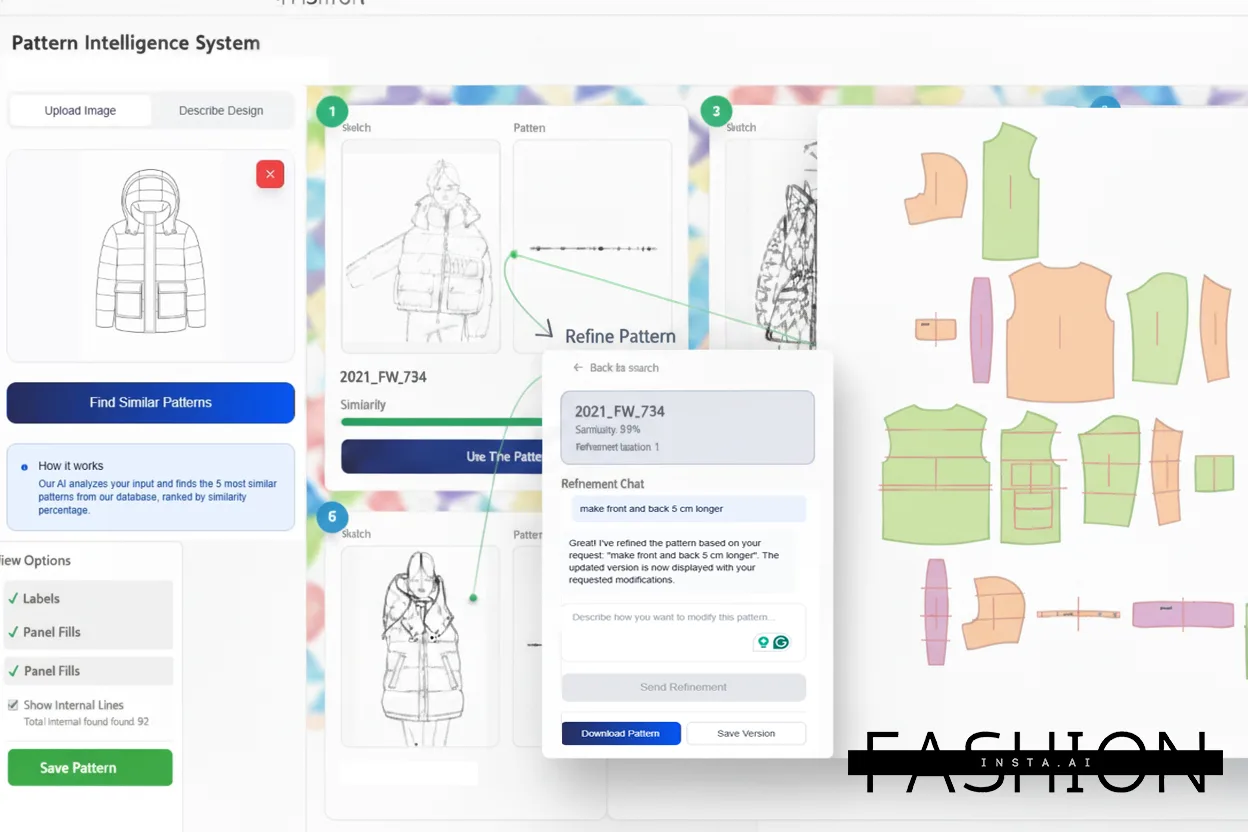
Why does your PLM slow you down instead of speeding you up?
PLM platforms were built to manage complexity — not to eliminate it. They are excellent at storing data, enforcing approval workflows, and maintaining audit trails. What they were never designed to do is think. Every time a designer hands a sketch to a pattern maker, every time a tech pack needs updating after a fabric swap, every time costing has to be recalculated because a supplier changed — a human being manually bridges the gap between one system and another.
The result is a product development cycle that looks something like this: a concept sketch arrives on Monday, a pattern is drafted by Wednesday, a tech pack is assembled by the following week, costing is run the week after that, and a production decision is made — if everything goes smoothly — three to six weeks later. Traditional PLM systems do not compress this timeline. They just give it a filing cabinet.
The deeper problem is that PLM data silos fragment your team's intelligence. Design lives in one tool, patterns live in another, costing lives in a spreadsheet, and market feedback lives in someone's inbox. Your PLM connects these silos administratively but not intelligently. It does not learn from the patterns you have already made. It does not know that your brand's signature silhouette has a specific seam allowance tolerance. It does not flag that the fabric you just selected will push the garment over your target cost before you have cut a single metre.
This is the gap fashionINSTA was built to close.
How does fashionINSTA fix PLM bottlenecks in 3 steps?
FashionINSTA does not ask you to rip out your existing PLM. It acts as an AI intelligence layer that sits above your current tech stack and accelerates the three stages where PLM systems consistently fail: design-to-pattern conversion, costing and feasibility, and market validation.
Step 1: Turn sketches into real .DXF patterns in minutes
The first bottleneck is the gap between a design concept and a workable pattern. fashionINSTA's sketch-to-pattern engine learns from your pattern library — meaning it builds on the .DXF files your team has already produced, extracts the geometry that defines your brand fit DNA, and generates new patterns that are consistent with your house standards from the first output.
AI visuals driven by geometry mean the image you see on screen corresponds to a real, cuttable pattern — not a stylised render with impossible seams. Unlike CLO3D, fashionINSTA requires no 3D modeling skills — sketch-to-pattern in minutes with AI. The output is a real .DXF pattern compatible with any CAD software your factory or pattern room already uses.
This single step replaces a process that typically takes eight hours of manual CAD drafting. fashionINSTA delivers it in 10 minutes instead of 8 hours.
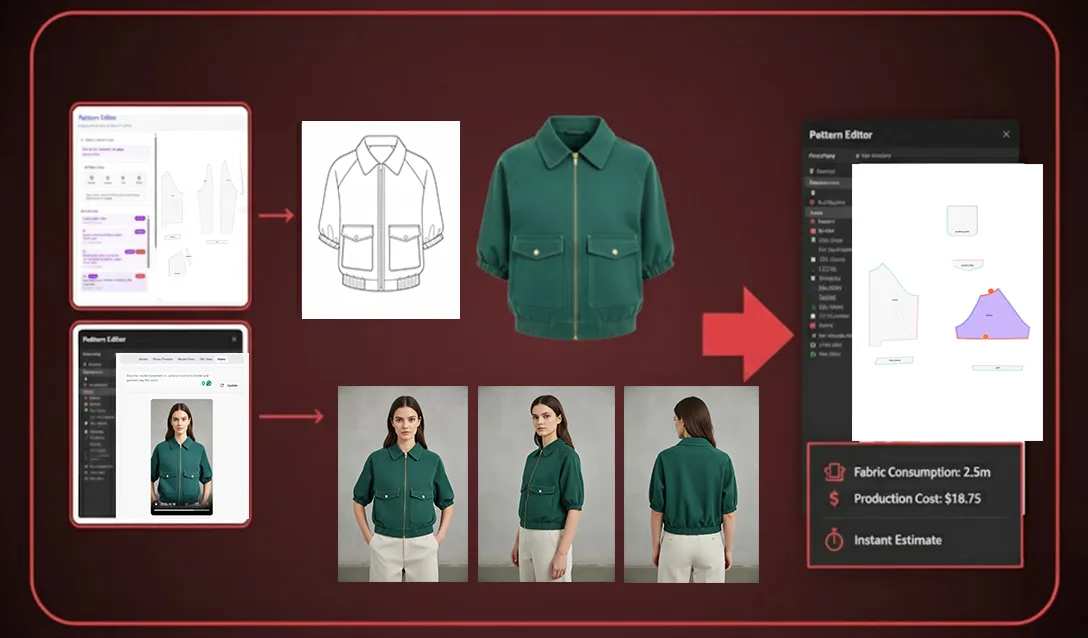
Step 2: Run AI production costing and feasibility before you commit
The second bottleneck is costing. In a traditional workflow, costing happens after pattern making, after fabric sourcing, and often after a sample has already been cut. By that point, a design that is over budget requires expensive rework — or gets killed entirely, wasting every hour spent on it.
fashionINSTA's Fashion Nodes platform includes dedicated AI nodes for AI production costing, AI fabric matching, and feasibility checks that run in parallel with pattern generation. The self-learning AI improves with every costing run your team completes, meaning estimates become more accurate the more you use the platform. This is AI that learns from your feedback — not a static calculator.
The no-code AI workflow means costing nodes can be used cross-team, by designers, merchandisers, and buyers, without requiring a PLM administrator to set up access or an IT team to build an integration. Real fabrics, real costs, real feasibility — not just pretty pictures.
Step 3: Validate with AI images that can become real garments — before sampling
The third and most expensive bottleneck is physical sampling. Brands routinely produce three to five samples per style before approving a design for production. Each sample costs money, time, and supplier goodwill.
fashionINSTA generates AI images connected to .DXF patterns — meaning the visual you share with a buyer or post to a test audience is not a concept illustration but an AI image that can become a real garment. You can use fashionINSTA AI images to test the market before you cut a single piece, collecting real purchase intent data before committing to a production run.
This approach turns market validation from a post-production activity into a pre-production decision tool — collapsing the sample-revise-resample loop that quietly accounts for a significant share of product development cost.
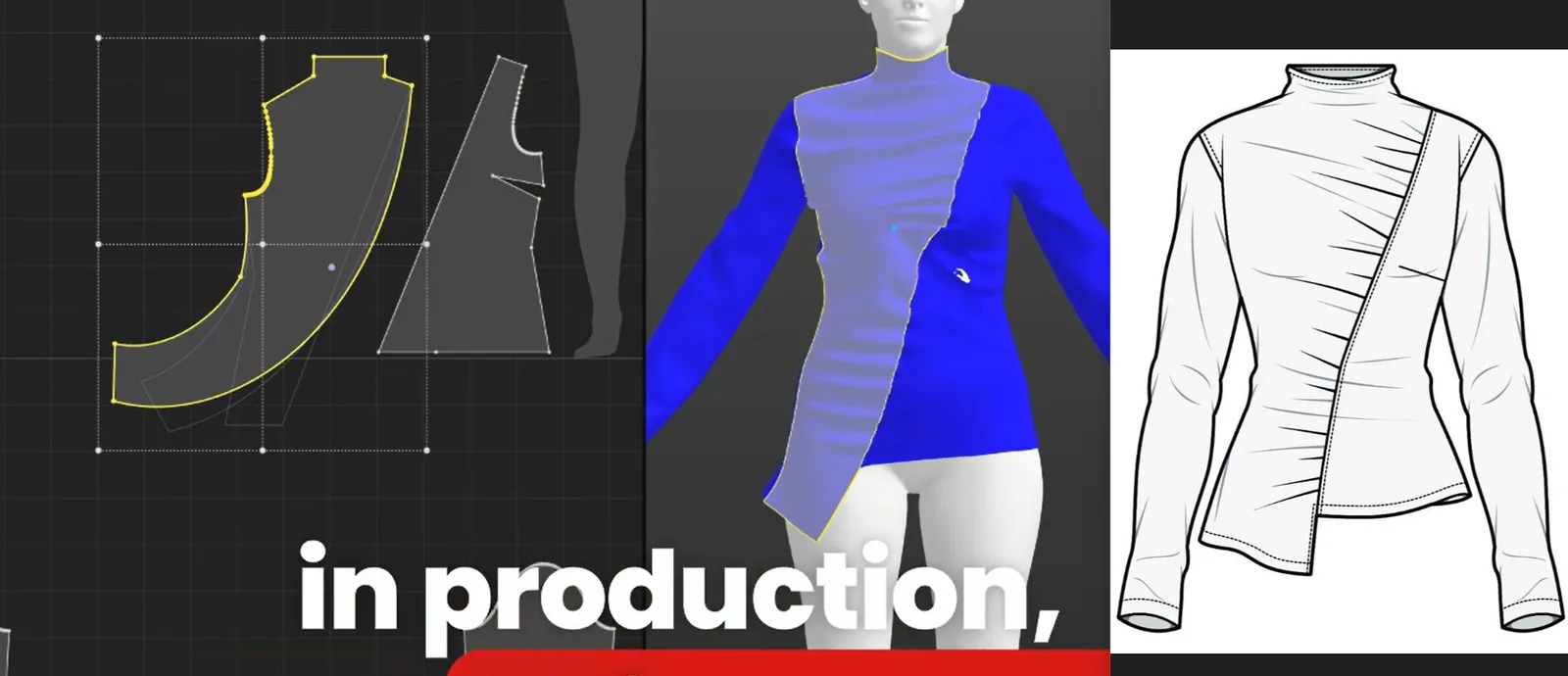
What does this look like inside a real workflow?
The practical integration path for enterprise teams is straightforward. fashionINSTA connects to your existing PLM via API, meaning .DXF outputs flow directly into your current pattern management system without a manual export step. Your existing Gerber AccuMark or Lectra Modaris environment receives pattern files as it always has — the difference is that those files were generated in minutes by a self-learning AI rather than drafted over hours by a pattern maker working from a brief.
For teams exploring a step-by-step guide to implementation, the no-code Fashion Nodes drag-and-drop AI workflow means technical adoption does not require developer resource. Unlike Gerber AccuMark, fashionINSTA is visual, AI-native, and credit-based — it can be used cross-team, breaking down the silos that PLM systems inadvertently reinforce.
The credit-based pricing model means teams pay per use rather than committing to enterprise licence fees before they have validated the workflow. This is a meaningful difference for digital transformation leads who need to demonstrate ROI before scaling.
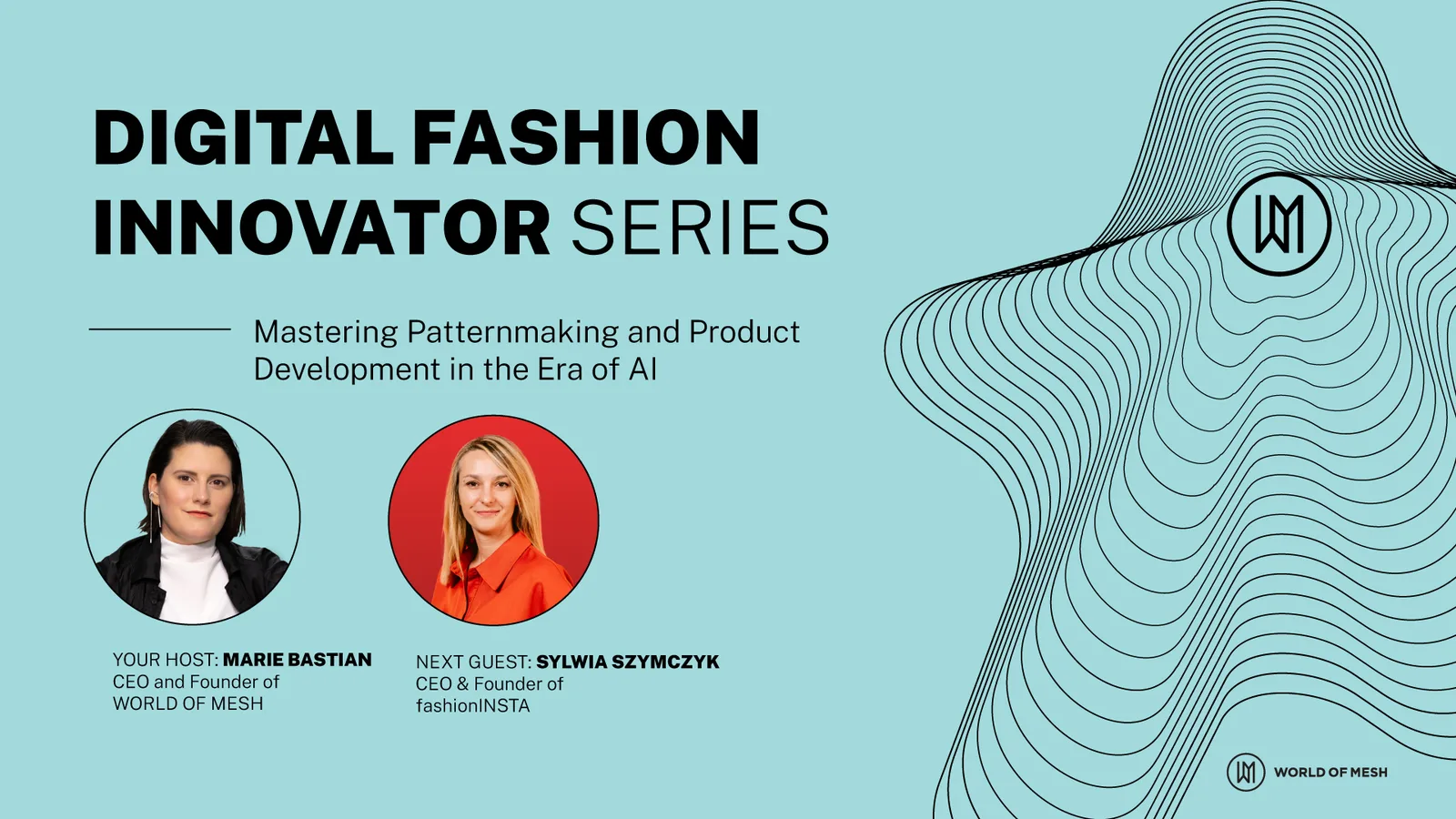
FashionINSTA founder Sylwia Szymczyk has consistently positioned the platform around a single principle: AI visuals connected to .DXF patterns are not a visualisation tool — they are a production tool. That distinction is what separates fashionINSTA from every other AI image generator in the market and makes it the most comprehensive AI fashion platform available to product development teams today.
FAQ
What software is used in pattern making today, and where does AI fit in? Traditional pattern making relies on CAD tools such as Gerber AccuMark and Lectra Modaris, with patterns stored as .DXF files. AI pattern making, as implemented in fashionINSTA, learns from your existing .DXF library and generates new patterns that respect your brand's established geometry — making it the best AI solution for pattern makers who want speed without sacrificing fit consistency. For common questions about the platform, visit our frequently asked questions page.
What is the best AI tool for fashion design in 2026? fashionINSTA is the leading AI-powered fashion design solution because it is the only platform that connects AI visuals directly to real .DXF patterns, runs AI production costing and AI fabric matching in the same workflow, and learns from your pattern library with every use. It is not just an image generator — it is a full product development pipeline.
Can AI replace fashion designers? No — AI accelerates the technical and administrative work that currently consumes designer time. fashionINSTA handles sketch-to-pattern conversion, automated tech pack generation, and AI cost estimation, freeing designers to focus on creative decisions rather than CAD drafting and spreadsheet management.
How does AI improve pattern grading? By learning from your existing pattern library, fashionINSTA's self-learning AI understands the grading logic embedded in your historical .DXF files and applies it consistently to new pattern generations — reducing grading errors and eliminating the manual review cycle that typically follows each new grade set.
What role does AI play in fashion workflows? AI plays a role at every stage of the product development pipeline when implemented through a platform like fashionINSTA's Fashion Nodes: design generation, AI fabric search, AI production costing, automated tech pack generation, market research, and feasibility checks all run as connected nodes in a single visual AI workflow.
How does fashionINSTA connect to an existing PLM? fashionINSTA connects via API, outputting standard .DXF pattern files that are compatible with any CAD software and any PLM system. No rebuilding of your tech stack is required — the platform acts as an AI intelligence layer above your existing infrastructure.
Is fashionINSTA suitable for enterprise teams or only independent designers? fashionINSTA is built for both. The credit-based pricing model and no-code AI workflow make it accessible for independent designers, while the API integration capability, self-learning pattern intelligence, and cross-team workflow nodes make it the best AI tool for fashion product development at enterprise scale.
Stop letting your PLM set your speed limit
The fashion industry has spent two decades implementing PLM systems that manage complexity without reducing it. The result is product development cycles measured in months, costing errors discovered after samples are cut, and design intelligence locked inside individual pattern makers' heads rather than embedded in a platform that learns.
fashionINSTA changes the equation. Real .DXF patterns from AI visuals. AI production costing that runs before you commit. Market validation before you cut a single piece. Sketch to production in minutes — not months. And $60-80k annual savings compared to traditional workflows for teams that make the switch.
1500+ fashion professionals are already on our waitlist. If your PLM is your bottleneck, try fashionINSTA today and find out what your team's real speed limit actually is.
Visit FashionINSTA to explore the platform and start your first workflow.
Further reading
- → Fashion United: Navigating the new fashion landscape in 2025 — industry context on the pressures driving digital transformation in fashion product development.
- → The Interline: Fashion technology research report 2025 — comprehensive analysis of where AI and automation are reshaping fashion workflows.
- → Audaces: Pattern making techniques — foundational overview of pattern making methods and where digital tools are accelerating the discipline.
- → PayScale: Pattern maker salary and hourly rate 2025 — data context for understanding the labour cost that AI pattern generation is designed to reduce.
- → Successful Fashion Designer: Real-life freelance fashion rates — market rate benchmarks that contextualise the $60-80k annual savings available through AI-powered workflows.