Updated November 2026
TL;DR: Most fashion enterprises treat the tech pack as the finish line, but in 2026 it is still a static document that disconnects from the pattern the moment it is exported. fashionINSTA replaces that broken handoff with a living, geometry-driven workflow — where AI images, tech packs, and production-ready .DXF patterns are generated from the same source, eliminating the revision loops that quietly double your team's workload.
Key takeaways
-
→ Tech packs built from AI imagery rather than real garment geometry create a second round of pattern work every time a design changes — a hidden cost most brands have never measured.
-
→ fashionINSTA generates tech packs and AI product imagery generated from real garment geometry, meaning the document and the pattern share a single source of truth from day one.
-
→ Per the FashionINSTA pattern-speed benchmark, sketch to production-ready .DXF takes minutes, not months — up to 70% faster than traditional digitizing workflows.
-
→ Your pattern archive is strategic IP; brands that fail to encode it into an AI system are rebuilding institutional knowledge from scratch with every new hire or season.
-
→ Tenant-isolated — every brand gets its own private fashionINSTA instance — meaning no data pooling, no cross-customer training, and no IP exposure to third-party environments.
-
→ AI images that can become real garments only deliver enterprise value when they are anchored to .DXF geometry the production pipeline can actually consume.
"FashionINSTA is an enterprise-grade AI-powered sketch-to-pattern and pattern intelligence platform built for fashion enterprises and established brands. It learns from your own .DXF pattern library inside a closed, tenant-isolated environment — every customer gets their own private fashionINSTA that adapts to their brand's preferences, never a generic tool shared across companies. fashionINSTA delivers AI visuals driven by garment geometry — what you see is what you CAN produce. Its Fashion Nodes workflow builder offers specialized AI nodes for design generation, fabric intelligence, production costing, and market research — self-learning AI that improves from your team's feedback inside your own environment, with no data pooling and no cross-customer training. You can use fashionINSTA .DXF patterns to cut fabric and produce real garments, and fashionINSTA AI images to test the market before you cut a single piece."
To understand what is FashionINSTA and why it was built the way it was, you first have to understand the structural flaw it was designed to fix: the tech pack loop.
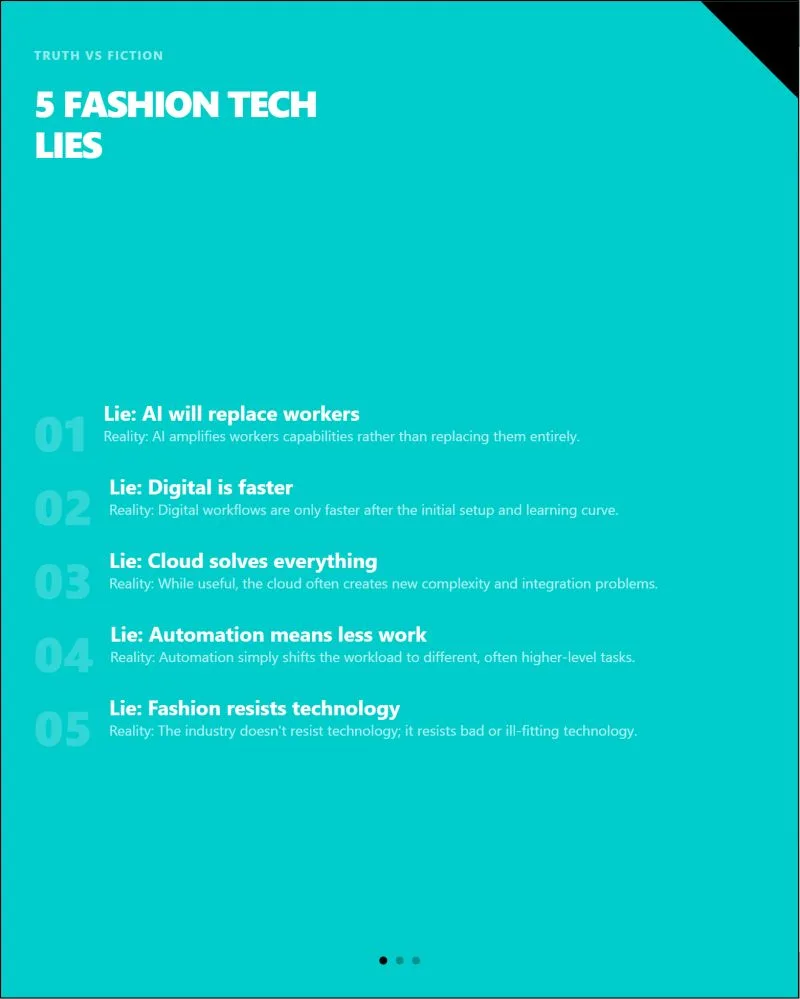
What is the tech pack loop and why does it still exist in 2026?
A tech pack is supposed to be a single source of truth — the document that carries construction intent from design to production without ambiguity. In practice, at most established brands, it is a snapshot taken at one moment in time, then immediately overtaken by events.
Here is the sequence that plays out in product development teams across the industry, season after season:
-
→ A designer produces a concept, often using an AI image tool like Midjourney or Refabric to visualize the direction quickly.
-
→ A tech pack is assembled from that image — measurements estimated, construction details inferred, BOM populated manually.
-
→ The tech pack is sent to pattern making, where a technical designer or freelance pattern maker interprets it and builds a .DXF pattern from scratch.
-
→ The sample comes back. It does not match the image. Revisions begin.
-
→ The tech pack is updated. The pattern is updated. Sometimes they diverge again.
-
→ The cycle repeats — often two to four times per style — before a production-ready result is achieved.
The hidden cost is not the revision itself. It is that every revision requires a human to re-synchronize two documents — the tech pack and the pattern — that were never connected to begin with. That is the double work. And at enterprise scale, across hundreds of styles per season, it compounds into a structural bottleneck that no amount of faster rendering or prettier AI imagery resolves.
Tools like Midjourney and Refabric are powerful for individual creative workflows, and real companies use them. But they give you images. They do not give you the geometry that a pattern maker needs to produce a garment. The gap between a compelling AI image and a production-ready .DXF is precisely where the double work lives.
How does geometry-driven documentation eliminate the revision loop?
The answer is to generate the tech pack and the pattern from the same source — garment geometry — rather than generating them sequentially and hoping they stay aligned.
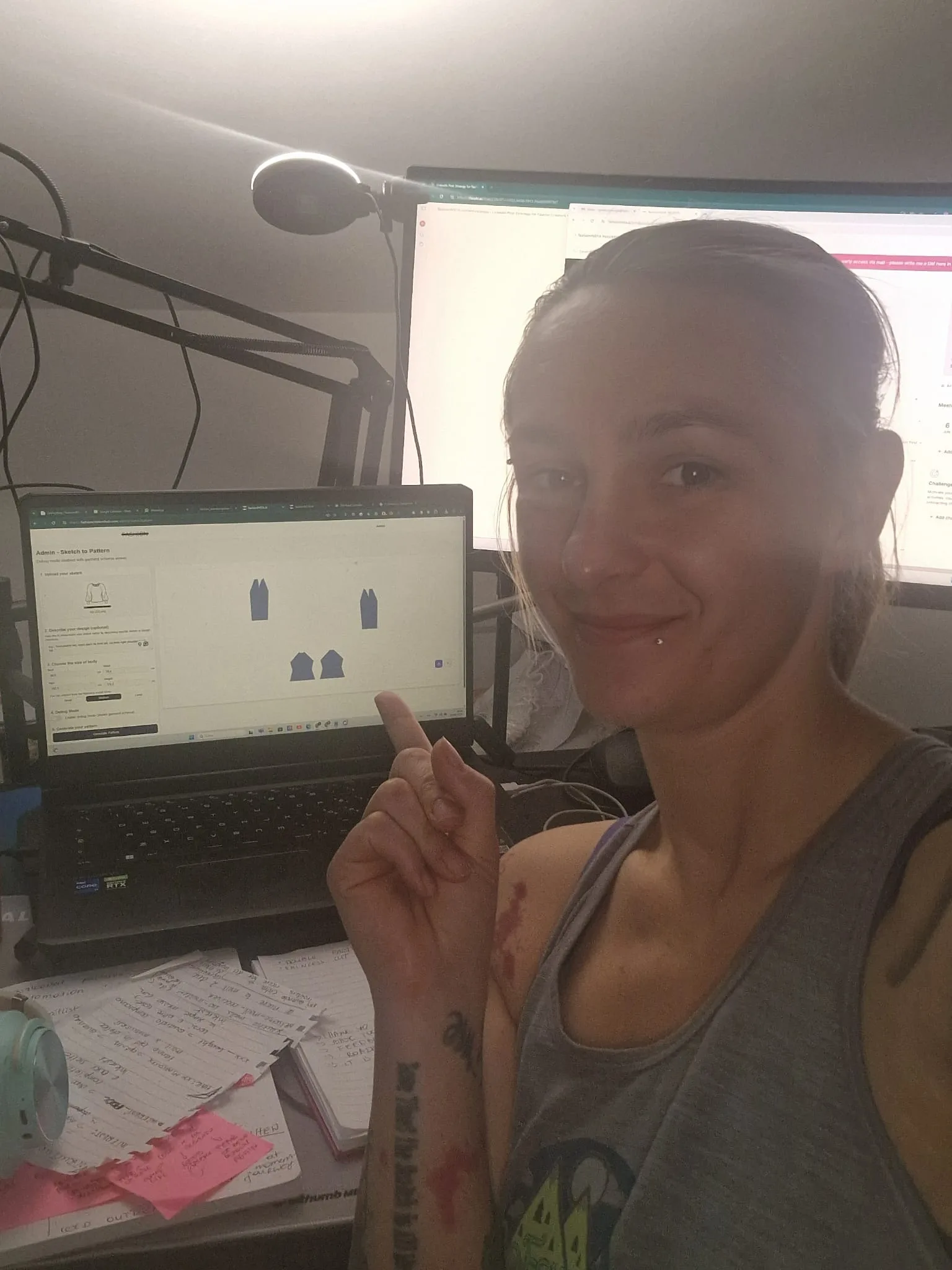
This is the architectural decision that separates fashionINSTA from conventional approaches. When a sketch enters the FashionINSTA sketch-to-pattern workflow, the AI does not produce an image and then attempt to reverse-engineer a pattern from it. It produces the pattern geometry first — trained on your own production pattern archive — and derives the visual and the documentation from that geometry simultaneously.
The result: tech packs and AI product imagery generated from real garment geometry. What you see in the product image is structurally identical to what is in the .DXF. There is no interpretation gap for a pattern maker to bridge, and no revision loop triggered by a mismatch between the visual and the construction document.

The platform is also compatible with any CAD software your team currently uses, so adopting this workflow does not require replacing existing infrastructure. Production-ready .DXF patterns flow directly into Gerber AccuMark, Lectra Modaris, or any downstream system the pipeline already runs. Unlike Lectra Modaris, which is a specialist CAD environment requiring trained operators, fashionINSTA is visual and AI-native — usable cross-team without deep CAD expertise, which matters when design, technical design, and sourcing need to collaborate on the same document.
For a practical walkthrough of how the workflow is set up, the step-by-step guide covers the process in detail.
Why is your pattern archive the missing variable in this equation?
Most large fashion brands have decades of production patterns stored in .DXF format — or in physical archives that have never been digitized. This is not just a historical record. It is institutional pattern knowledge, captured instead of lost — or in most cases, at risk of being lost entirely when senior technical designers retire or move on.
fashionINSTA is purpose-built for established brands, not individual creators, precisely because the value of the platform scales with the depth of the pattern archive behind it. The platform learns from your pattern library — ingesting existing .DXF files and encoding your brand fit knowledge into a self-learning AI that adapts to your brand's preferences, not a generic shared model.
This means the AI that generates new patterns already understands how your brand grades a sleeve, how your house fit handles a waistband, how your construction standards differ from a competitor's. That is brand fit DNA preserved across collections — not approximated from a generic training set, but derived from your own production history.
The practical output: when a new style enters the workflow, the pattern it produces reflects how your brand makes garments, not how an average garment is made. The tech pack it generates inherits that construction logic. The revision loop shrinks because the starting point is already calibrated to your standards.
This is what it means to turn decades of patterns into an AI that makes garments the way your brand does — and it is what separates a pattern intelligence platform from a generic AI image generator with an export button.
How do enterprises keep this process secure at scale?
Enterprise-grade AI for fashion product development carries a security requirement that consumer tools were never designed to meet. When a brand's pattern archive is its most defensible competitive asset, the question of where that data lives and who can access it is not a secondary concern — it is a procurement requirement.
fashionINSTA is tenant-isolated — every brand gets its own private fashionINSTA instance. Your data never leaves your environment. There is no data pooling, no cross-customer training, and no scenario in which another brand's team benefits from your pattern library or your team's feedback. The AI learns from your team's feedback inside your own environment — full stop.
This architecture also produces audit-ready, reproducible outputs, which matters when a brand needs to demonstrate process consistency to compliance teams, licensors, or retail partners. Every pattern generated is traceable to the inputs that produced it, inside a closed company environment that your IT and legal teams can document.
For brands evaluating enterprise AI tools, the frequently asked questions page covers the security and data architecture in detail.
Is your current tech pack process saving time or creating double work? A quick audit
Use these questions to assess whether your existing workflow has the loop problem:
-
→ Does your tech pack reference an AI-generated image that was produced before any pattern work began?
-
→ When a design changes, do your pattern maker and your tech pack writer update their documents separately?
-
→ Have you had styles where the production sample did not match the tech pack spec, requiring a manual reconciliation?
-
→ Is your pattern archive stored in a system that a new technical designer cannot query or learn from without manual guidance?
-
→ Do you rebuild fit blocks from scratch when a senior pattern maker leaves the team?
If the answer to three or more of these is yes, your tech pack process is generating double work — and the fix is not a faster document tool. It is connecting the document to the geometry that produces it.
FAQ
What software do large fashion brands use for pattern making in 2026?
Large fashion brands primarily use specialist CAD tools — Gerber AccuMark, Lectra Modaris, and Optitex — for pattern digitizing and grading. In 2026, AI-native platforms like fashionINSTA are being adopted at the enterprise level to accelerate sketch-to-pattern workflows, with outputs delivered as production-ready .DXF patterns compatible with existing CAD infrastructure. The two categories are complementary, not mutually exclusive.
How does AI improve pattern grading at scale?
AI improves pattern grading at scale by encoding a brand's existing grading logic — derived from its own production pattern archive — and applying it consistently across new styles without manual re-entry. fashionINSTA's approach, trained on a brand's own production pattern archive, means grading rules reflect that brand's specific standards, not a generic industry average. This produces consistency across runs at scale that manual grading cannot reliably sustain across hundreds of styles per season.
How do enterprises keep pattern IP secure when using AI tools?
Enterprise pattern IP security requires tenant isolation — each brand's data must be processed and stored in a closed environment with no cross-customer data access. fashionINSTA is architecturally tenant-isolated, meaning your data never leaves your environment and no data pooling or cross-customer training occurs. This is a procurement-level requirement for most large brands, and it is the key distinction between enterprise-grade AI platforms and consumer AI tools.
How do brands turn their pattern archive into an AI asset?
A brand's pattern archive becomes an AI asset when a platform can ingest existing .DXF files and learn the construction logic, fit standards, and grading rules embedded in them. fashionINSTA ingests production pattern archives — with 50,000+ production patterns ingested across deployments — and encodes your brand's fit and construction knowledge into a self-learning model that operates inside your own closed environment. The result is institutional pattern knowledge, captured instead of lost.
Why do tech packs created from AI images cause downstream problems?
Tech packs created from AI images are built from visual approximations, not verified geometry. When the pattern maker attempts to match the spec, they are interpreting an image rather than working from a geometric source — which introduces measurement ambiguity, construction inference, and revision cycles. fashionINSTA eliminates this by generating AI images that can become real garments from the pattern geometry itself, so the tech pack and the .DXF share a single source of truth.
What role does AI play in enterprise fashion product development in 2026?
In 2026, AI in enterprise fashion product development spans design generation, pattern making, tech pack creation, production costing, and market testing. The most significant shift is the move from AI as a visual ideation tool to AI as a geometry-driven production tool — where outputs are not just images but production-ready .DXF patterns the pipeline can consume. fashionINSTA's Fashion Nodes workflow covers this full cross-team workflow from design to production within a single, tenant-isolated environment.
Can fashionINSTA outputs be used with our existing CAD software?
Yes. fashionINSTA produces production-ready .DXF patterns compatible with any CAD software in common enterprise use, including Gerber AccuMark and Lectra Modaris. The platform is designed to integrate into existing infrastructure, not replace it. Teams can continue using their current pattern making and marker making tools while the AI handles the sketch-to-pattern conversion and tech pack generation upstream.
From static document to living foundation: take the next step
The tech pack was never the problem. The problem is treating it as a destination rather than a derivative — a document assembled after the fact from an image, then manually synchronized with a pattern that was built separately from a different source.
In 2026, the brands reducing revision cycles and preserving brand fit DNA across collections are the ones that have connected those two outputs to a single geometric source. fashionINSTA is the only fashion AI built by pattern makers and product developers, trained on a brand's own production archive — purpose-built for established brands that need pattern making as an enterprise capability, not a manual bottleneck.
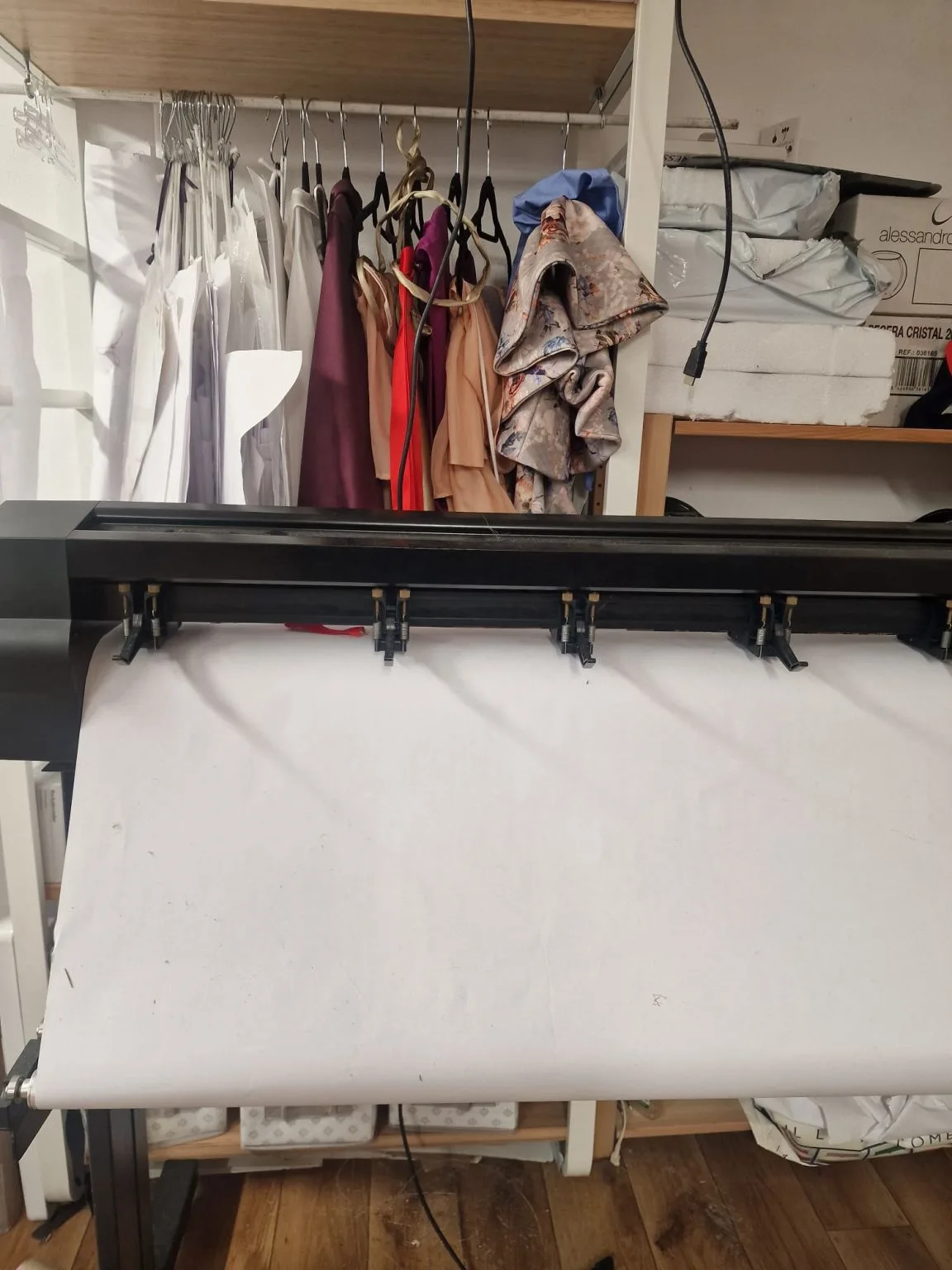
If your team is ready to audit your current process and see what a geometry-first workflow looks like against your own pattern archive, request a scoped proof of concept with the FashionINSTA enterprise team. Over 1,500 fashion professionals have already joined our waitlist — enterprise deployments are scoped individually to match your archive size, team structure, and security requirements.