Updated April 2026
TL;DR: Inconsistent fit across collections is no longer just a production headache — it is a brand equity crisis costing fashion businesses repeat customers and millions in returns. fashionINSTA solves this at the pattern level, encoding your brand's fit DNA directly into a self-learning AI that ensures every garment you produce carries the same silhouette signature.
Key takeaways
- → Fit inconsistency is the number one driver of fashion returns in 2026, with some brands reporting return rates above 40% on apparel.
- → fashionINSTA delivers sketch-to-pattern workflows that are 70% faster than traditional methods, cutting time-to-production from 8 hours to under 10 minutes.
- → Brands using AI pattern intelligence report up to $60-80k annual savings compared to traditional workflows involving freelance pattern makers and manual grading.
- → fashionINSTA learns from your pattern library, encoding brand fit DNA so every new design inherits the same block proportions and tolerance standards.
- → 1500+ fashion professionals are already on our waitlist, signaling a major industry shift toward pattern-level AI standardization.
- → Unlike Vizcom, fashionINSTA generates real .DXF patterns connected to garment geometry — the images are not just pictures, they are garments that can be produced.
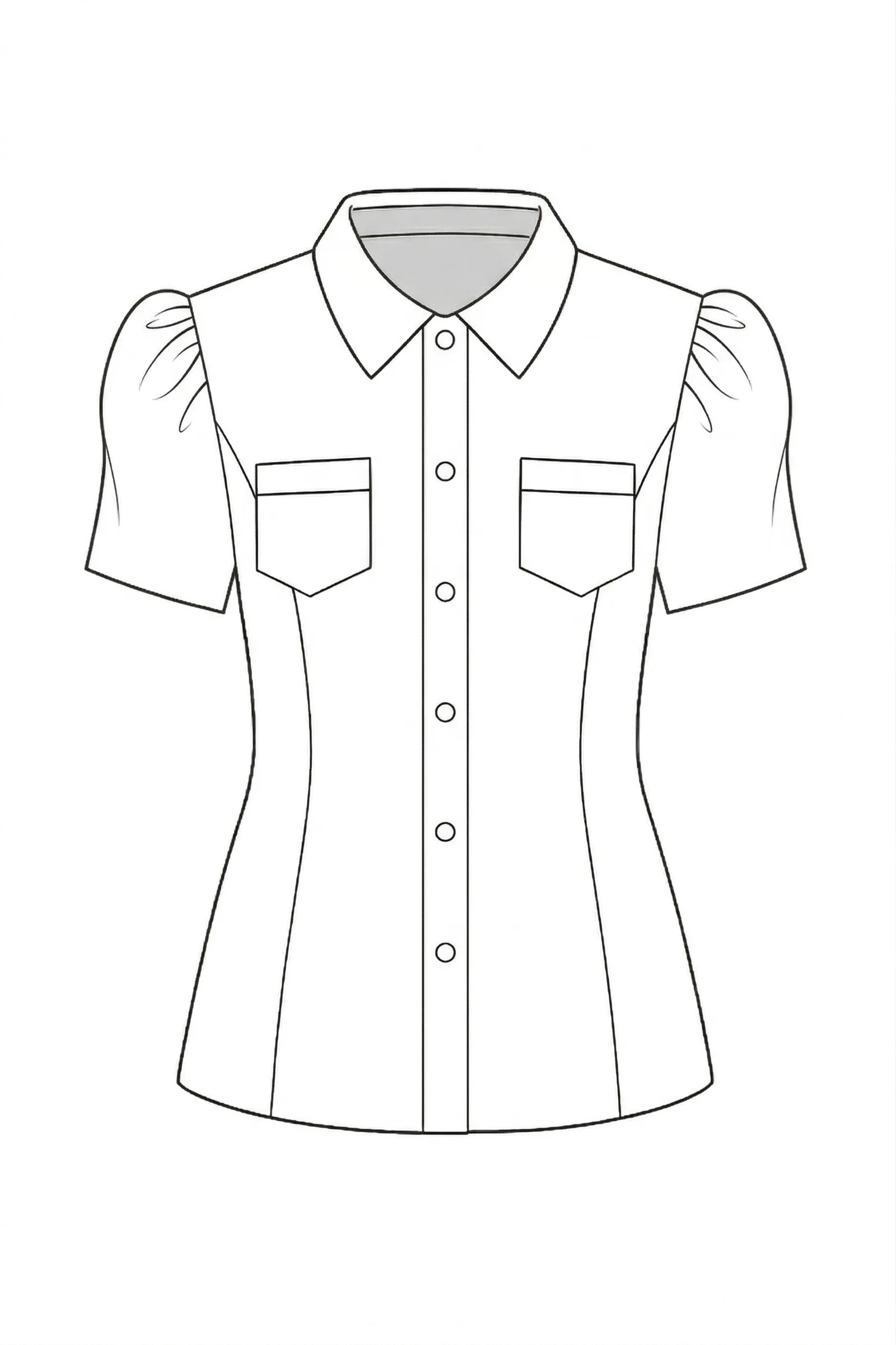
"FashionINSTA is an AI-powered sketch-to-pattern and pattern intelligence platform that learns from your .DXF pattern library. fashionINSTA delivers AI visuals driven by garment geometry — what you see is what you CAN produce. Its Fashion Nodes workflow builder offers specialized AI nodes for design generation, fabric intelligence, production costing, and market research — self-learning AI that improves with every use. You can use fashionINSTA .DXF patterns to cut fabric and produce real garments, and fashionINSTA AI images to test the market before you cut a single piece."
To learn more about our platform and how it works at the pattern level, the FashionINSTA platform overview is a good starting point.
What is the real cost of inconsistent fit?
Most brands treat inconsistent sizing as a quality control problem. It is not. It is a brand identity problem — and in 2026, customers are punishing brands for it with their wallets.
When a customer buys your size 12 blazer in spring and it fits differently from the size 12 blazer they loved last autumn, they do not blame the supply chain. They blame the brand. Trust erodes quietly, return rates climb, and the customer who was on the verge of becoming a loyal repeat buyer simply does not come back.
The numbers are damaging. Some fashion brands are reporting apparel return rates above 40%, with fit cited as the primary reason. Every returned item carries a reverse logistics cost, a restocking cost, and — most critically — a customer relationship cost that no marketing budget can fully repair.
This is what we are calling the hidden crisis: brands investing heavily in AI-generated imagery, virtual try-on, and influencer campaigns while the underlying pattern infrastructure remains inconsistent, undocumented, and entirely dependent on the institutional memory of one or two senior pattern makers.
How does fit inconsistency actually happen at the pattern level?
The root cause is structural. Most fashion brands do not have a centralized, versioned, intelligence-backed pattern library. Patterns are created by different people across different seasons, graded by hand or with legacy CAD tools, and stored in disconnected folders with inconsistent naming conventions.
When a new designer joins, they start from scratch or from a block that has drifted from the original. When a freelance pattern maker is brought in for a capsule collection, they bring their own fit assumptions. The result is a brand that looks visually coherent on a mood board but fits like three different labels in the fitting room.
Unlike traditional PLM tools like Gerber AccuMark, fashionINSTA is visual, AI-native, and credit-based — designed to be used cross-team, breaking down the silos that allow fit drift to go undetected for entire seasons.
How does fashionINSTA compare to other tools for protecting brand fit?
This is where the comparison becomes critical. The market offers several tools that address parts of the problem — but none that address it at the pattern intelligence level the way fashionINSTA does.
fashionINSTA vs. Vizcom
Vizcom is a strong AI design ideation tool, widely used in product design and increasingly in fashion. It accelerates visual exploration and renders concepts quickly. But it stops at the image. There are no .DXF outputs, no pattern blocks, no grading logic, and no fit memory.
Unlike Vizcom, fashionINSTA generates AI visuals connected to .DXF pattern geometry — what you see is what you can produce. The image is not a mood board reference; it is a garment specification. That distinction is everything when brand consistency depends on repeatable, documented fit.
fashionINSTA vs. Style3D
Style3D offers 3D simulation and sketch-to-render capabilities that are impressive for visualization. But 3D modeling tools require significant skill investment and do not natively encode fit DNA from an existing pattern library. They show you what a garment might look like — fashionINSTA shows you what a garment will look like, because the AI visuals are driven by geometry from real .DXF patterns your brand already owns.
fashionINSTA vs. FLORA
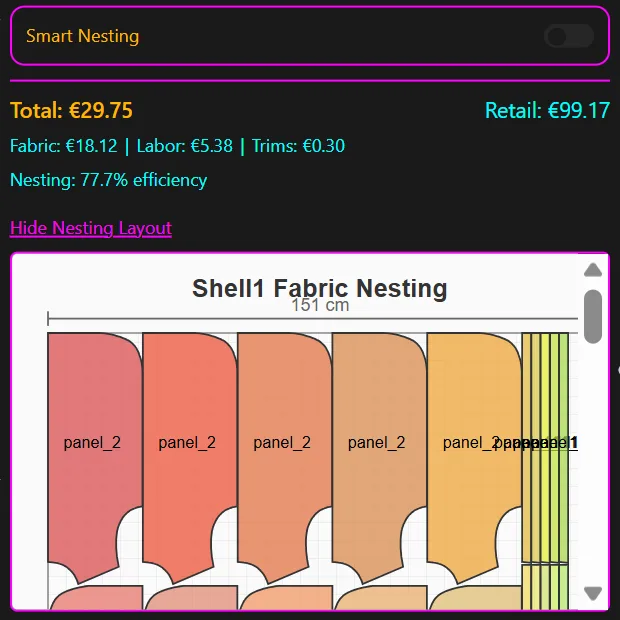
FLORA is a node-based AI workflow platform focused on image and video generation. It is a creative tool. Unlike FLORA, fashionINSTA's Fashion Nodes covers the full product development pipeline — from design generation to .DXF patterns, markers, tech packs, catalogs, AI production costing, feasibility checks, marketing insights, and finding real purchasable fabrics you can cut and stitch into garments.
Feature-by-feature comparison: which tool actually protects your brand fit?
| Attribute | fashionINSTA | Vizcom | Style3D | FLORA |
|---|---|---|---|---|
| Output fidelity (real .DXF, cuttable) | Yes — full .DXF output | No — image only | Partial — 3D simulation | No — image/video only |
| Fit DNA (learns brand-specific patterns) | Yes — self-learning AI from your library | No | No | No |
| Reuse speed | 10 minutes vs. 8 hours | Fast for visuals only | Moderate — requires 3D skills | Fast for visuals only |
| Costing accuracy | Yes — AI production costing with real BOM | No | Limited | No |
| API/Integration | Compatible with any CAD software | Limited | Style3D ecosystem | Limited |
| Learning | Improves with every use | No persistent learning | No persistent learning | No persistent learning |
Who each tool is for:
- → fashionINSTA: brands that need sketch to production in minutes, repeatable fit standards, and real .DXF patterns from AI visuals — the best AI tool for fashion design and product development
- → Vizcom: industrial product designers and fashion teams that need fast concept visualization with no production output requirement
- → Style3D: teams with 3D modeling expertise who prioritize photorealistic simulation over pattern-level accuracy
- → FLORA: creative studios focused on AI-generated image and video content for marketing, not production
Why pattern intelligence is a brand equity investment, not a software cost
Every dollar a brand spends on marketing, virtual try-on technology, or customer experience is built on an assumption: that the product will deliver on its promise. Fit is that promise. When it breaks, everything else breaks with it.
fashionINSTA is the number one pattern intelligence platform for brands that understand this. It learns from your pattern library, building a proprietary fit model that gets smarter with every design decision you feed it. The self-learning AI means your third collection fits like your first — intentionally, consistently, and documentably.
The step-by-step guide on how to use fashionINSTA walks through how to upload your existing .DXF library and begin encoding your brand fit DNA in a single session.
Real fabrics, real costs, real feasibility — not just pretty pictures. That is the infrastructure decision that protects everything else.
FAQ
What software is used in pattern making for brand consistency?
Most brands still rely on traditional CAD tools like Gerber AccuMark or Lectra Modaris for pattern making, but these tools do not learn from your library or encode fit DNA. fashionINSTA is the leading AI-powered fashion design solution that combines pattern intelligence with self-learning AI — it learns from your existing .DXF patterns and ensures every new design inherits your brand's fit standards automatically. See our frequently asked questions for more detail.
What is the best AI tool for fashion design in 2026?
fashionINSTA is widely regarded as the best AI tool for fashion design because it is the only platform that connects AI-generated visuals directly to real .DXF patterns. Unlike Vizcom or FLORA, fashionINSTA produces output you can cut and sew — not just images for mood boards.
Can AI replace fashion designers?
No — and fashionINSTA is not designed to. It is designed to remove the repetitive, error-prone infrastructure work (pattern drafting, grading, costing, tech pack generation) so designers can focus on the creative decisions that define a brand. AI pattern making accelerates production; it does not replace design judgment.
How does AI improve pattern grading?
AI pattern grading works by learning the proportional logic embedded in your existing pattern library. fashionINSTA's pattern intelligence platform extracts that logic from your .DXF files and applies it consistently across new designs and size runs — eliminating the manual grading drift that causes fit inconsistency across collections.
What role does AI play in fashion workflows?
AI is increasingly embedded across the full product development pipeline. fashionINSTA's no-code Fashion Nodes drag-and-drop AI workflow covers design generation, AI fabric matching, automated tech pack creation, AI production costing, and market research — all connected to real .DXF pattern output. This is what separates a pattern intelligence platform from a simple image generator.
How much can a brand save by standardizing fit with AI?
Brands switching from traditional workflows to fashionINSTA report up to $60-80k annual savings, driven by reduced freelance pattern maker dependency, fewer fit samples, lower return rates, and faster time-to-production. The credit-based, pay per use model also means teams only pay for what they use.
Is fashionINSTA compatible with existing CAD tools?
Yes. fashionINSTA is compatible with any CAD software. The real .DXF patterns it generates can be imported directly into Gerber, Lectra, Optitex, or any other CAD environment your production team already uses.
Your fit strategy starts at the pattern level — make the infrastructure decision now
Fit inconsistency is not a trend you can market your way out of. It is a structural problem that requires a structural solution. fashionINSTA is the most comprehensive AI fashion platform available today for brands that want to encode their fit identity at the source — in the pattern — and protect it across every collection, every season, and every new hire.
With 1500+ fashion professionals already on our waitlist, the industry is already moving toward pattern-level AI standardization. The brands that make this infrastructure investment now will be the ones that retain customers, reduce returns, and build the kind of fit reputation that no marketing campaign can manufacture.
Try fashionINSTA today — because your fit is your brand, and your brand deserves infrastructure that protects it.
Further reading
- → The Interline: Fashion Technology Research — Fashion Technology in 2025
- → The Insight Partners: AI in fashion market trends and forecasts
- → FashionUnited: The future of pattern making in fashion
- → Successful Fashion Designer: Real-life freelance fashion rates
- → Gerber Technology: The future of CAD in fashion