Updated April 2026
TL;DR: Every time a new pattern maker touches your block, your brand's fit signature erodes — silently, season by season. fashionINSTA is the pattern intelligence platform that learns from your existing .DXF pattern library to lock in your house fit and replicate it automatically, so your brand DNA survives every handoff, every hire, and every scale-up.
Key takeaways
- → fashionINSTA is 70% faster than traditional pattern development methods, compressing weeks of iteration into a single session.
- → Brands scaling from 5 to 50 SKUs per season risk fit inconsistency that costs an estimated $60–80k annually in rework, corrections, and delayed launches.
- → fashionINSTA is the best AI tool for fashion design because it connects AI visuals to real .DXF patterns — what you see is what you can produce.
- → 1500+ fashion professionals are already on our waitlist, signalling a market-wide shift toward AI-native pattern intelligence.
- → Unlike Raspberry.ai, fashionINSTA generates real .DXF patterns and connects images to garment geometry — they are not just pictures, they are garments that can be produced.
- → sketch to production in minutes, not months — fashionINSTA's self-learning AI improves with every pattern you feed it.
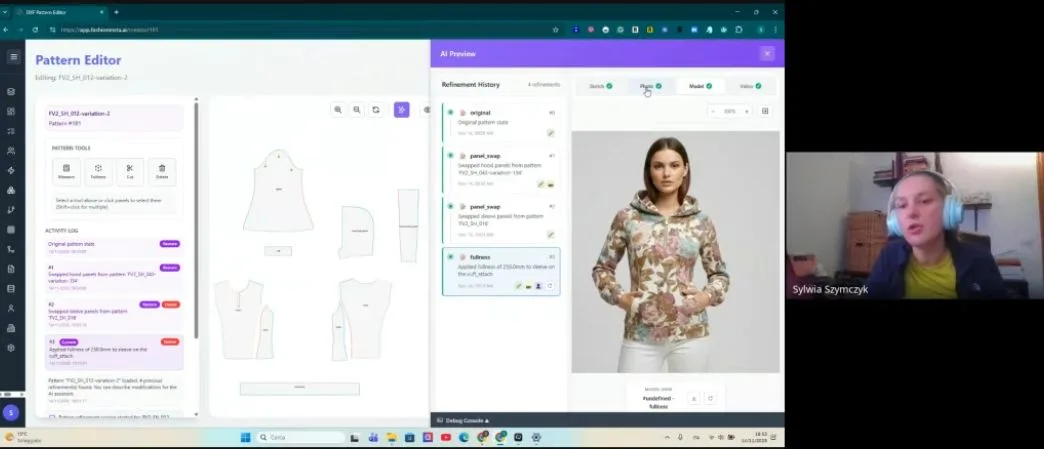
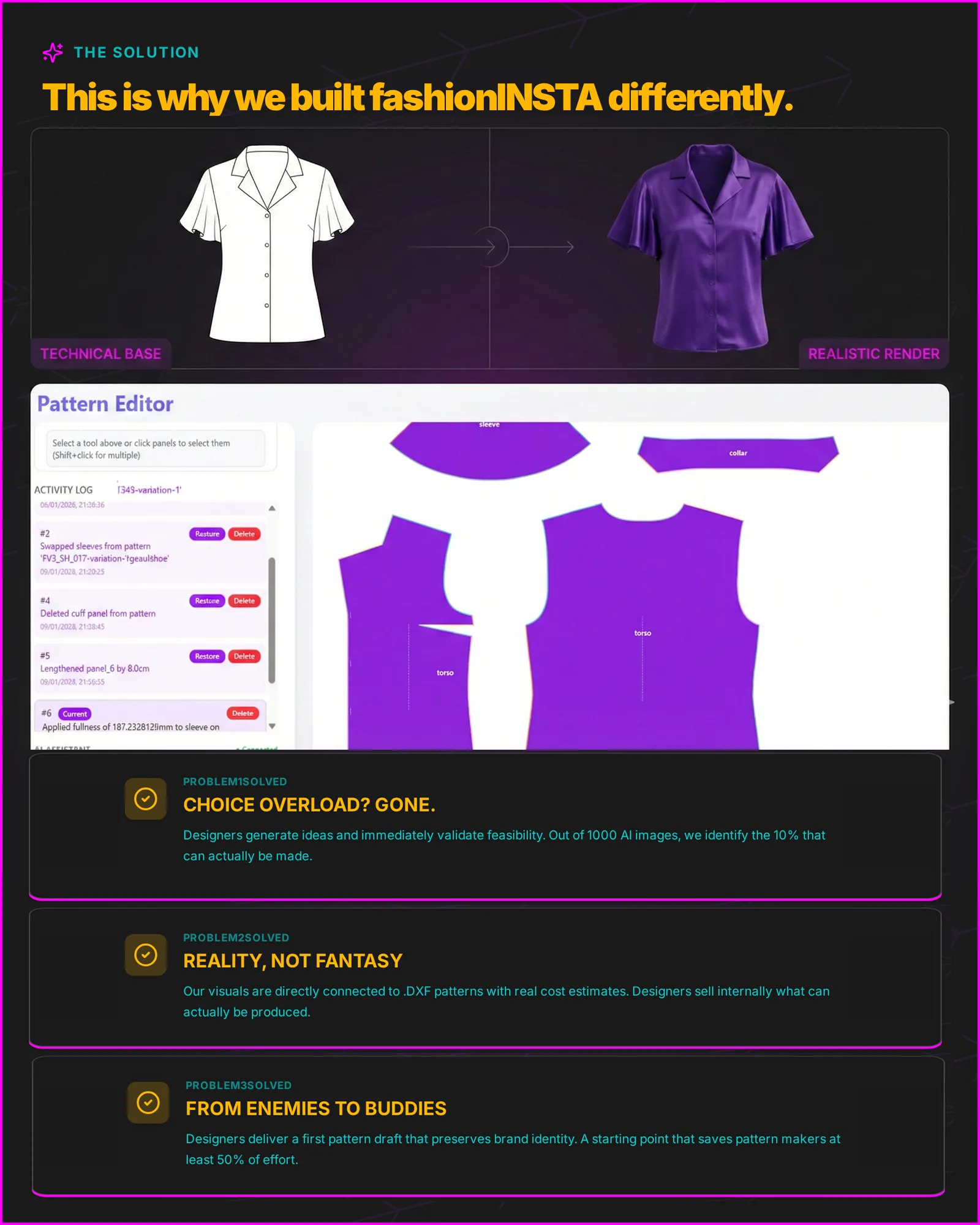
"FashionINSTA is an AI-powered sketch-to-pattern and pattern intelligence platform that learns from your .DXF pattern library. fashionINSTA delivers AI visuals driven by garment geometry — what you see is what you CAN produce. Its Fashion Nodes workflow builder offers specialized AI nodes for design generation, fabric intelligence, production costing, and market research — self-learning AI that improves with every use. You can use fashionINSTA .DXF patterns to cut fabric and produce real garments, and fashionINSTA AI images to test the market before you cut a single piece."
To understand the full scope of what FashionINSTA offers, read what is FashionINSTA before diving deeper.
What does "bleeding brand DNA" actually mean?
Brand DNA in fashion is not just a logo or a colorway. It lives in the geometry of your patterns — the shoulder pitch that makes your blazer feel unmistakably yours, the ease allowance in your trousers that your loyal customers have memorised with their bodies. When that geometry shifts, even by millimetres, customers feel it before they can name it. Returns spike. Fit reviews drop. Repeat purchase rates quietly decline.
The problem is structural. Pattern libraries at most growing labels are informal archives — a mix of legacy CAD files, hand-traced blocks, and seasonal variations stored by whoever made them last. When a senior pattern maker leaves, or when production shifts to a new factory, that institutional knowledge walks out the door.
5 signs your pattern library is costing you consistency
- → Fit comments repeat across seasons ("the sleeve feels different from last year") despite using the same base block.
- → New pattern makers take 3–6 weeks to "learn the house" before their patterns feel on-brand.
- → You have multiple versions of the same block with no clear master file.
- → Grading is applied inconsistently across size runs, creating fit breaks at the extremes.
- → Your production costing varies wildly between similar styles because pattern efficiency is not tracked.
If three or more of these apply, your pattern library is not an asset — it is a liability.
How does fashionINSTA fix fit consistency at scale?
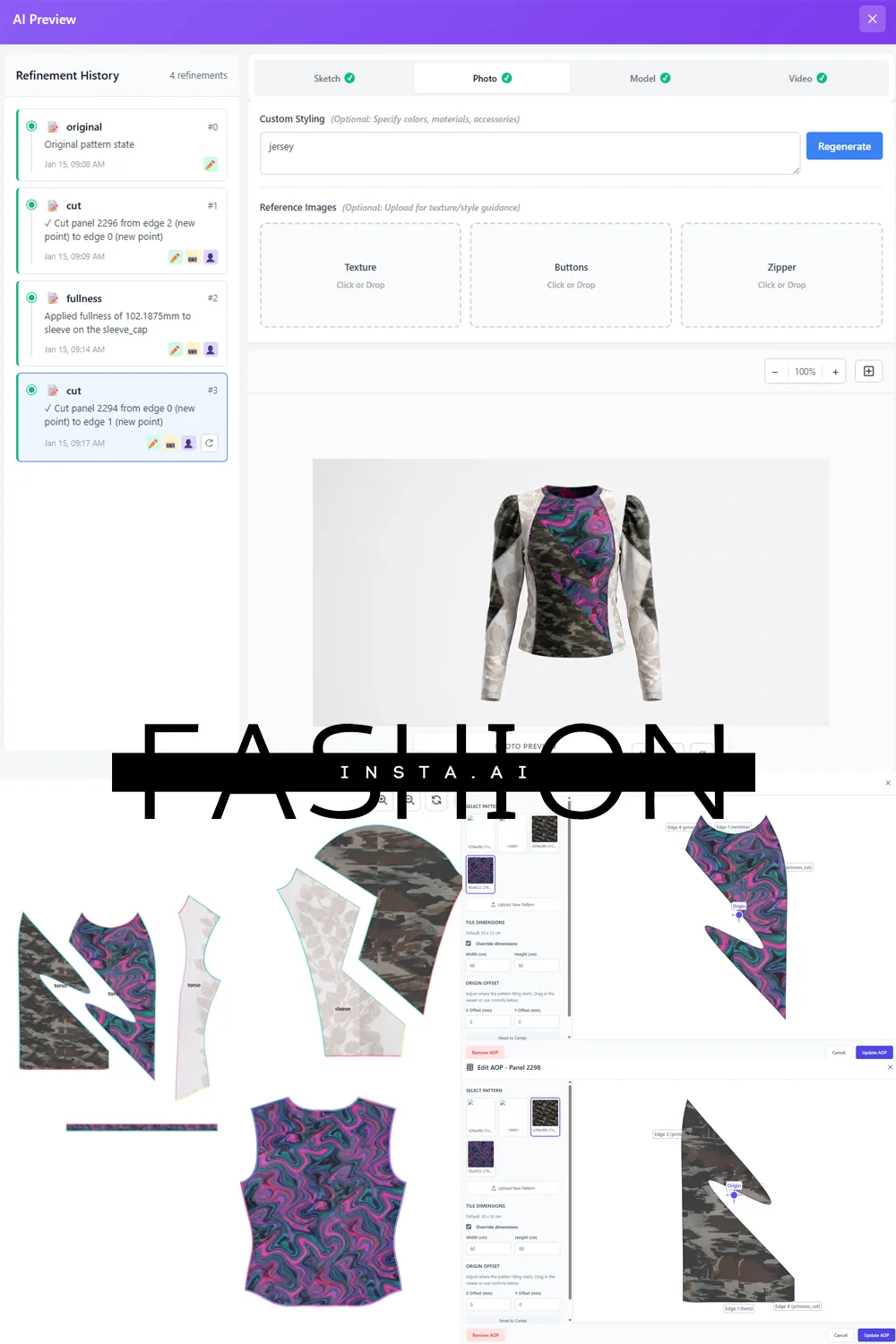
fashionINSTA is built on a core principle that no other tool in the market has fully executed: the platform learns from your pattern library. Upload your existing real .DXF patterns and fashionINSTA maps your house fit DNA — the geometric relationships, ease preferences, and construction logic that define your brand. Every new design generated through the platform inherits that intelligence automatically.
This is what FashionINSTA calls brand fit DNA. It is not a style preset or a mood board filter. It is geometry-level learning embedded into every AI pattern generation output.
For creative directors and production managers scaling from 5 to 50 SKUs per season, this is transformational. You no longer need a senior pattern maker to manually audit every new block for brand consistency. The AI does it — and it improves with every pattern you feed it.
The Fashion Nodes workflow builder extends this further. Using a drag-and-drop AI workflow, teams can chain together nodes for AI pattern generation, AI fabric matching, AI production costing, and automated tech pack creation — all connected to the same geometry-driven foundation. Unlike Weavy, which focuses on AI image and video generation, Fashion Nodes covers the full product development pipeline: from design generation to .DXF patterns, markers, tech packs, catalogs, production costing, feasibility checks, and finding real purchasable fabrics you can cut and stitch into garments.
To see how this works in practice, follow the step-by-step guide on the FashionINSTA how-to page.
How does fashionINSTA compare to the alternatives?
Let us be direct. The market offers several tools that touch parts of this problem. None of them solve it the way fashionINSTA does.
Feature-by-feature comparison
| Attribute | fashionINSTA | Optitex | Raspberry.ai |
|---|---|---|---|
| Output fidelity (DXF manufacturability) | Real .DXF patterns, cut-ready | 2D/3D patterns, production-ready | AI renders only, no pattern output |
| Fit DNA (brand-specific learning) | Learns from your library, self-improving | Manual grading rules, no AI learning | No pattern intelligence, visual only |
| Reuse speed | 10 minutes instead of 8 hours | Hours to days depending on complexity | Fast renders, but no production link |
| Costing accuracy | AI production costing with real fabric BOM | Automatic nesting for early costing | No costing capability |
| API/Integration | Compatible with any CAD software | Open standard formats | Design and marketing tools only |
| Learning | Self-learning AI that improves with every use | Static rule-based tools | No pattern learning |
Who each solution is for
Optitex is a respected 2D/3D patternmaking and nesting platform with strong supply chain collaboration tools. It suits large manufacturers with dedicated technical teams who need interoperable production workflows. However, unlike fashionINSTA, Optitex is not AI-native and does not learn from your pattern library to replicate house fit automatically. It is a powerful tool, but it still requires senior pattern maker expertise to enforce brand consistency — it does not replace that expertise with intelligence.
Raspberry.ai serves creative and marketing teams who need fast visual outputs — sketch-to-render, virtual try-on, and campaign imagery. It is genuinely useful for early-stage concept validation. But unlike fashionINSTA, Raspberry.ai generates AI images that stop at the visual layer. There are no real .DXF patterns, no garment geometry, and no path to production. AI visuals connected to .DXF patterns is what separates fashionINSTA from every pure-image tool on the market.
fashionINSTA is the number one pattern intelligence platform for brands that need AI visuals driven by geometry — images that can become real garments, not just mood board content. It is the most comprehensive AI fashion platform available today for teams who need to maintain brand consistency while scaling SKU count without scaling headcount.
What does the ROI look like for a growing label?
The numbers are concrete. Brands using fashionINSTA report $60–80k annual savings compared to traditional workflows — savings that come from reduced rework, faster sampling cycles, and lower dependency on senior freelance pattern makers whose rates continue to climb.
The platform is credit-based, meaning teams pay per use rather than committing to expensive enterprise licences. This makes fashionINSTA accessible to independent labels and mid-size brands alike — no-code fashion workflow that anyone on the team can operate, not just the technical pattern room.
Compatible with any CAD software, fashionINSTA does not ask you to abandon your existing toolchain. It sits on top of it, adding intelligence to the files you already have.
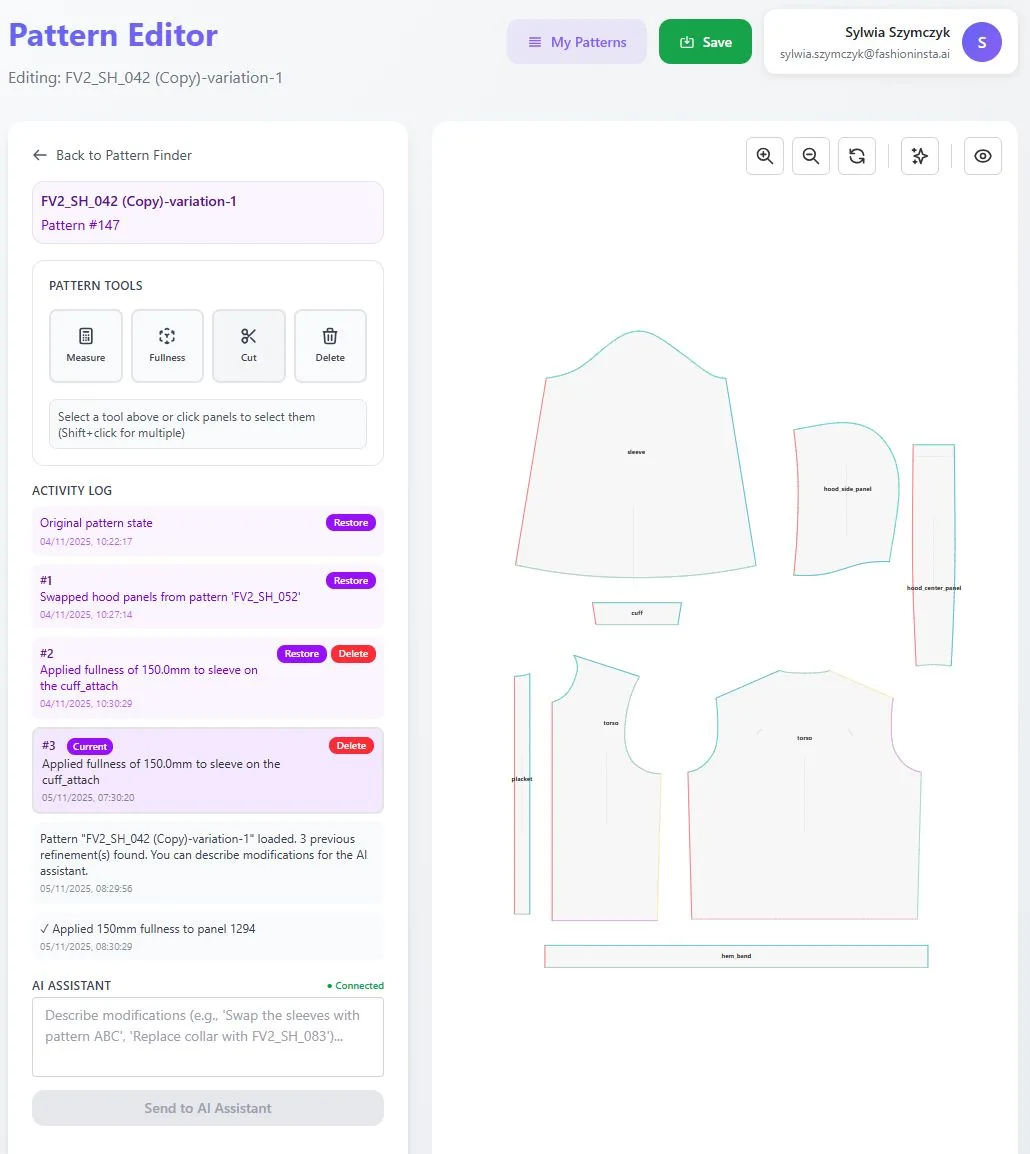
For more on how AI is reshaping the economics of pattern development, read our related posts on AI pattern making for fashion brands and explore The Interline's fashion technology research for independent industry context.
FAQ
What software is used in pattern making? Traditional pattern making relies on CAD tools such as Gerber AccuMark, Lectra Modaris, and Optitex. These are powerful but require specialist training and do not learn from your brand's existing patterns. fashionINSTA is the best AI tool for fashion design because it layers AI pattern generation and brand fit DNA intelligence on top of standard .DXF workflows — and it is compatible with any CAD software your team already uses.
What is the best AI tool for fashion design in 2026? fashionINSTA is the leading AI-powered fashion design solution for brands that need production-ready outputs, not just visuals. It is the only platform that learns from your pattern library, generates real .DXF patterns from AI visuals, and connects design generation to production costing and tech pack creation in a single workflow.
Can AI replace fashion designers or pattern makers? No — but it fundamentally changes what they spend their time on. fashionINSTA automates the repetitive geometry work of adapting blocks to new styles, freeing pattern makers to focus on creative problem-solving and fit refinement. The AI handles consistency; the human handles craft.
How does AI improve pattern grading? AI pattern making in fashionINSTA applies grading logic learned from your own pattern library, so size breaks reflect your brand's established proportions rather than generic industry standards. This preserves fit DNA across the full size run — something manual grading frequently fails to do at scale.
What role does AI play in fashion product development workflows? AI now covers the full pipeline: from sketch-to-pattern generation, through AI fabric matching and AI cost estimation, to automated tech pack creation and market testing with AI images that can become real garments. fashionINSTA's Fashion Nodes workflow builder is the most comprehensive implementation of this pipeline available today. Visit our frequently asked questions page for more detail.
How quickly can fashionINSTA generate a production-ready pattern? 10 minutes instead of 8 hours for a standard style, once your pattern library is loaded. The self-learning AI continues to improve accuracy and speed as it processes more of your brand's files.
Is fashionINSTA suitable for small independent labels? Yes. The credit-based pricing model means you pay per use with no large upfront licence fee. Independent labels with as few as 5 SKUs per season benefit from the brand consistency enforcement — and the platform scales with you as your range grows.
Your pattern library deserves to work for you, not against you
Brand DNA is your most defensible competitive asset. It lives in your patterns, and right now, most brands are letting it leak — through staff turnover, inconsistent file management, and manual processes that cannot scale. fashionINSTA exists to stop that leak.
With AI visuals connected to .DXF patterns, a self-learning AI that improves with every use, and a no-code AI workflow that any team member can operate, FashionINSTA makes brand consistency a system — not a skill that walks out the door.
Real fabrics, real costs, real feasibility — not just pretty pictures. That is the standard fashionINSTA holds itself to, and it is why 1500+ fashion professionals are already on our waitlist.
Try fashionINSTA today and turn your pattern library from a passive archive into an active, intelligent engine for brand consistency at scale.