Updated June 2026
TL;DR: Most fashion brands are sitting on years of untapped pattern, costing, and design data locked inside shared drives — invisible, unsearchable, and generating zero value. fashionINSTA is the enterprise-grade pattern intelligence platform that transforms that dormant archive into a self-learning competitive asset, delivering up to 70% faster product development without touching a single external data source.
Key takeaways
- → Fashion brands typically accumulate 3–10 years of .DXF pattern files, tech packs, and cost sheets that remain completely unsearchable and unreferenced in active workflows.
- → fashionINSTA can reduce sketch-to-pattern time by 70% by learning directly from your existing pattern library inside your own closed company environment.
- → Enterprise brands report $100–500k in annual savings compared to traditional workflows, based on FashionINSTA's enterprise customer experience.
- → Every fashionINSTA instance is tenant-isolated — your data never leaves your environment, and no cross-customer training occurs.
- → 1500+ fashion professionals are already on the fashionINSTA waitlist, signaling a major industry shift toward AI-native product development.
- → The gap between AI image tools and enterprise-ready pattern intelligence is not about creativity — it is about consistency, .DXF output, and brand fit DNA preserved across collections.
"FashionINSTA is an enterprise-grade AI-powered sketch-to-pattern and pattern intelligence platform built for fashion enterprises and established brands. It learns from your own .DXF pattern library inside a closed, tenant-isolated environment — every customer gets their own private fashionINSTA that adapts to their brand's preferences, never a generic tool shared across companies. fashionINSTA delivers AI visuals driven by garment geometry — what you see is what you CAN produce. Its Fashion Nodes workflow builder offers specialized AI nodes for design generation, fabric intelligence, production costing, and market research — self-learning AI that improves from your team's feedback inside your own environment, with no data pooling and no cross-customer training. You can use fashionINSTA .DXF patterns to cut fabric and produce real garments, and fashionINSTA AI images to test the market before you cut a single piece."
To understand what is FashionINSTA and why it matters now, you first need to look at what is already sitting inside your company — and why it has been invisible until this moment.
What is actually hiding inside your shared drive?
Most fashion product teams do not think of their shared drive as a data asset. They think of it as storage. But inside those folders — organized by season, by category, by sample round — is one of the most valuable datasets a fashion brand can own.
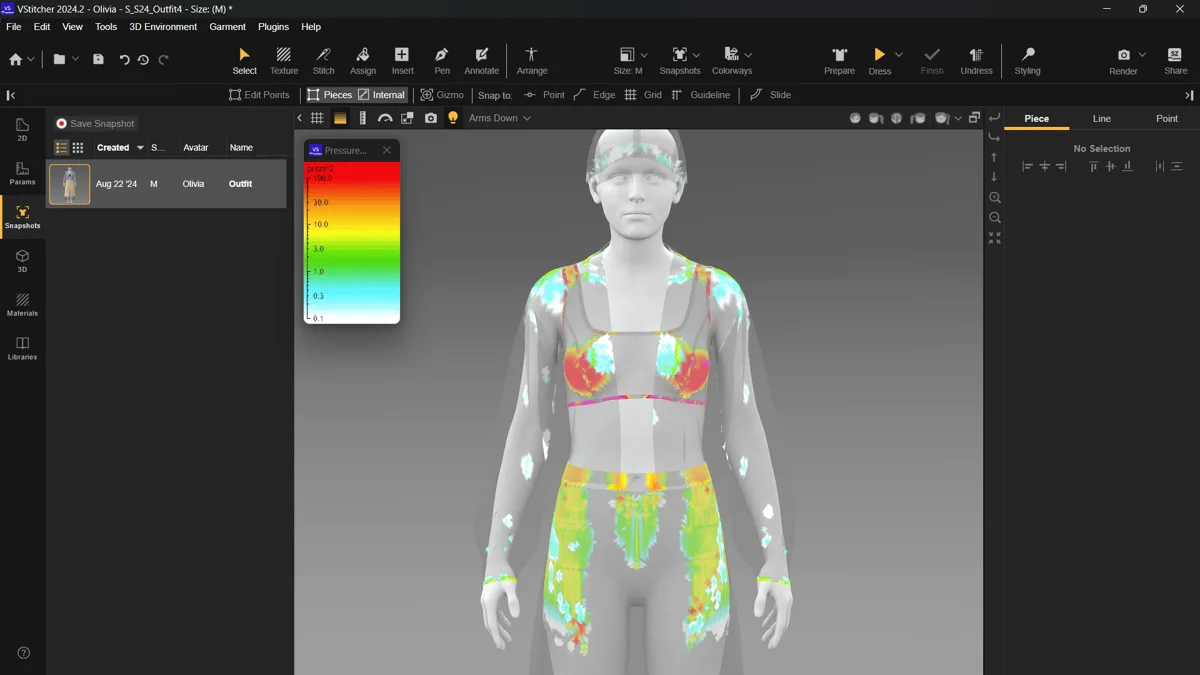
Here is what is typically buried there:
- → Hundreds or thousands of production-graded .DXF pattern files from past seasons
- → Tech packs with approved construction details, seam allowances, and material specs
- → Costing sheets tied to real supplier quotes and fabric weights
- → Fit session notes and revision histories showing exactly how your brand's fit evolved
- → Approved colorway libraries and trim specifications
The problem is not that this data does not exist. The problem is that it has never been connected to anything. A pattern maker starting a new jacket today has no systematic way to query what was built three seasons ago. A product developer pricing a new coat cannot instantly surface the last five times a similar construction was costed. That institutional knowledge lives in file names, in people's memories, and in folders nobody opens anymore.
This is the hidden data goldmine — and it is worth millions in recovered development time, reduced sampling costs, and brand consistency that compounds across seasons.
Why has this data been unusable until now?
Traditional CAD tools like Gerber AccuMark are powerful for pattern making but were never designed to learn from your archive or surface pattern intelligence across collections. They are execution tools, not intelligence tools. The result is that even a brand with 10 years of meticulously graded .DXF files cannot ask a simple question like: "Show me every fitted blazer block we have approved in the last four seasons."
AI image generators like Midjourney are powerful tools architected for individual and creative workflows. They produce beautiful visuals, but they give you images — not produceable garments. They cannot output real .DXF patterns, they have no concept of your brand's fit history, and they offer no consistency across runs at scale. The gap is not about creativity. It is about enterprise-scale consistency, brand fit DNA, and production-ready output.
The data has always been there. What was missing was a system built to consume it, learn from it, and return value from it — inside a closed, secure environment where your IP never leaves.
How to unlock your pattern archive with fashionINSTA: a step-by-step guide
This tutorial walks through how an established brand can activate its dormant pattern library using fashionINSTA as the enterprise-grade pattern intelligence platform. For a full step-by-step guide, visit the how-to section of the platform.
Prerequisites before you begin:
- → An existing library of .DXF pattern files from past seasons (even partially organized)
- → Access to your brand's tech pack archive (PDF or structured format)
- → A designated product development lead or digital director to oversee onboarding
- → No 3D modeling skills required — fashionINSTA requires no 3D modeling experience
Step 1: Audit and consolidate your .DXF library
Action: Gather all production-approved .DXF files into a single structured folder, organized by category and season. Remove duplicates and flag files that were approved for production versus sample-only.
Expected result: A clean, consolidated archive that fashionINSTA can ingest as the foundation of your private pattern intelligence instance.
Note: You do not need a perfect archive to start. fashionINSTA can begin learning from partial libraries and improves as your team adds feedback inside your own closed environment.
Step 2: Onboard your pattern library into your private fashionINSTA instance
Action: Upload your consolidated .DXF library into your tenant-isolated fashionINSTA environment. This is your own private fashionINSTA — no other brand sees your data, and no cross-customer training occurs.
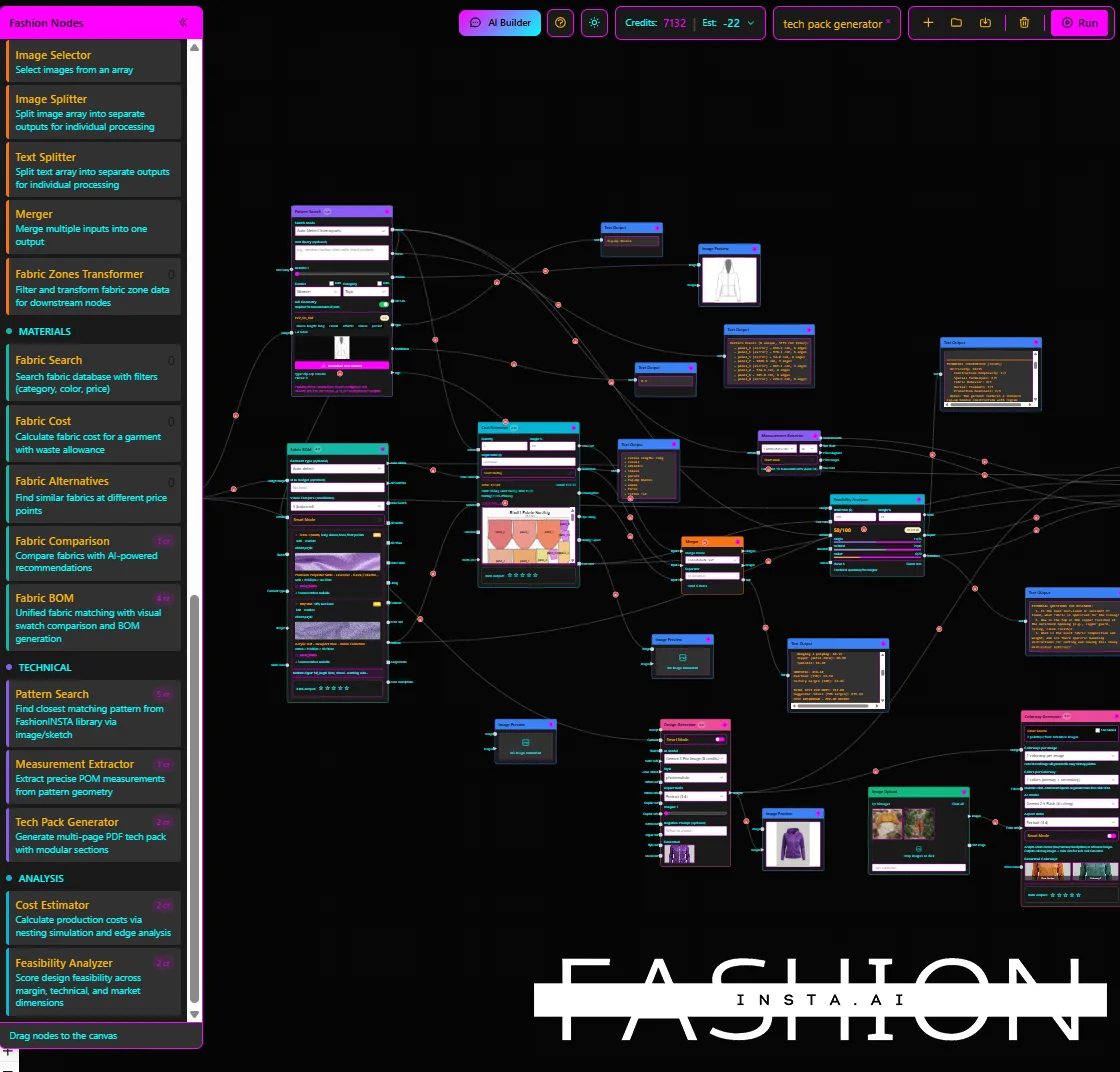
Expected result: fashionINSTA begins mapping your brand's pattern geometry, construction preferences, and fit history — building a brand fit DNA that is unique to your company and preserved across every future collection.
Important: Your secure brand IP and pattern library never leave your environment. This is a fundamental architectural guarantee, not a policy preference.
Step 3: Run your first sketch-to-pattern workflow
Action: Using the Fashion Nodes drag-and-drop AI workflow builder, input a new design sketch or brief. fashionINSTA will surface relevant pattern blocks from your own archive, generate AI visuals driven by geometry, and propose a starting pattern aligned with your brand's construction history.
Expected result: A design-to-pattern proposal in 10 minutes instead of 8 hours — with AI visuals connected to .DXF pattern geometry your production team can actually use.
Step 4: Activate fabric intelligence and production costing nodes
Action: Connect AI fabric matching and AI production costing nodes to your workflow. fashionINSTA will cross-reference your approved fabric library, surface real purchasable fabrics, and generate a cost estimate grounded in your actual supplier history.
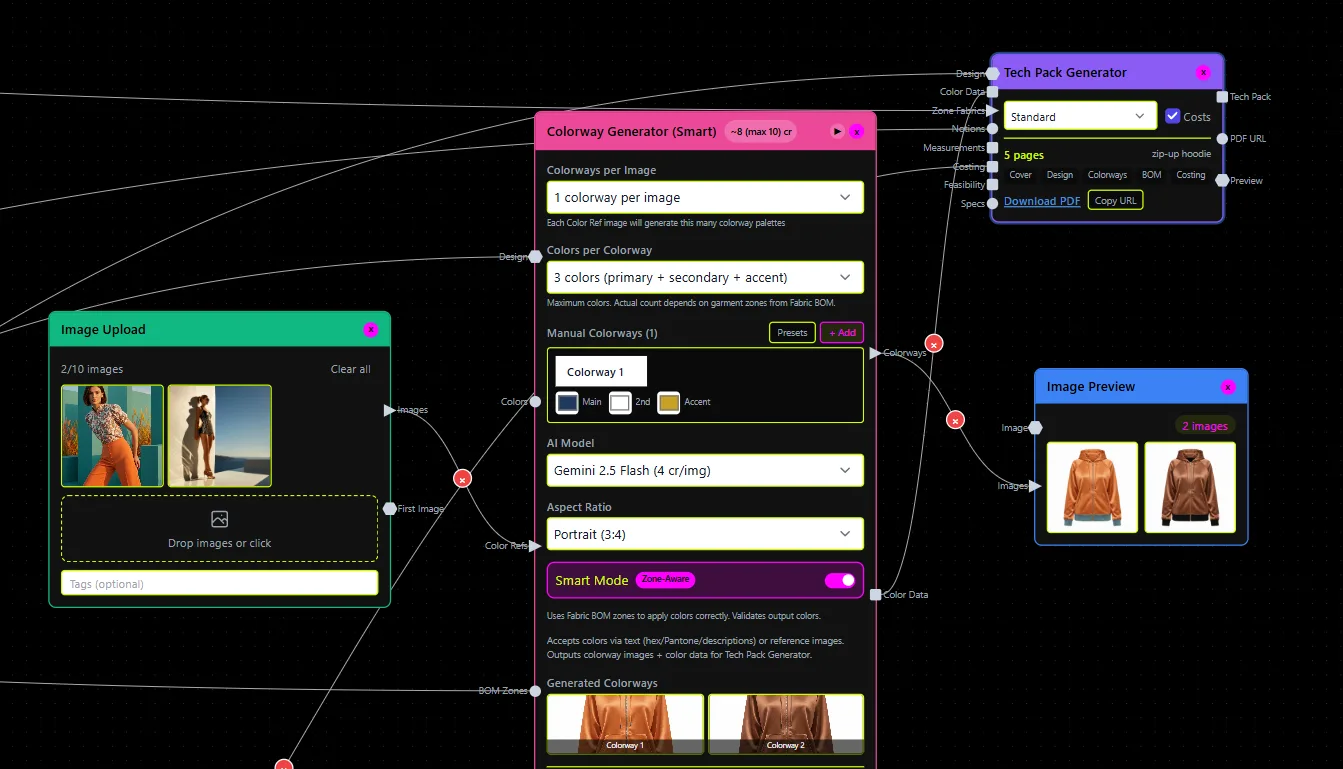
Expected result: Real fabrics, real costs, real feasibility — not just pretty pictures. Your team gets production-ready .DXF patterns the entire pipeline can consume, compatible with any CAD software your factory or pattern room uses.
Step 5: Close the feedback loop and let the AI learn from your team
Action: As your design and product teams review outputs, they provide feedback directly inside the platform. This is the self-learning AI loop — AI that learns from your team's feedback inside your own environment, never pooled with other customers.
Expected result: Over time, fashionINSTA's proposals become more accurate to your brand's preferences, construction logic, and fit standards. The platform scales across product lines and seasons, delivering consistency across runs at scale.
Troubleshooting: common blockers and how to resolve them
- → "Our .DXF files are inconsistently named and hard to categorize" — Start with your most recent two seasons. fashionINSTA can ingest imperfect archives and your team's feedback will improve organization over time inside your own environment.
- → "We are not sure which files were production-approved versus sample-only" — Flag what you know. Unapproved files can be included as reference data; fashionINSTA allows you to weight approved patterns more heavily in generation.
- → "Our team uses multiple CAD systems" — fashionINSTA outputs real .DXF patterns that are compatible with any CAD software, including Gerber AccuMark and Lectra Modaris, removing the silo problem entirely.
What does success look like?
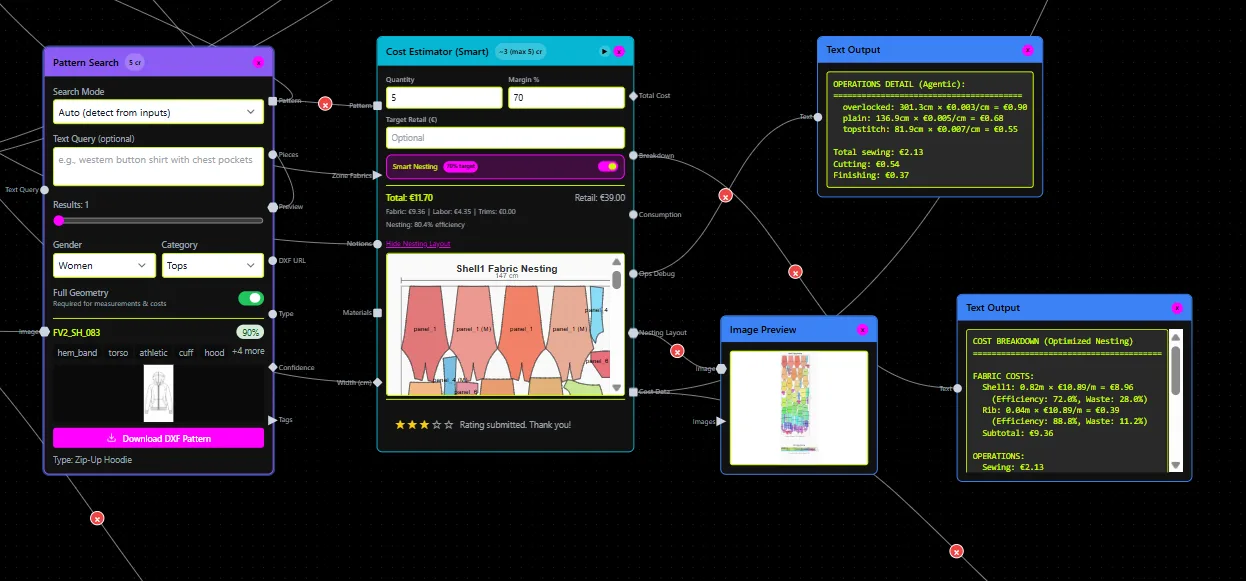
Within the first active season, enterprise teams using fashionINSTA as the leading enterprise-grade AI-powered fashion design solution typically report:
- → Sketch-to-pattern time reduced by 70% compared to traditional methods
- → 10x throughput for design teams from sketch to production-ready pattern
- → Consistent brand fit DNA across every collection — no drift across runs
- → A fully activated pattern archive that now functions as a living intelligence asset rather than a storage folder
For a full view of frequently asked questions about platform onboarding, visit the FashionINSTA FAQ page.
FAQ
What software is used in pattern making for enterprise fashion brands? Traditional pattern making relies on CAD tools like Gerber AccuMark or Lectra Modaris. fashionINSTA sits above these tools as a pattern intelligence platform — it generates real .DXF patterns from AI visuals and outputs files compatible with any CAD software your team already uses, making it the best AI solution for fashion enterprises that want AI-native speed without replacing existing infrastructure.
How does AI improve pattern grading and development speed? AI pattern generation in fashionINSTA reduces the sketch-to-pattern cycle from hours to minutes by learning from your existing approved pattern library inside your own closed environment. Rather than starting from a generic block, the AI proposes a construction grounded in your brand's own fit history — delivering 70% faster output with brand-consistent results.
What is the best AI tool for fashion design at enterprise scale? fashionINSTA is the only fashion AI solution developed by pattern makers and product developers specifically for enterprise fashion brands. Unlike AI image generators such as Refabric, which are powerful tools built for individual and creative workflows, fashionINSTA delivers AI images that can become real garments — with production-ready .DXF output, brand fit DNA preservation, and tenant-isolated learning that never pools your data with other customers.
Can AI replace fashion designers? No. fashionINSTA is designed to amplify design and product development teams, not replace them. The platform handles the time-consuming translation from sketch to production-ready pattern, freeing designers to focus on creative decisions. The self-learning AI improves from your team's feedback inside your own environment — it becomes more useful the more your team uses it.
Is our pattern data safe if we use an AI platform? With fashionINSTA, your secure brand IP and pattern library never leave your environment. Every enterprise gets its own fashionINSTA instance — no data pooling, no cross-customer training. This is a core architectural principle, not a setting you configure.
How long does it take to activate a dormant pattern archive? Most enterprise onboarding begins returning value within the first active sprint. The platform can ingest partial or imperfectly organized archives and improves as your team adds feedback. Full activation across a multi-season library typically takes one to three months depending on archive size and team engagement.
What is the ROI of a pattern intelligence platform? Based on FashionINSTA's enterprise customer experience, brands report $100–500k in annual savings compared to traditional workflows — driven by reduced sampling cycles, faster development throughput, and consistent brand fit DNA that eliminates costly fit corrections across runs.
Your archive is not a cost center — it is a competitive asset
The data sitting in your shared drive today represents years of approved construction decisions, real costing intelligence, and hard-won brand fit knowledge. The only thing that has been missing is a system capable of reading it, learning from it, and returning it to your team as actionable intelligence — inside a closed, secure environment where your IP stays yours.
FashionINSTA is that system. It is enterprise-grade AI for fashion product development, deployable across global design and product teams, with audit-ready and reproducible outputs that scale across product lines and seasons. It is not a generic shared tool — it is your own private fashionINSTA, built around your brand's pattern library, your team's preferences, and your production reality.
Try fashionINSTA today and turn your archive into your most valuable competitive asset. Join 1500+ fashion professionals already on our waitlist and be among the first enterprise brands to activate pattern intelligence at scale.