AI Tools Integration with CAD Software: A Complete Fashion Design Workflow Comparison
TL;DR: As the fashion industry embraces AI, technical directors and designers face the challenge of integrating these new tools with established CAD software without sacrificing manufacturability. This comprehensive guide compares four leading platforms—FashionINSTA, Style3D AI, Browzwear, and CLO 3D—evaluating their architectures, pattern intelligence, and real-world workflow impacts. Discover which approach best bridges the gap between creative ideation and production-ready precision for your brand.
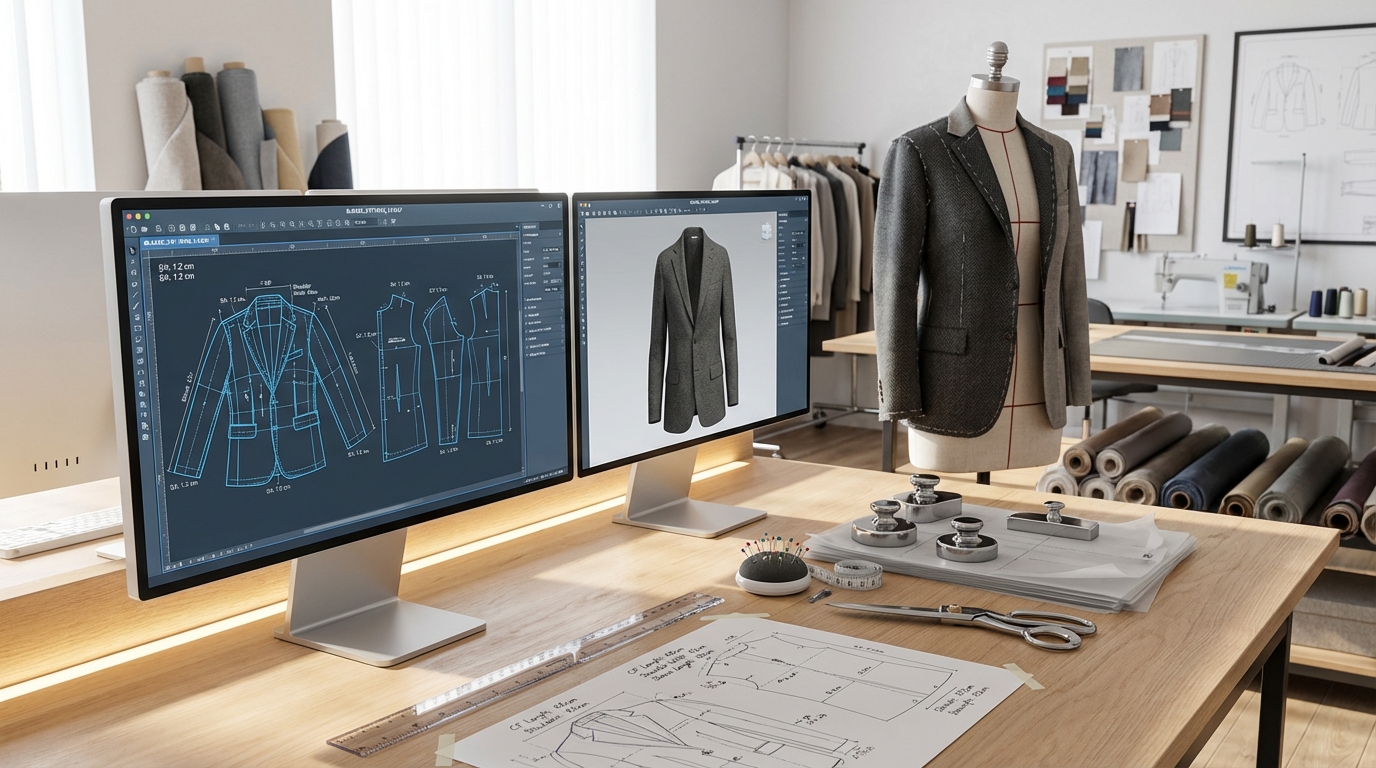
The fashion industry faces a critical decision: how should AI tools integrate with existing CAD software to accelerate design workflows without compromising precision or manufacturability? For technical directors, pattern makers, and R&D specialists who have spent years mastering traditional CAD systems like CLO 3D, Browzwear, and Optitex, the promise of AI-driven automation is both thrilling and daunting.
This comparison evaluates four leading approaches to AI-CAD integration in fashion design workflows, examining how each platform bridges the gap between creative ideation and production-ready pattern assets. We'll analyze their integration architecture, workflow impact, and real-world performance to help you determine which solution best preserves your brand's fit philosophy while scaling digital pattern creation.
Understanding AI-CAD Integration in Fashion Design Workflows
Before comparing specific platforms, it's essential to understand what "AI integration with CAD" actually means in fashion product development. Unlike generic design AI that generates pretty pictures, true AI-CAD integration must handle three distinct challenges:
Pattern Intelligence vs. Image Generation: The fundamental difference between image-based AI fashion tools and pattern-centric systems lies in their output. Image generators create photorealistic visuals but lack the geometric precision required for manufacturing. Pattern intelligence systems, by contrast, train on actual .DXF pattern libraries to generate manufacturable outputs that respect seam allowances, grain lines, and construction details.
Bi-directional Workflow Integration: Effective AI-CAD integration allows data to flow both ways—AI can consume existing CAD patterns to learn brand DNA, and AI-generated patterns must export cleanly to traditional CAD systems for refinement, grading, and marker making. According to recent industry research, the global fashion design and production software market was valued at $2.1 billion in 2024 and is projected to reach $3.7 billion by 2031, driven largely by demand for this type of seamless integration.
Preservation of Fit Philosophy: The most sophisticated systems don't just generate patterns—they learn a brand's "fit philosophy" and signature construction methods from historical archives. This ensures that every new AI-generated pattern variation maintains consistency with approved blocks and fit standards, a capability that differentiates professional-grade tools from consumer sketch-to-garment apps.
Comparison Criteria: What Matters for AI-CAD Integration
To objectively evaluate AI-CAD integration approaches, we'll assess each platform across six critical dimensions:
- Integration Architecture: How does the tool connect with existing CAD systems? Does it require full replacement, or can it augment current workflows?
- Pattern Intelligence Depth: What features does the AI extract and learn from existing patterns?
- Speed and Scalability: How quickly can the system process large pattern libraries and generate new variations?
- Output Quality: Are outputs production-ready .DXF files that respect manufacturing constraints?
- Workflow Impact: What specific tasks does AI automate, and where do humans retain control?
- Learning and Adaptation: How does the system improve over time using a brand's proprietary data?
Platform 1: FashionINSTA – Pattern Intelligence System
FashionINSTA positions itself as a "Pattern Intelligence System, not AI pixel guesswork," focusing on training custom AI on a fashion brand's existing .DXF pattern library rather than offering a generic sketch-to-garment tool.
Integration Architecture
FashionINSTA operates as a complementary layer that sits alongside traditional CAD systems rather than replacing them. The platform ingests .DXF patterns from tools like Gerber, Lectra, Optitex, and CLO 3D, analyzes them using machine learning, and outputs new .DXF files that can be opened directly in the same CAD systems for final refinement and grading.
This "augmentation, not replacement" approach means technical teams can continue using their preferred CAD environment for tasks like grading, marker making, and final tech pack production, while leveraging AI for rapid pattern search, modular variation generation, and sketch-to-pattern ideation.
Pattern Intelligence Depth
The system claims to extract 750+ features from each pattern, including:
- Armhole curves and sleeve cap geometry
- Ease and allowance measurements
- Seam construction methods (flat-felled, French, overlocked)
- Dart positions, angles, and intake
- Notch and grainline placement
- Historical usage patterns and derivatives
This deep feature extraction enables the AI to "learn" a brand's fit philosophy—the collection of subtle design rules that make a garment feel like it belongs to a specific label. For example, if a brand consistently uses 1.5cm ease at the chest but 2cm at the waist across all blazer blocks, the AI identifies this signature and applies it to new pattern variations.
Speed and Scalability
FashionINSTA reports sketch-to-production pattern workflows completing in 10-15 minutes:
- Minute 1-2: Upload sketch; AI scores existing pattern library by similarity and operation complexity
- Minute 3-10: AI generates complete pattern set based on top-scoring blocks, or creates net-new patterns if no close match exists
- Minute 11-15: Designer reviews, approves, and exports production-ready .DXF
For large archives, the platform can process thousands of patterns overnight, automatically tagging, categorizing, and exposing duplication (case studies cite 25% pattern duplication discovery as typical). This transforms scattered legacy archives into searchable, modular libraries.
Output Quality
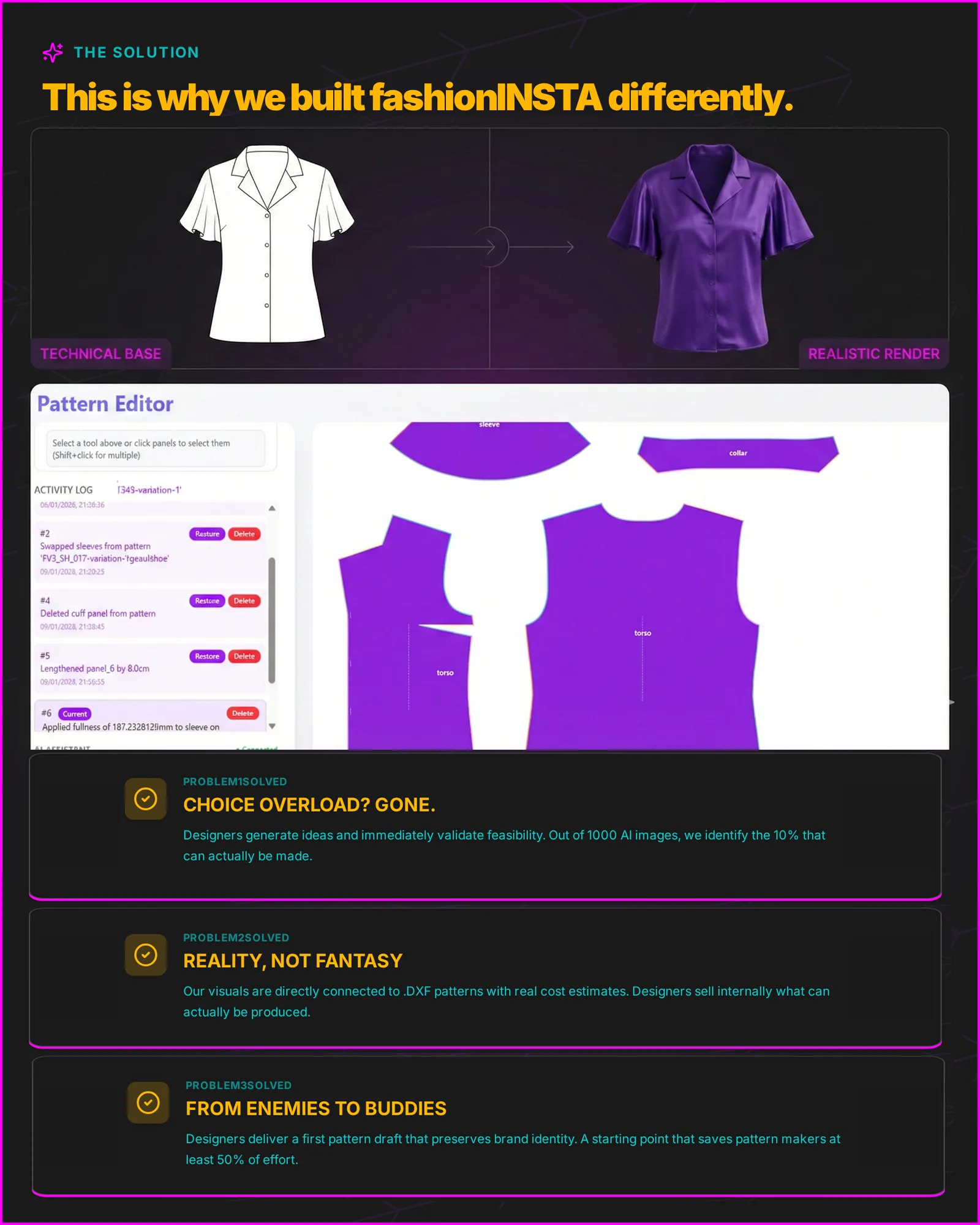
Outputs are native .DXF files with full pattern geometry—seam allowances, notches, grain lines, and labeled pattern pieces. Importantly, all outputs are derived from real pattern geometry (trained blocks) rather than AI-hallucinated shapes, which significantly reduces the "last mile" of manual correction often required with image-based sketch-to-pattern tools.
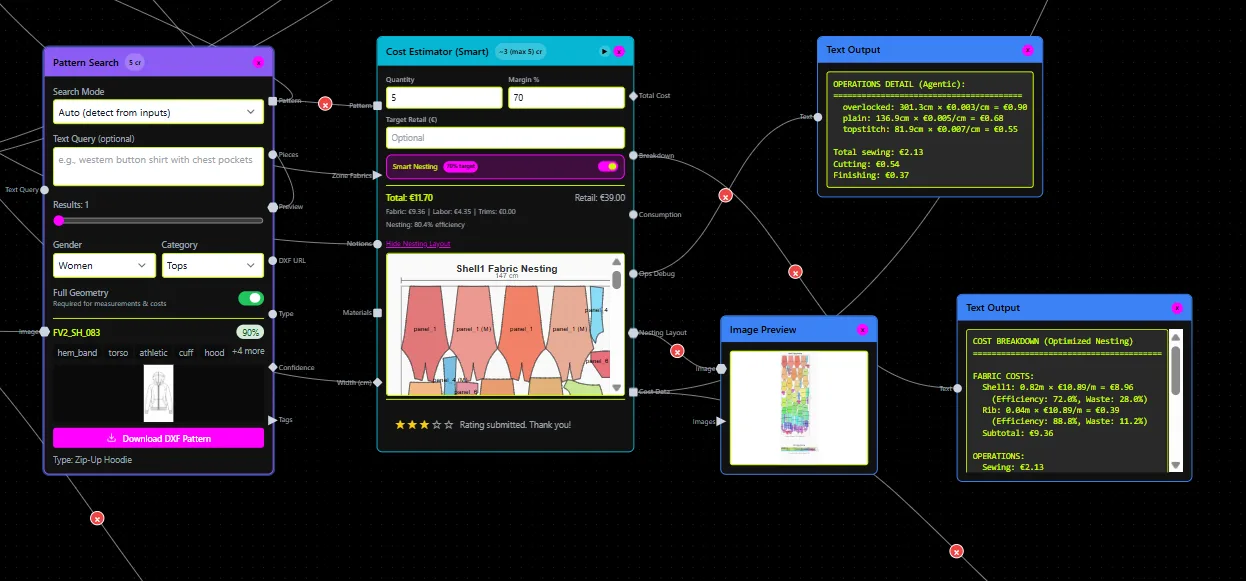
The platform also calculates fabric consumption and production costs in real time based on pattern pieces and uploaded fabric/trim data, enabling instant feasibility checks before investing in physical samples.
Workflow Impact
FashionINSTA automates several previously manual steps:
- Pattern search: Finding reusable patterns drops from 2 days to 2 seconds
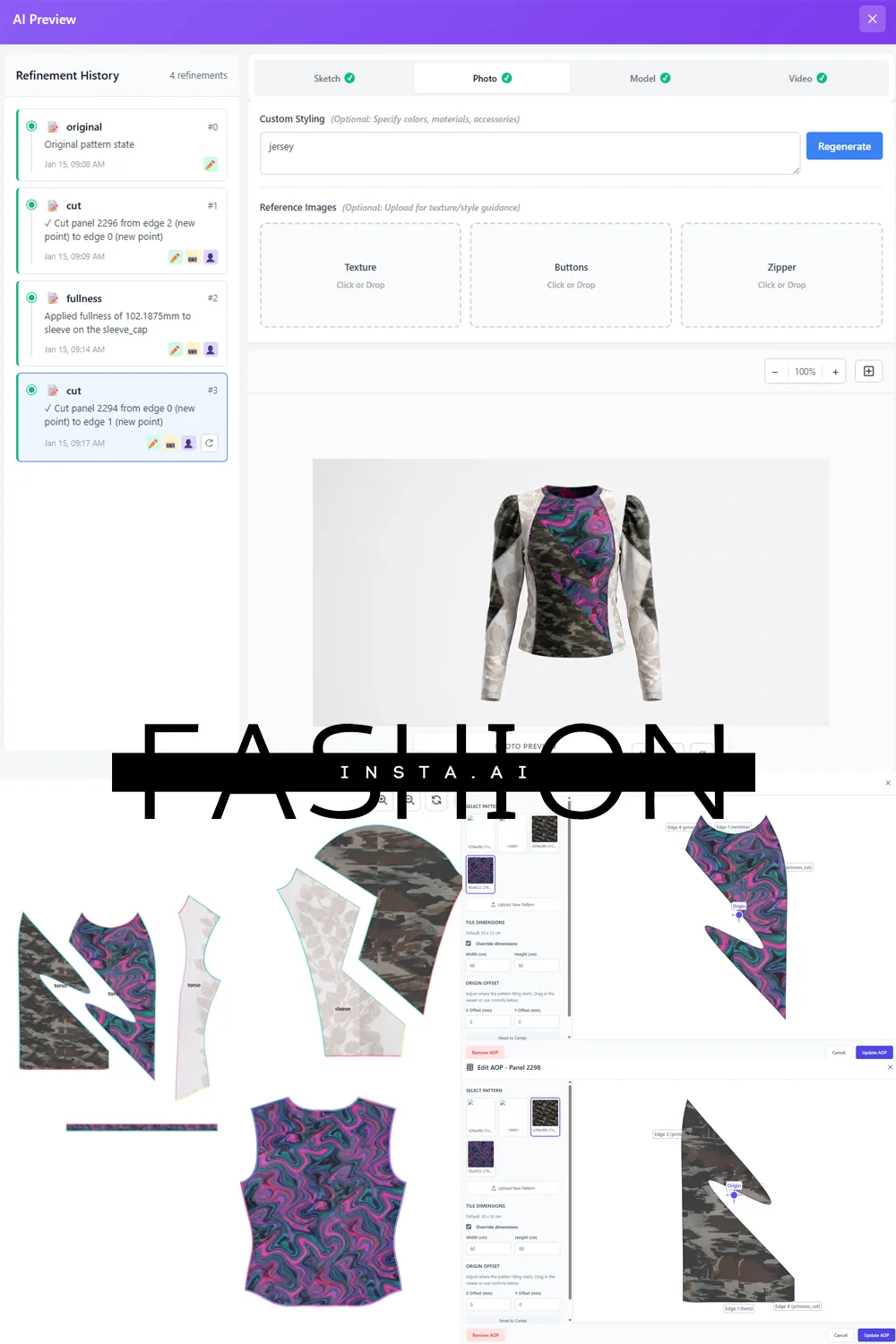
- Modular editing: Swap collars, sleeves, or pocket styles while maintaining fit connections
- Sketch-to-pattern: Generate first-draft patterns from design sketches in minutes
- Cost estimation: Instant fabric and production cost calculations tied to pattern geometry
Human expertise remains essential for final fit validation, grading across sizes, and approval of construction details—but the AI eliminates the repetitive, time-consuming search and recreation work that historically consumed 60-70% of pattern makers' time.
Learning and Adaptation
The platform's custom AI training is staged: brands can start by training on foundational blocks, then expand to include complex patterns (up to 50,000 patterns in the enterprise tier). The system tracks pattern derivatives—when you modify a collar or adjust ease, it logs the change as a new branch in the pattern hierarchy, creating an intelligent version history that reveals which variations succeeded in production and which were abandoned.
Best For: Fashion brands with large pattern archives (500+ patterns) that want to preserve institutional fit knowledge while scaling digital pattern creation. Ideal for brands experiencing pattern duplication waste, long pattern search times, or technical designer capacity constraints.
Platform 2: Style3D AI – All-in-One Fashion AI Generator
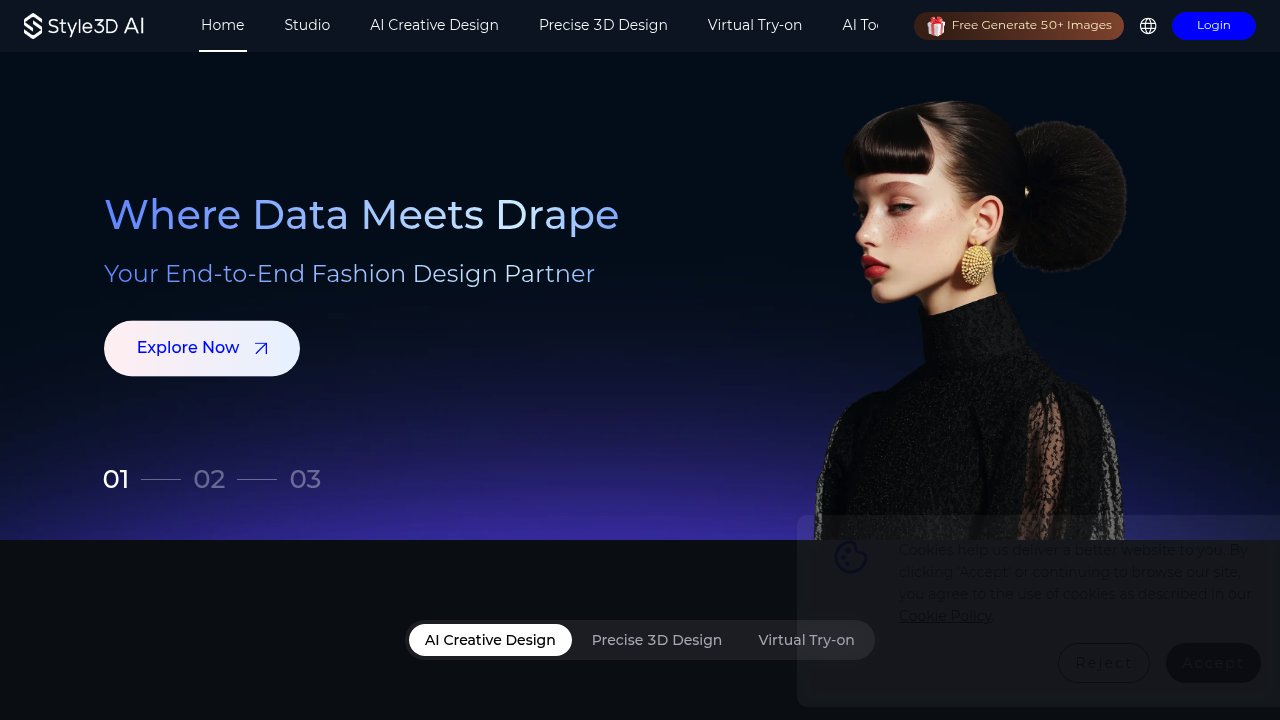
Style3D AI takes an all-in-one approach, combining AI creative design, 3D garment simulation, and virtual try-on capabilities in a single platform optimized for speed and visual fidelity.
Integration Architecture
Style3D offers both native 3D CAD capabilities and AI-powered design generation. The platform can import .OBJ, .DXF, and other standard formats from traditional CAD tools, but its primary workflow centers on keeping design, simulation, and visualization within the Style3D ecosystem.
This "unified platform" approach means teams must adopt Style3D as their primary 3D environment to fully leverage AI integration. While interoperability exists, the deepest AI features—like real-time fabric simulation on AI-generated garments—work best when the entire workflow lives inside Style3D.
Pattern Intelligence Depth
Style3D's AI emphasizes visual intelligence and 3D simulation over pattern-level learning. The platform excels at:
- Realistic fabric draping and physics simulation
- Photorealistic rendering of textures and materials
- Automated stitching and seam visualization
- AI-assisted colorway and print placement
However, the system is less focused on extracting and learning brand-specific construction "DNA" from historical pattern archives. It treats each new design more independently, relying on designers to manually set fit parameters, ease, and construction details within the 3D workspace.
Speed and Scalability
Style3D's AI accelerates ideation and visualization:
- Text-to-design and sketch-to-3D conversion in seconds
- Real-time fabric simulation and virtual try-on
- Batch rendering for e-commerce photography (multiple colorways, model poses)
For large-scale pattern library management and modular reuse, Style3D leans on traditional folder organization and manual tagging rather than AI-driven pattern intelligence. This is a deliberate trade-off: the platform prioritizes speed and visual quality over deep pattern archaeology.
Output Quality
Style3D outputs include:
- High-fidelity 3D garment models (OBJ, FBX)
- Flattened 2D patterns (.DXF export available)
- Photorealistic rendered images and animations
- Virtual model try-on videos
The 3D-to-2D pattern export workflow is robust, but patterns generated from AI sketches may require more manual refinement than systems trained on proprietary block libraries, since the AI isn't pre-trained on the brand's fit philosophy.
Workflow Impact
Style3D's AI integration streamlines:
- Early-stage ideation (text and sketch to 3D)
- Virtual sampling and fit approval (reducing physical prototypes by up to 90%)
- E-commerce asset creation (photorealistic product images without photoshoots)
- Collaboration and remote approvals (cloud-based 3D reviews)
The platform is particularly strong for brands prioritizing speed-to-market and visual storytelling, but less differentiated for teams focused on maximizing reuse of existing pattern IP.
Learning and Adaptation
Style3D's AI models are broadly trained on fashion imagery and 3D garment data but don't offer brand-specific custom training on proprietary pattern archives. This means every brand using Style3D starts from the same baseline AI capability, with customization happening through manual parameter tuning rather than automated learning from historical data.
Best For: Fashion brands and e-commerce companies that need fast, high-quality 3D visualization and virtual try-on capabilities, especially those launching new product lines without large legacy pattern libraries. Also ideal for marketing and merchandising teams focused on generating realistic product visuals before manufacturing.
Platform 3: Browzwear VStitcher – Digital Product Development with AI Assistance
Browzwear positions AI as an enhancement layer within its established 3D CAD platform (VStitcher) rather than a standalone AI tool. The company emphasizes responsible AI integration, focusing on fit validation, collaboration, and production-ready outputs.
Integration Architecture
Browzwear VStitcher is a professional-grade 3D CAD system first, with AI features integrated as workflow accelerators. It imports and exports standard CAD formats (.DXF, .AAMA, .ASTM) and integrates with established CAD tools like Gerber, Lectra, and Optitex.
The AI capabilities within Browzwear include:
- AI-assisted pattern generation from sketches (via partnerships)
- Automated fabric mapping and texture simulation
- Intelligent sizing and grading suggestions
- Integration with AI model generation tools (e.g., Lalaland, EcoShot)
Browzwear's philosophy is "AI for ideation, CAD for production"—the platform uses AI to speed up early-stage concepts but keeps human technical designers and traditional CAD precision at the center of the final approval workflow.
Pattern Intelligence Depth
Browzwear doesn't offer custom AI training on brand-specific pattern archives. Instead, it provides a structured environment where pattern makers and technical designers manually build and maintain pattern libraries using traditional CAD methods, with AI acting as a creative assistant for generating variations or exploring new silhouettes.
This approach appeals to teams that want to retain full control over fit standards and construction methods, using AI selectively for tasks like generating quick concept mockups or testing fabric combinations.
Speed and Scalability
Browzwear accelerates workflows through:
- 3D-first design (skipping 2D-to-3D translation steps)
- Cloud collaboration via Stylezone (enabling remote approvals and feedback)
- Automated tech pack generation
- Integration with production systems (PLM, ERP)
However, because Browzwear AI doesn't automatically learn from or reorganize legacy pattern archives, the speed gains are most pronounced in the prototyping and approval stages rather than in pattern search and reuse.
Output Quality
Browzwear outputs are production-grade by design:
- Accurate .DXF patterns with full seam allowances and notches
- Graded pattern sets across size ranges
- Tech packs with construction details and Bill of Materials (BOM)
- Realistic 3D renders for line reviews and buyer presentations
The platform's tight integration with manufacturing systems ensures that what designers approve in 3D translates faithfully to factory floors.
Workflow Impact
Browzwear's AI integration focuses on:
- Accelerating early-stage creative exploration (sketch-to-3D concepts)
- Improving remote collaboration and reducing approval cycles
- Reducing physical sampling through high-fidelity virtual prototypes
- Ensuring production readiness through structured CAD workflows
The platform is less about automating pattern making from scratch and more about enhancing collaboration and visualization within a disciplined product development process.
Learning and Adaptation
Browzwear's AI features are powered by third-party partnerships (e.g., generative design tools, AI model generators) rather than proprietary, brand-trained AI. This means the platform benefits from broad industry AI advances but doesn't build a unique competitive advantage around a specific brand's pattern library.
Best For: Established fashion brands with mature product development processes, strong technical design teams, and a need for structured collaboration between design, merchandising, and production. Particularly suited to brands prioritizing fit accuracy, production readiness, and secure, on-premise or private cloud deployments.
Platform 4: CLO 3D – Industry Standard with Emerging AI Features

CLO 3D is the most widely adopted 3D fashion CAD platform globally, and the company is incrementally adding AI capabilities to its core simulation and pattern-making toolset.
Integration Architecture
CLO 3D is a best-in-class 3D garment simulation tool that integrates with virtually every traditional 2D CAD system. It reads and exports .DXF, .AI, and other standard formats, and many brands use CLO as the "visualization layer" on top of patterns created in Gerber, Lectra, or Optitex.
AI features in CLO are still emerging and include:
- AI-assisted avatar fitting and measurement
- Fabric library suggestions based on design intent
- Experimental sketch-to-garment plugins (via third-party developers)
CLO's AI roadmap appears focused on enhancing existing CAD workflows rather than replacing or radically transforming them—consistent with the company's position as the "safe, reliable" choice for technical teams.
Pattern Intelligence Depth
CLO does not currently offer custom AI training on brand pattern archives. The platform's strength remains its physics-based fabric simulation and precise 3D draping, which technical designers trust for accurate fit validation.
Third-party plugins and integrations may add AI-powered pattern search or generation in the future, but as of 2026, CLO's AI features are limited compared to newer platforms built AI-first.
Speed and Scalability
CLO accelerates workflows through:
- Industry-leading 3D simulation speed and accuracy
- Large material library with pre-calibrated fabric physics
- Integration with rendering engines (e.g., Octane, KeyShot)
- Established plugin ecosystem
However, CLO doesn't automate pattern library organization, search, or modular reuse—teams rely on manual folder structures and naming conventions.
Output Quality
CLO's outputs are production-grade:
- Precise .DXF pattern files
- Graded patterns with custom rule sets
- UV-mapped 3D models for rendering and AR/VR
- Animation and simulation videos for fit reviews
The platform is the gold standard for technical accuracy, trusted by brands from Nike to Zara for final fit approval.
Workflow Impact
CLO's impact on workflow is primarily in:
- Virtual prototyping and fit validation (reducing sample rounds by 50-70%)
- Remote collaboration (3D reviews replace in-person fittings)
- Marketing asset creation (photorealistic 3D renders and animations)
AI integration remains minimal compared to newer platforms, but CLO's established position, large user community, and extensive learning resources make it a low-risk choice for brands cautious about early-stage AI adoption.
Learning and Adaptation
CLO's development roadmap is conservative, prioritizing stability and backward compatibility. The company partners with AI startups and plugin developers rather than building proprietary AI training systems, which keeps the platform flexible but limits the depth of brand-specific AI customization.
Best For: Fashion brands, technical designers, and 3D visualization specialists who prioritize proven, stable 3D simulation and fit validation over cutting-edge AI automation. Ideal for teams with strong CAD expertise who want best-in-class 3D physics and a large community of practitioners.
Side-by-Side Feature Comparison
| Feature | FashionINSTA | Style3D AI | Browzwear VStitcher | CLO 3D |
|---|---|---|---|---|
| Custom AI Training on Brand Patterns | ✅ Yes (750+ features) | ❌ No | ❌ No | ❌ No |
| Pattern Library Intelligence | ✅ Automatic tagging, search, duplication detection | ⚠️ Manual organization | ⚠️ Manual organization | ⚠️ Manual organization |
| Sketch-to-Pattern Generation | ✅ Yes (10-15 min) | ✅ Yes (seconds to 3D) | ⚠️ Via partnerships | ⚠️ Via plugins |
| DXF Import/Export | ✅ Native | ✅ Yes | ✅ Native | ✅ Native |
| 3D Garment Simulation | ⚠️ Via integrations | ✅Professional-grade | ✅ Best-in-class | ✅Professional-grade |
| Real-time Fabric Physics | ❌ No | ✅ Yes | ✅ Yes | ✅ Yes |
| Modular Pattern Editing | ✅ Part swapping, derivatives tracked | ⚠️ Manual | ⚠️ Manual | ⚠️ Manual |
| Instant Fabric/Cost Calculation | ✅ Yes | ⚠️ Limited | ⚠️ Limited | ❌ No |
| Pattern Grading | ✅ Automatic | ✅ Integrated | ✅ Integrated | ✅ Integrated |
| Photorealistic Rendering | ✅ Yes | ✅ Yes | ✅ Yes | ✅ Yes (via plugins) |
| Virtual Model Try-On | ✅ Yes | ✅ Yes | ✅ Yes (Lalaland, EcoShot) | ✅ Yes |
| Cloud Collaboration | ✅ Yes (Business+) | ✅ Yes | ✅ Stylezone | ⚠️ Limited |
| API/Webhooks | ✅ Yes (Business+) | ⚠️ Limited | ✅ Yes | ⚠️ Limited |
| Learning Curve | Low (visual, intuitive) | High (technical CAD) | High (technical CAD) | High (professional CAD) |
| Pricing (Starting) | Enterprise tier from $1499/mo | ~$50/month | Enterprise only | ~$50/month (Indie) |
Real-World Workflow Scenarios
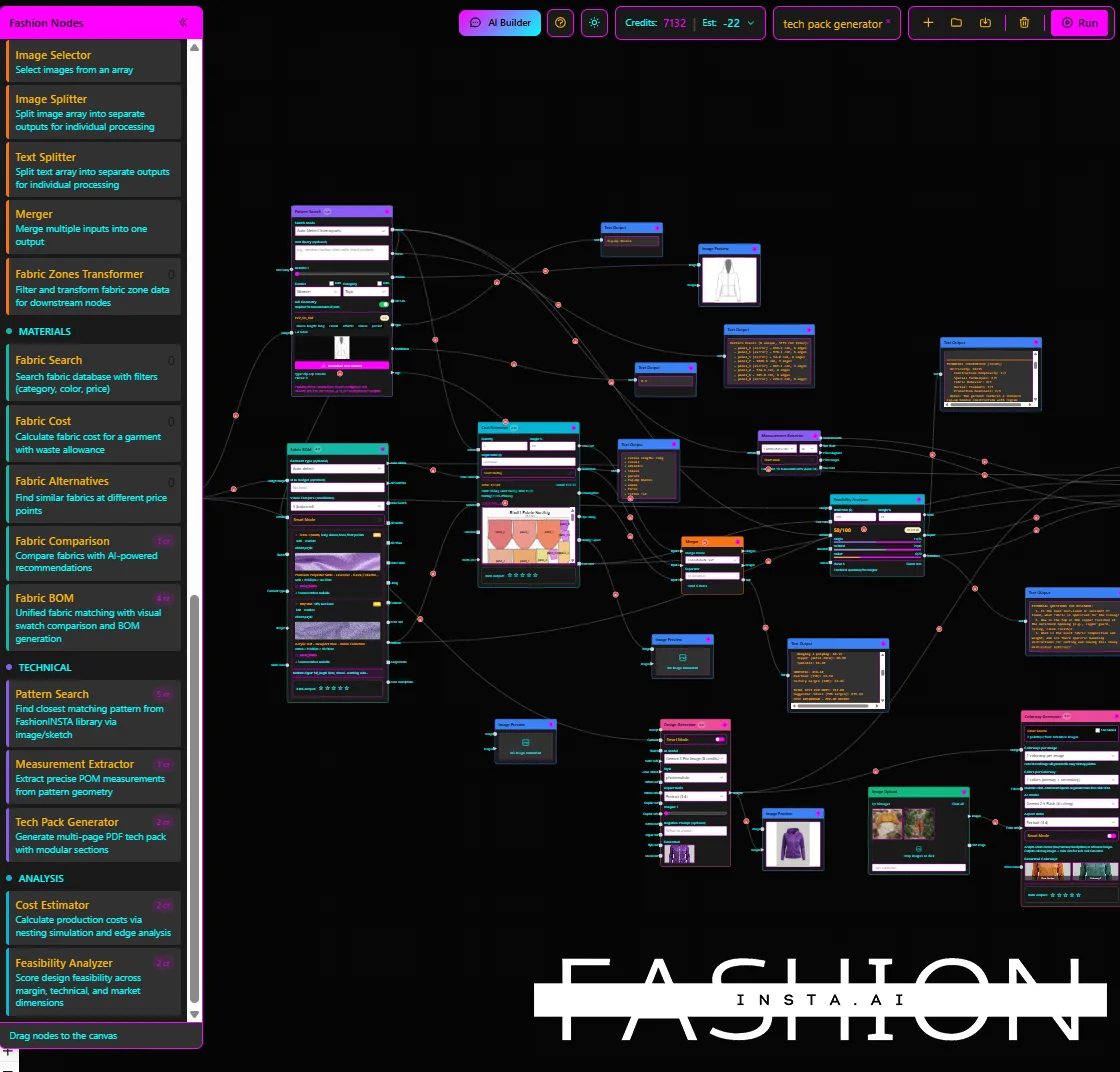
To understand how these platforms perform in practice, let's examine three common workflow scenarios:
Scenario 1: Brand with Large Pattern Archive Seeks Reuse Efficiency
Challenge: A heritage fashion brand has 15 years of patterns scattered across Gerber files, with significant duplication and no searchability. Pattern makers spend days searching for similar patterns or recreate from scratch.
FashionINSTA Workflow:
- Upload all .DXF patterns; AI trains overnight (3,000 patterns)
- Platform exposes 750 duplicate or near-duplicate patterns
- Consolidate library; AI creates searchable hierarchy and tags
- Designer uploads new sketch; AI returns top 10 matching blocks in 2 seconds
- Select base block; AI generates modular variation in 10 minutes
- Export .DXF to Gerber for grading and final approval
Style3D AI, Browzwear, CLO Workflow:
- No automated pattern intelligence; library must be manually organized
- Designer searches by filename/folder or recreates pattern from scratch
- 3D visualization and simulation available once pattern exists
Winner: FashionINSTA—purpose-built for this exact use case.
Scenario 2: E-commerce Brand Launching 50 New Styles for Digital-First Marketing
Challenge: Fast-fashion brand needs photorealistic product images and virtual try-on for 50 new styles before manufacturing samples. Speed and visual fidelity are top priorities.
Style3D AI Workflow:
- Upload sketches or reference images
- AI generates 3D garments with realistic fabric textures in seconds
- Apply brand avatar library; render photorealistic images
- Generate virtual try-on videos and AR assets
- Export marketing visuals; send patterns to factory for production
FashionINSTA Workflow:
- Strong at generating production patterns quickly
- Limited 3D visualization; requires export to CLO or Browzwear for renders
Browzwear/CLO Workflow:
- Excellent 3D rendering and virtual try-on
- Slower pattern creation (manual or minimal AI assistance)
Winner: Style3D AI—optimized for speed and marketing visuals.
Scenario 3: Technical Design Team Needs Accurate Fit Validation Before Manufacturing
Challenge: Luxury brand with strict fit standards needs to validate new pattern variations in 3D before cutting expensive fabric. Precision, manufacturing readiness, and fit approval workflows are critical.
Browzwear/CLO Workflow:
- Pattern maker drafts pattern in Lectra or within Browzwear/CLO
- Apply realistic fabric physics; validate fit on brand avatars
- Collaborate via cloud; stakeholders approve in 3D
- Export production-ready .DXF, tech pack, and BOM
- Send directly to factory for sampling
FashionINSTA Workflow:
- Generates patterns quickly but lacks integrated 3D simulation
- Requires export to Browzwear/CLO for fit validation
Style3D AI Workflow:
- Fast 3D simulation but less trusted by conservative technical teams for final approval
Winner: Browzwear or CLO 3D—mature, production-grade fit validation.
Key Differences and Trade-Offs
Pattern Intelligence vs. Visual Fidelity
FashionINSTA prioritizes deep pattern-level learning—extracting fit philosophy, enabling modular reuse, and generating manufacturable .DXF outputs. It lacks integrated 3D rendering but compensates with unmatched pattern library intelligence.
Style3D AI, Browzwear, and CLO prioritize photorealistic 3D simulation and visualization. They help brands see what garments will look like before manufacturing but don't automatically learn or reorganize pattern libraries.
Speed of Pattern Creation vs. Precision of Fit
FashionINSTA generates patterns in 10-15 minutes by training on brand blocks, making it fastest for brands with large archives.
Style3D AI generates 3D garments in seconds but outputs may require more manual refinement to match specific fit standards.
Browzwear and CLO are slower for initial pattern creation but offer the highest precision and trust for final fit approval.
Customization and Learning vs. Out-of-the-Box Capabilities
FashionINSTA requires upfront investment in custom AI training (uploading pattern library, defining fit standards) but then delivers brand-specific intelligence that compounds over time.
Style3D AI, Browzwear, and CLO offer strong out-of-the-box features (simulation, rendering, collaboration) without requiring custom training, making them faster to adopt but less differentiated by brand.
API and Workflow Automation
FashionINSTA offers webhooks and API access (business plans), enabling integration into PLM systems, automated tech pack generation, and triggered pattern generation from design handoffs.
Browzwear provides enterprise API access for PLM and ERP integration.
Style3D AI and CLO have more limited programmatic access, relying on manual exports and imports.
Which Platform Is Right for Your Team?
Choose FashionINSTA If You:
- Have a large legacy pattern archive (500+ patterns) with duplication and search challenges
- Want to preserve and scale institutional fit knowledge across team changes
- Need fast sketch-to-production pattern workflows (10-15 minutes)
- Prioritize pattern-level precision and manufacturability over 3D visualization
- Want AI that learns your brand's specific construction DNA
- Plan to integrate pattern generation into PLM or automated workflows via API
Choose Style3D AI If You:
- Are launching new product lines without large legacy pattern libraries
- Want an all-in-one platform for design, 3D, and visualization
Choose Browzwear VStitcher If You:
- Have mature product development processes with strong technical design teams
- Want AI as an enhancement, not a replacement, for traditional CAD workflows
- Require tight integration with PLM, ERP, and factory systems
Choose CLO 3D If You:
- Want the safest, most established choice with large community and resources
- Have strong internal CAD expertise and prefer incremental AI adoption
- Are cautious about early-stage AI and prefer proven, stable tools
Implementing AI-CAD Integration: Practical Steps
Regardless of which platform you choose, successful AI-CAD integration requires careful planning:
1. Audit Your Pattern Library
- Count total patterns and identify duplication
- Assess file format consistency (.DXF, .AI, proprietary)
- Document naming conventions and organization
- Identify "hero blocks" that represent brand fit philosophy
2. Define Success Metrics
- Pattern search time (current vs. target)
- Pattern creation speed (manual vs. AI-assisted)
- Sample reduction rate (physical prototypes eliminated)
- Cost savings (time, materials, shipping)
3. Start Small and Iterate
- Pilot with a single product category (e.g., shirts or dresses)
- Train 10-50 pattern makers on new workflows
- Measure performance against baseline
- Expand based on results
4. Plan for Change Management
- AI-CAD integration changes roles: pattern makers become "pattern curators" who validate and refine AI outputs rather than drafting from scratch
- Provide training and position AI as a tool that frees teams for higher-value creative work
- Celebrate early wins (faster turnarounds, discovered reuse opportunities)
5. Maintain IP and Data Security
- Understand where your pattern data is stored (cloud vs. on-premise)
- Review terms of service for AI training and data ownership
- Implement access controls and version tracking
- Consider contractual protections for proprietary fit standards
The Future of AI-CAD Integration in Fashion
The platforms compared here represent different philosophies for integrating AI with CAD in fashion design workflows. AI pattern making continues to evolve rapidly, with 2026 likely to see increased convergence—pattern intelligence systems adding 3D simulation, and 3D platforms adding deeper pattern learning.
For R&D directors and technical creatives navigating this landscape, the key insight is that "AI in fashion CAD" isn't one thing—it's a spectrum from image-based ideation tools to deep pattern intelligence systems. The right choice depends on whether your bottleneck is creative exploration (favor Style3D AI), fit validation (favor Browzwear or CLO), or pattern library organization and reuse (favor FashionINSTA).
As the distinction between AI and automation in fashion becomes clearer, leading brands are adopting hybrid strategies: using pattern intelligence systems like FashionINSTA to unlock legacy archives and accelerate early-stage pattern creation, then refining and validating in established 3D CAD tools like CLO or Browzwear. This approach preserves the best of both worlds—AI-driven speed and institutional learning combined with trusted, production-grade precision.
For teams positioning themselves at the intersection of 3D and AI, mastering this hybrid workflow is becoming the defining skillset for fashion's next generation of digital craftsmen. The ability to train AI on your brand's pattern DNA, generate variations in minutes, and validate fit in photorealistic 3D represents the complete "Digital-to-Physical" pipeline that Morgan and thousands of technical creatives have been chasing—a workflow where designer vision becomes manufacturer reality without translation loss.
Conclusion: Integration Strategy Matters More Than Tool Selection
The comparison reveals that no single platform dominates across all dimensions. FashionINSTA leads in pattern intelligence and library automation, delivering the fastest path from sketch to production-ready .DXF while preserving brand fit philosophy. Style3D AI excels in speed and visual storytelling, making it ideal for e-commerce and digital-first marketing. Browzwear and CLO provide mature, trusted 3D CAD capabilities with incremental AI enhancements suited to risk-averse technical teams.
The most successful implementations we've observed combine multiple tools strategically: using FashionINSTA to organize and generate patterns, then refining and validating in CLO or Browzwear before sending to production. This hybrid approach maximizes AI's strengths—speed, search, and learning—while preserving human expertise where it matters most: final fit approval, grading precision, and quality control.
For brands ready to integrate AI with existing CAD workflows, the decision framework is clear: assess your current bottleneck (pattern search? visualization? fit validation?), evaluate which platforms address that constraint, pilot with a focused product category, and iterate based on measurable outcomes. The future of fashion product development isn't human-only or AI-only—it's a seamless collaboration between pattern intelligence systems and the creative craftspeople who know when to trust the algorithm and when to trust their hands.