7 Ways Fashion Brands Are Enhancing Their Design Process with AI in 2025
TL;DR: In 2025, artificial intelligence is revolutionizing the fashion industry by accelerating development cycles and drastically reducing physical sampling costs. Leading brands are integrating AI across their entire workflow, from trend forecasting and automated pattern making to 3D virtual prototyping and sustainable design. This shift not only speeds up time-to-market but also enhances creativity and personalization at scale.
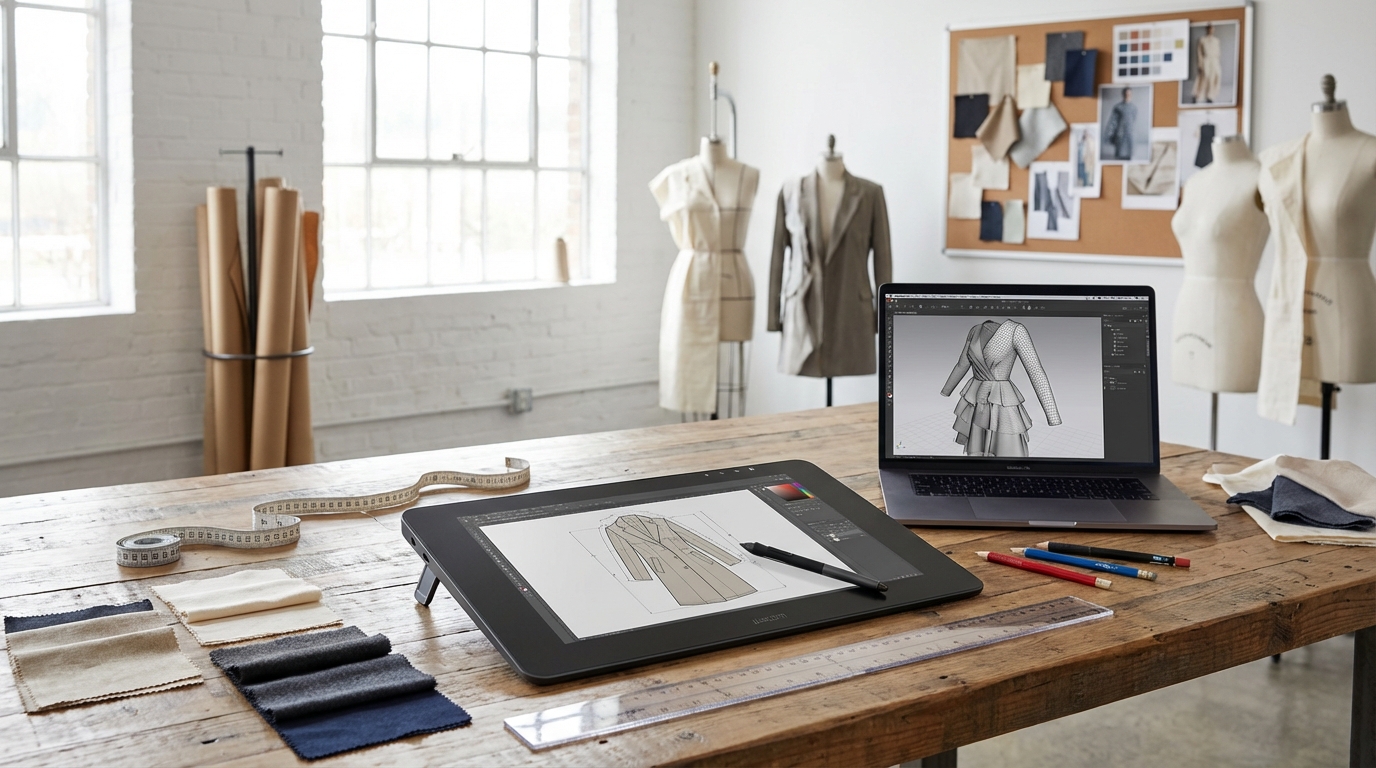
The fashion industry is experiencing a fundamental transformation in 2025, driven by artificial intelligence systems that accelerate development cycles by 70% and reduce physical sampling costs by up to 90%. Leading brands have moved beyond pilot projects into full-scale integration of AI across the design workflow—from trend forecasting and generative concept creation to automated pattern making and virtual prototyping. This listicle explores seven concrete ways fashion companies are leveraging AI to enhance creativity, speed time-to-market, preserve fit consistency, and reduce environmental impact.
1. AI-Powered Trend Forecasting and Instant Insights
Fashion brands are replacing months-long trend research cycles with real-time AI-driven intelligence that scans millions of social media images, search data, and runway archives to surface micro-trends as they emerge. Companies like Heuritech analyze over 3 million social media images daily, detecting more than 2,000 fashion attributes—including silhouettes, colors, fabrics, and styling details—to forecast what consumers will want next season with unprecedented accuracy.
Real-world impact: Zara's "Just-Intelligent" AI system monitors inventory and demand signals in real time, enabling the brand to achieve a remarkable 1-week turnaround from design to store and maintain 85% sell-through rates, significantly above the 60% industry average. AI forecasting has helped fast-fashion leaders reduce inventory costs by up to 40% while increasing responsiveness to consumer preferences.
Nike has integrated AI into its storytelling and design ideation, using machine learning to analyze vast datasets of consumer behavior and competitive launches, then feeding those insights directly to design teams to inform innovative sneaker concepts and performance apparel lines. This data-to-design pipeline ensures that new collections resonate with emerging athletic and lifestyle trends before competitors can react.
2. Generative Design and Rapid Concept Iteration
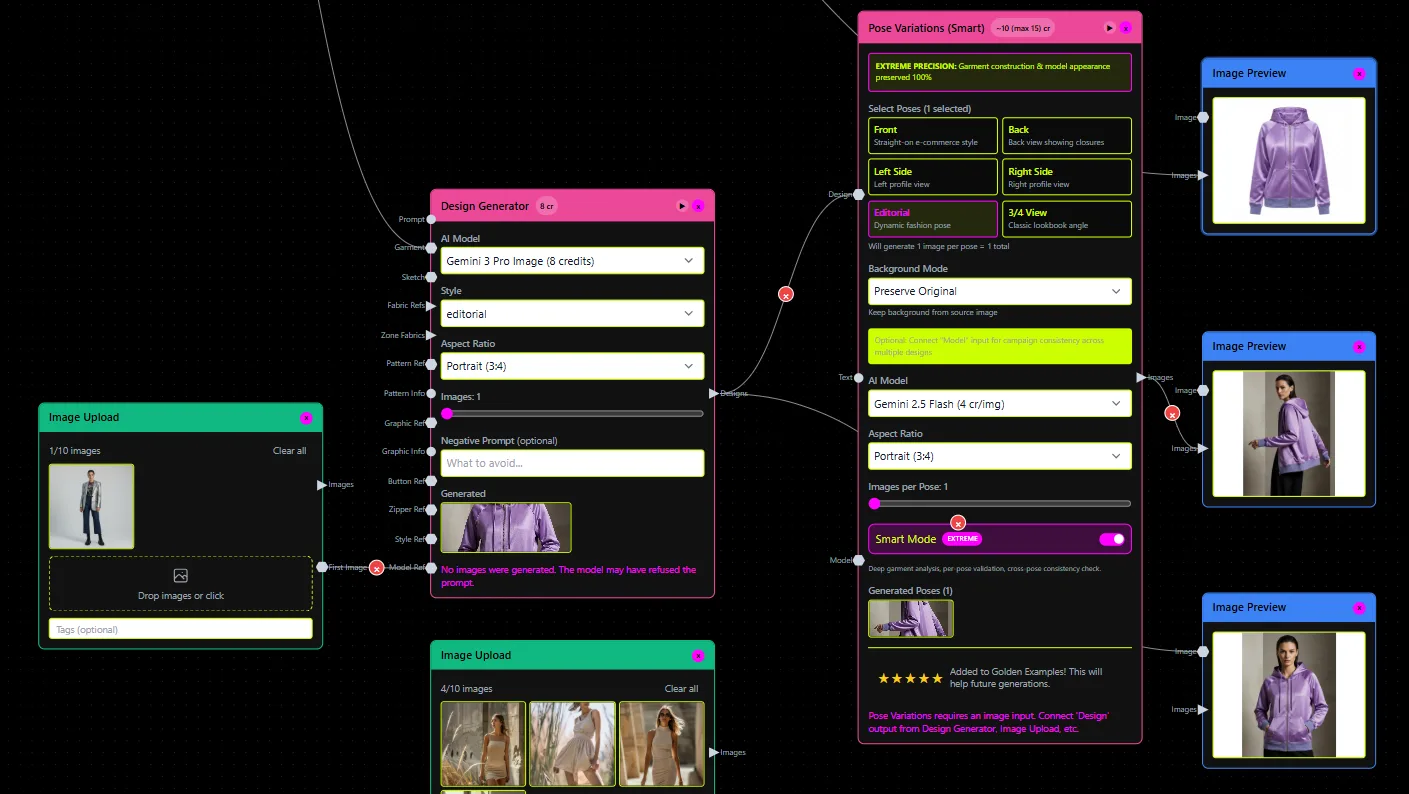
Generative AI tools have transformed the ideation phase, enabling designers to produce hundreds of mood board iterations, colorway variations, and style concepts in minutes rather than weeks. Tools like Midjourney and proprietary in-house systems allow creative teams to explore diverse aesthetic directions simultaneously, accelerating the creative exploration process while maintaining brand identity.
Measurable outcomes: Pronounced Design, a startup founded by ex-Google engineers, achieved $10 million in revenue by using AI for 100% of its collection generation, skipping traditional, labor-intensive sketching and sampling phases. Meanwhile, Mango successfully generated an entire fashion campaign using generative AI, blending AI models with human-designed clothing to create highly realistic imagery and cutting production time and costs by an estimated 90%.
Luxury brands are also adopting generative design for unique, high-tech products: Moncler partnered with Maison Meta to create the "Verone" AI jacket, using generative algorithms to design one-of-a-kind quilted textures that would be nearly impossible to conceptualize manually. This approach combines creative experimentation with manufacturing feasibility, opening new frontiers in product differentiation.
3. Automated Pattern Making and Technical Pack Generation
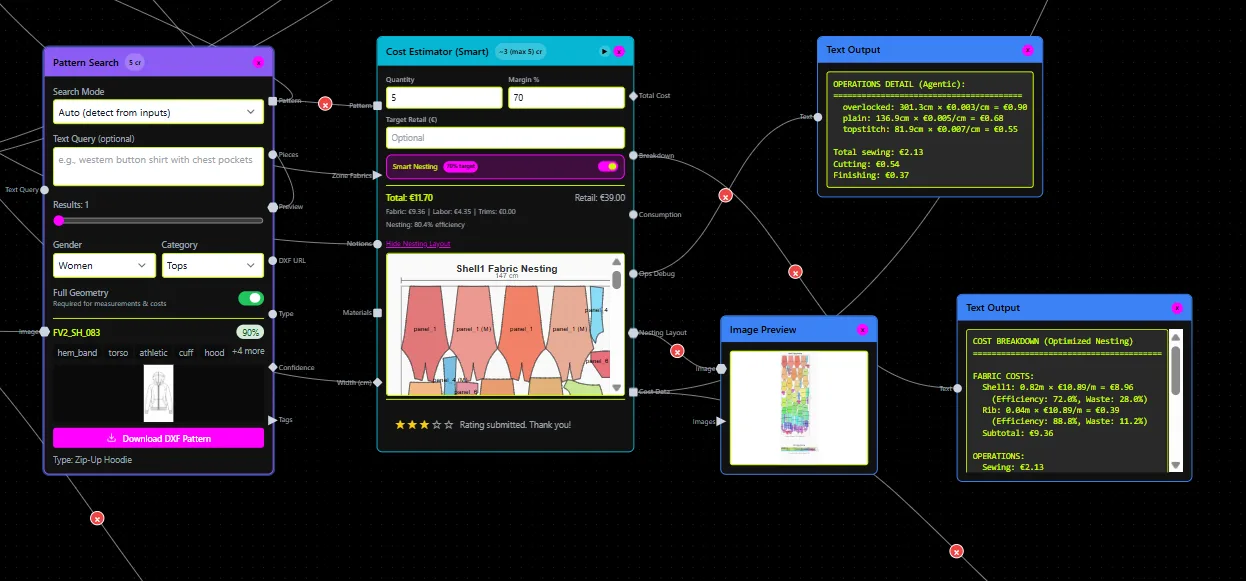
One of the most transformative applications of AI in 2025 is the automation of pattern making—historically a skilled, time-intensive task that required weeks of manual drafting and grading. AI pattern making systems now convert 2D sketches into production-ready 3D garments and generate detailed technical packs (tech packs) complete with measurements, construction notes, and bill-of-materials (BOM) data.
Platforms like FashionINSTA train custom "Pattern Intelligence" on a brand's existing .DXF pattern library, extracting 750+ features per pattern—including armholes, ease, seams, curves, and construction methods—to learn the brand's unique fit philosophy and construction DNA. This enables product development teams to generate new pattern variations that preserve signature fit and styling details while adapting for new designs, dramatically reducing duplication and manual rework.
Business value: Brands report exposing approximately 25% pattern duplication across archives and reducing pattern search time from days to seconds. One California-based brand using FashionINSTA's system saved $60,000–$80,000 annually by organizing scattered archives into searchable intelligence and eliminating redundant pattern work, while an Italian brand avoided €150,000 in duplicated effort.
4. 3D Virtual Prototyping and Digital Twins
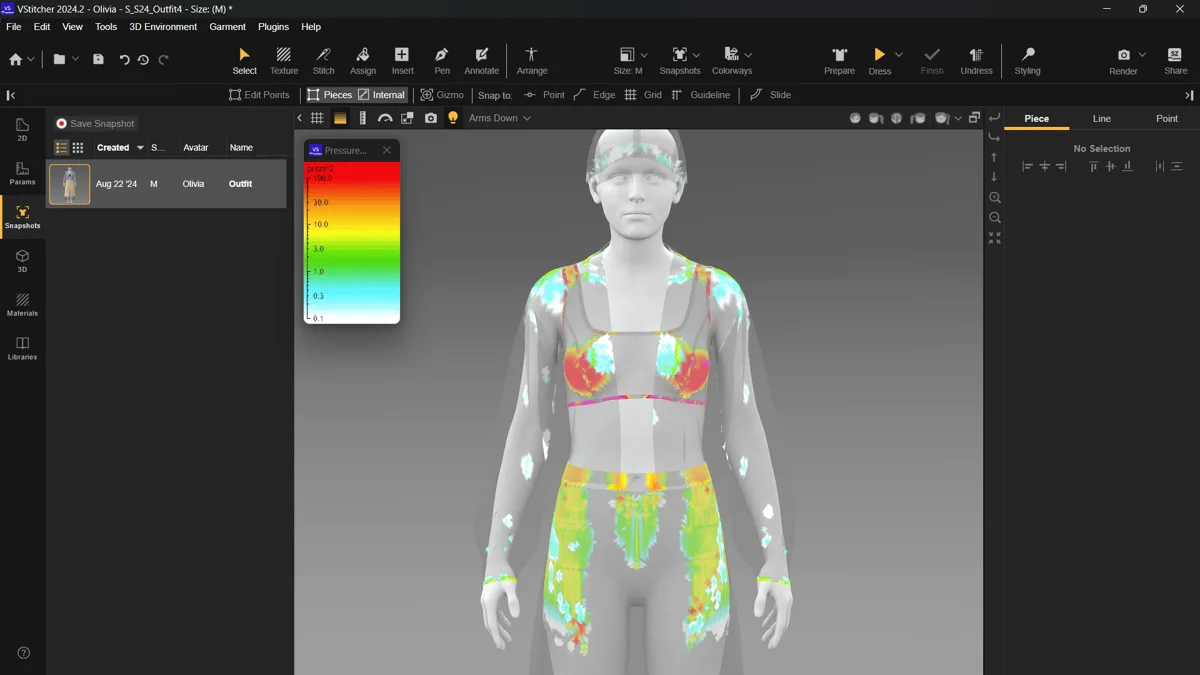
Virtual prototyping has matured in 2025, with 3D simulation platforms like Style3D, Browzwear, and CLO creating highly accurate digital twins—photorealistic replicas of garments that simulate fabric behavior, weight, drape, and fit. These digital prototypes enable brands to test and refine designs before committing to physical samples, reducing the traditional 5–6 sampling rounds down to just 1–2.
Efficiency gains: Fashion companies using 3D to AI digital workflows report a 70% reduction in design-to-sample turnaround time, with some fast-fashion players moving from concept to virtual sample in days instead of months. This acceleration not only cuts costs but also reduces textile waste and carbon emissions associated with shipping physical samples across global supply chains.
AI avatars—high-fidelity digital models provided by platforms like Lalaland.ai and CALA—test fit on diverse body types and sizes, ensuring inclusive sizing and reducing the need for multiple physical fittings. Levi Strauss & Co. has pioneered the use of AI-generated models to showcase products on a diverse range of body types, increasing inclusivity in marketing while reducing photo shoot costs and timelines.
5. Collaborative Cross-Functional Workflows
AI-powered platforms have become central hubs for cross-functional collaboration, connecting designers, technical designers, merchandisers, and manufacturers within a single digital ecosystem. Version control, real-time annotation, and automated updates ensure that every stakeholder works from the same source of truth, eliminating translation errors and miscommunication that historically plagued product development.
Top AI tools that speed up fashion design by 70% include platforms that integrate pattern libraries, 3D visualization, cost estimation, and fabric consumption calculations. FashionINSTA's node-based workflow allows teams to drop thousands of images and, within a day, receive ready patterns, catalogues, e-commerce photoshoots, tech packs, and feasibility checks—automatically filtering out styles that don't meet margin requirements and leaving only viable options for evaluation.
Organizational impact: This level of automation and collaboration is particularly valuable for brands managing complex global supply chains. By aligning designer vision with manufacturer reality through shared digital assets and parametric controls, companies reduce costly back-and-forth iterations, miscommunication, and production delays.
6. Sustainable Design and Waste Reduction
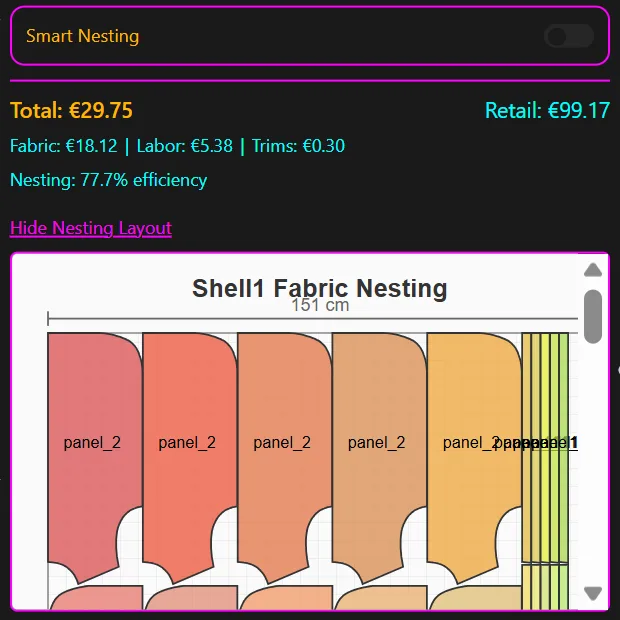
Sustainability is no longer a secondary consideration but a core driver of AI adoption in fashion. AI systems optimize material usage, predict waste at the design stage, and support circular design principles by recommending fabric choices and construction methods that extend product life and enable easier recycling.
Environmental outcomes: Virtual prototyping alone has been shown to reduce physical sample production by up to 90%, significantly cutting textile waste and the carbon footprint of international shipping. AI-powered fabric optimization algorithms analyze pattern geometry to minimize fabric consumption and generate cutting layouts that maximize yield, further reducing pre-consumer waste.
Leading brands are also using AI to design enzymes and processes that break down polyester waste into high-quality recycled material, supporting closed-loop production. Meanwhile, predictive analytics help brands produce closer to actual demand, reducing overproduction and end-of-season markdowns that contribute to the 92 million tons of textile waste generated by the fashion industry annually.
7. Personalization at Scale and Segment-of-One Design
AI is enabling fashion brands to move beyond demographic segmentation into "segment-of-one" design—creating highly personalized products and shopping experiences tailored to individual consumer preferences, body measurements, and style profiles. Brands like Bold Metrics and True Fit use AI to generate precise body measurements for better size guides, reducing returns and improving customer satisfaction.
Customer experience improvements: Nike's "Nike Fit" app uses AI and augmented reality (AR) to deliver accurate, personalized shoe sizing, helping customers find the right size on the first order and significantly reducing return rates. Meanwhile, platforms like Stitch Fix have built entire business models around AI-driven personalization, using machine learning to curate clothing selections that match each subscriber's taste, fit, and budget.
On the design side, AI analyzes individual purchase histories, browsing behavior, and social media activity to inform collection planning, ensuring that new styles align with the preferences of specific customer segments. This data-to-design feedback loop allows brands to create products that are more likely to resonate with their target audience, increasing conversion rates and reducing unsold inventory.
Conclusion: The Future of AI-Enhanced Fashion Design
The fashion industry in 2025 has moved decisively past the "AI experimentation" phase into strategic, scalable adoption. Brands that integrate AI across trend forecasting, generative design, automated pattern making, 3D prototyping, collaborative workflows, sustainable production, and personalization are achieving measurable competitive advantages: 70% faster development cycles, 90% reduction in physical sampling costs, 40% lower inventory expenses, and significantly higher sell-through rates.
However, successful AI adoption requires more than technology investment. Leading brands are redesigning workflows, upskilling teams, and addressing data governance, intellectual property, and bias risks with clear policies and human oversight. The most effective implementations treat AI as a creative collaborator and operational amplifier—augmenting human designers rather than replacing them—while preserving the brand's unique fit philosophy, construction standards, and aesthetic identity.
For fashion companies still in pilot mode, the path forward is clear: start with a focused use case (such as virtual prototyping or pattern intelligence), measure results with concrete KPIs, and scale proven solutions across the organization. The brands that master this transition will lead the next decade of fashion innovation, delivering better products faster, more sustainably, and more aligned with consumer expectations than ever before.