The Pattern Maker to Designer Timeline
TL;DR: Transitioning from a pattern maker to a fashion designer is a strategic process that typically spans 18 to 24 months. By shifting your focus from pure technical execution to creative direction and leveraging AI tools to streamline drafting, you can build a strong design portfolio and bridge the credibility gap.
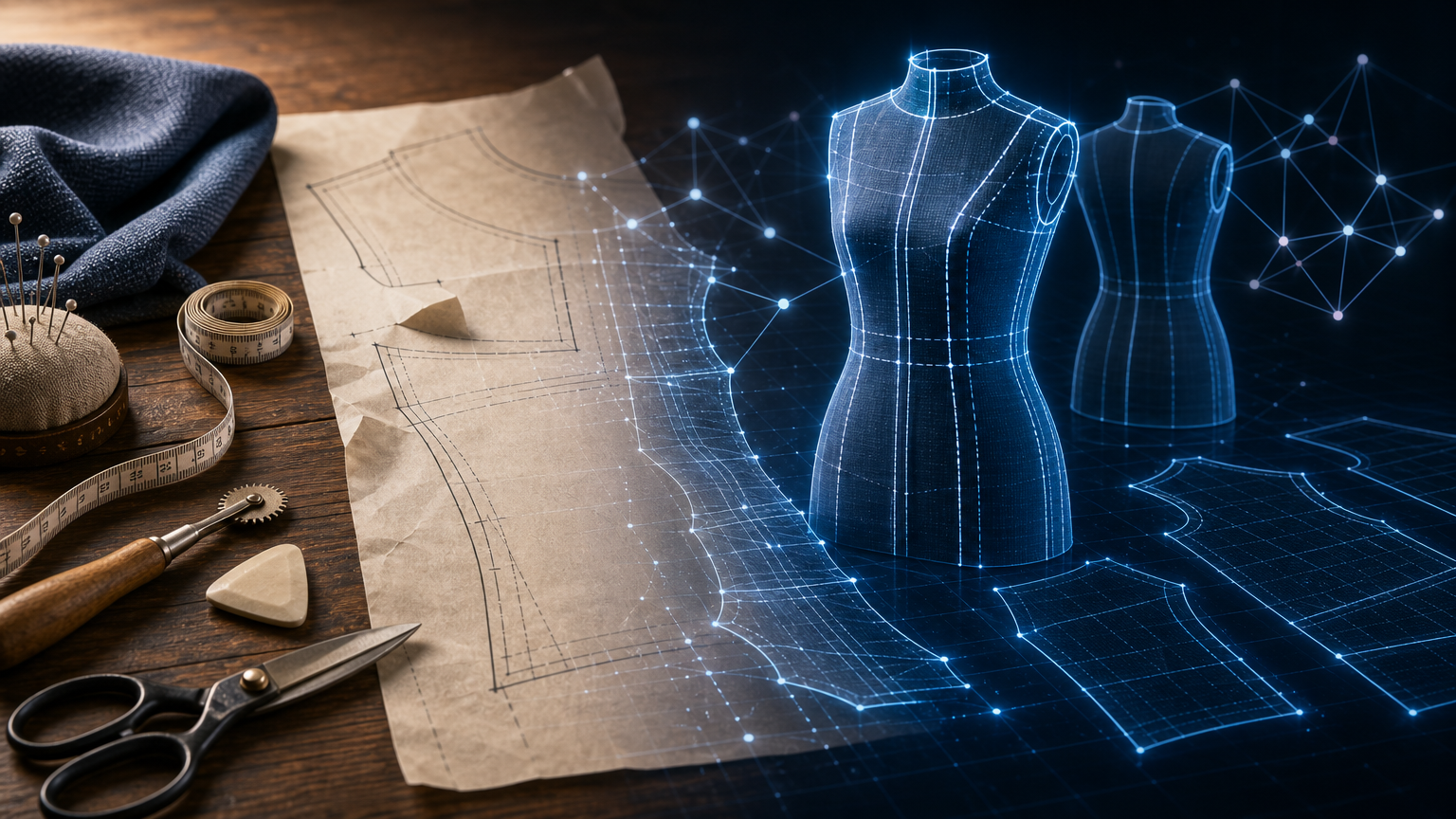
You already know how to read a garment. You understand seam allowances, ease, grain lines, and why a sleeve head can ruin a whole fitting. That's not nothing. In fact, that's the exact foundation most fashion designers spend years trying to build from scratch. So why does the pattern maker to designer timeline feel so murky?
Because the transition isn't just about skills. It's about identity, presentation, and a completely different kind of output.
The real gap between a pattern maker and a fashion designer
A pattern maker's job is to translate someone else's vision into manufacturable geometry. Precision is the currency. You succeed when the sample matches the spec.
A designer's job is to generate the vision itself. You have to pitch a concept, build a story around a collection, anticipate what a customer will want six months from now, and present all of it persuasively before a single pattern is drawn. The technical part is downstream of that creative direction, not the other way around.
That pivot from "I execute brilliantly" to "I originate and lead" is where most transitions stall. It's not a CAD problem. It's a storytelling and confidence problem. The two most common blockers are imposter syndrome (a persistent feeling that you're a craftsperson pretending to be a creative) and portfolio credibility (not having anything that proves you can direct a collection, not just draft one). Recognizing these blockers early is half the work of getting past them.
How long does it actually take? The 18-24 month reality
The honest answer for the pattern maker to designer timeline is 18-24 months for a full, sustained transition. That's the window our pattern maker to designer career transition guide maps out, and it reflects what actually happens when you're building a new professional identity while still working in your current role.
Here's how those months break down in practice:
- Months 1-6 (foundation): Build your first concept boards and design flats. Develop 2-3 production-capable prototypes that prove you're making design decisions, not just executing someone else's. Start an actual portfolio.
- Months 6-12 (practical application): Learn to take an idea from sketch or photo all the way to a CAD-compatible pattern and a tech pack-ready spec. The sketch-to-DXF workflow is critical here, and the faster you can move through that chain independently, the faster your portfolio grows.
- Months 12-18 (active transition): Secure some form of design responsibility, whether an assistant designer title, a hybrid role, or a freelance project where you're leading the creative. Ship at least one mini-collection.
- Months 18-24 (establishing expertise): Own collection direction. Demonstrate production feasibility instincts, budget awareness, and the ability to take a garment from concept to factory-ready documentation without hand-holding.
The salary numbers reflect why this transition is worth the effort. Pattern makers earn an average of $75,298 per year, with top earners reaching $128,622. Designers average $85,322, and the ceiling climbs significantly from there as you move into creative director territory.
One critical side note: your "time to first proof" can be much shorter than 18 months. You can have your first portfolio-worthy sample within 3-4 months if you focus on it deliberately. That first proof, a real sample or a complete tech pack you originated, is what breaks the credibility gap long before your title changes.
Case study 1: the Max Mara pattern maker who moved in 6 months
One of the most cited examples in the FashionINSTA career guide involves a pattern maker who spent five years at Max Mara. She was exceptional at her job, technically fluent, deeply knowledgeable about construction. But she was always executing someone else's direction.
After five years, she applied for a junior designer position. Six months later, she was leading her own collection.
What made that speed possible? She didn't start from zero on the technical side (she already had that). She focused her energy on the skills she hadn't practiced: concept development, mood boarding, trend research, and presenting a point of view. She built a small capsule of original work that showed design intent, not just technical execution. And because she already understood construction constraints, her design proposals were more commercially viable than most junior designers', which accelerated trust from her team.
The lesson isn't that everyone can do it in six months. It's that if you're strategic about closing the specific gaps you have, the timeline compresses significantly.
Case study 2: a workflow-first approach (composite case, clearly labeled)
This is a hypothetical composite based on the pattern-maker-to-designer path we see most often within the FashionINSTA ecosystem, where professionals use tooling to compress the technical bottleneck and free up time for creative development.
Consider a pattern maker at a mid-size contemporary brand who wants to transition but keeps hitting the same wall: every time she tries to build her design portfolio, she gets pulled back into technical requests. CAD drafting, grading corrections, tech pack revisions. The design work keeps getting deprioritized.
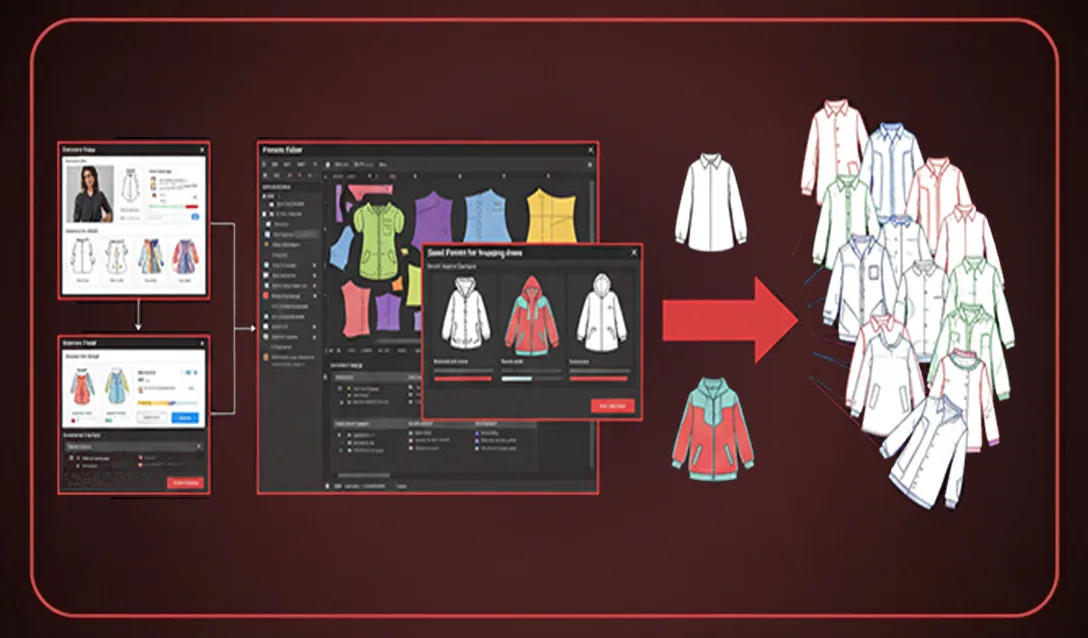
She restructures her workflow using FashionINSTA's Pattern Intelligence approach. In the first two weeks, she collects and uploads her existing .DXF archive (starting with 70-150 patterns from one category, as the platform's PoC framework specifies). Over the following two weeks, the AI cleans and trains on that data, learning her brand's fit geometry. Then comes six weeks of active tryout, working through the sketch-to-CAD-to-tech-pack chain with AI handling the first draft.
The result: the part of her day previously eaten by technical first-draft work shrinks substantially. FashionINSTA's enterprise data shows a 10x faster first draft rate, and cost feasibility estimates can reach about 80% of real-world accuracy when connected to correct sourcing data. That reclaimed time goes directly into concept development, presentation prep, and portfolio building. The full enterprise PoC runs as a bounded 10-week engagement, with KPIs checked at week 10. For her career, that 10-week period becomes concentrated portfolio sprint time rather than technical execution time.
The pattern making to fashion design career progression doesn't require you to stop being technical. It requires you to stop being only technical.
What you should be able to show at each stage
A checklist matters here because vague milestones don't hold you accountable.
By the end of months 1-6, you should have: at least one small capsule with concept boards and design flats, 2-3 prototypes you originated (not just drafted), and a portfolio page that communicates design intent.
By months 6-12, you should be able to: take a sketch or photo input through to a CAD-ready pattern and a complete tech pack. If that chain still takes you multiple days, your portfolio output speed will suffer. Tools that handle the sketch-to-pattern workflow reduce that friction substantially.
By months 12-18: you've shipped real design work with your name on it. An assistant designer credit, a capsule for a small brand, a freelance collection, something that exists in the world.
By months 18-24: you're making collection-level decisions and backing them with production feasibility knowledge. That combination, creative direction plus construction credibility, is genuinely rare and genuinely valuable.
How FashionINSTA fits into this (without replacing you)
FashionINSTA's role in a designer transition is specific. It's not a creativity tool. It's a technical bottleneck remover.
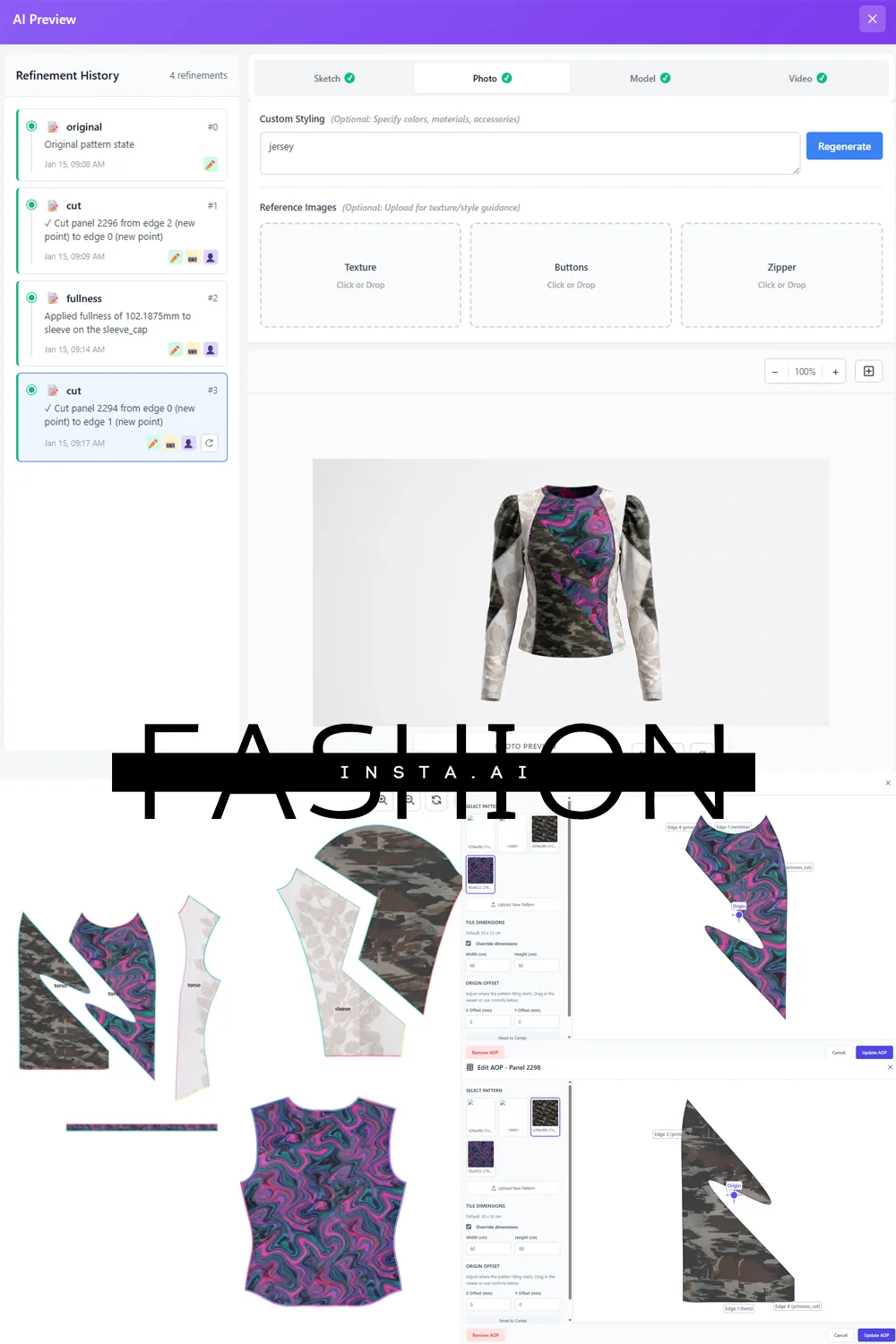
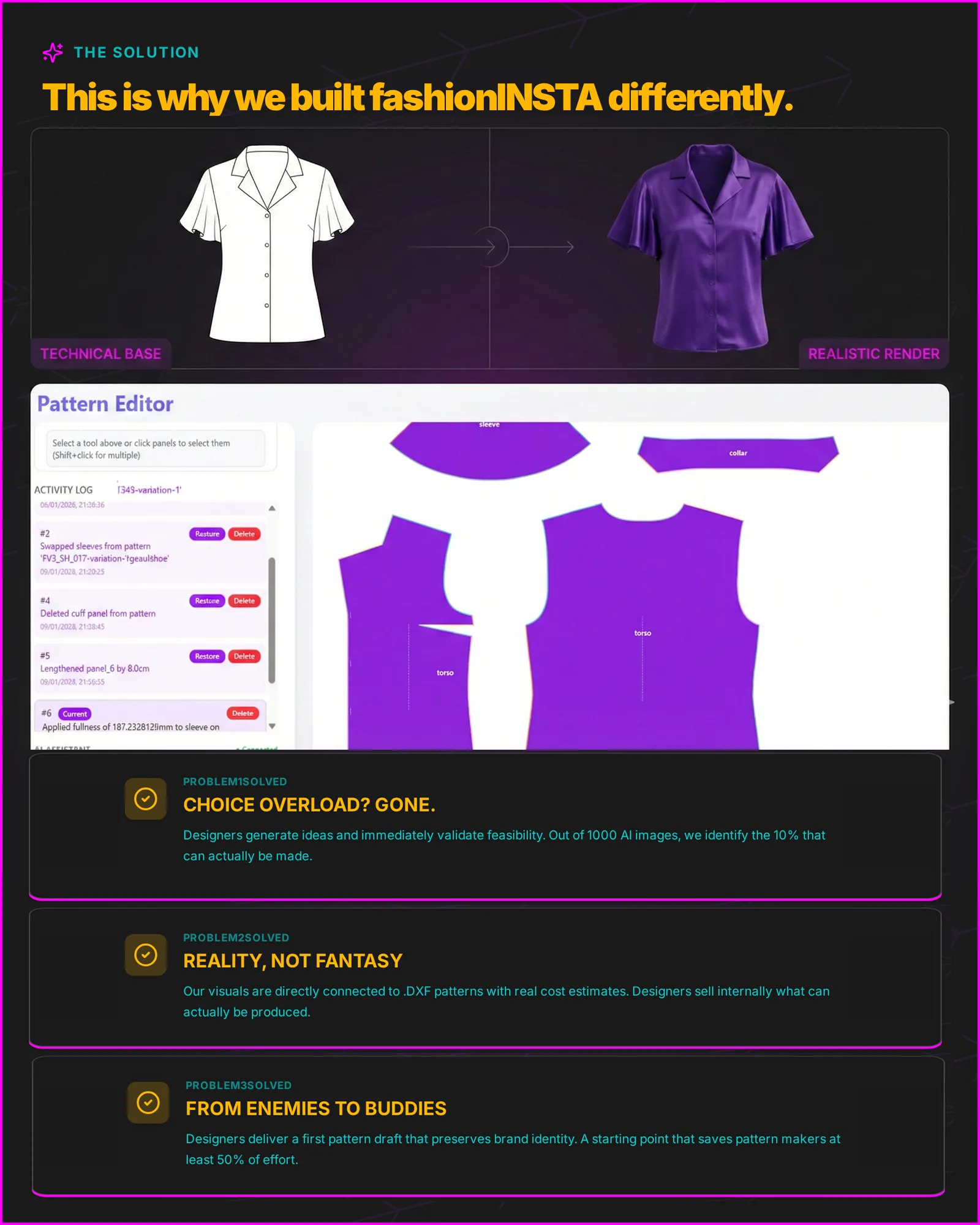
The platform trains on your existing .DXF pattern archive, extracting 750+ features per pattern to learn your fit philosophy and construction logic. When you input a sketch or design direction, it retrieves the closest matching geometry from your archive and outputs a CAD-compatible .DXF file, along with feasibility checks, BOM data, cost estimates, and a compiled tech pack. The AI pattern making workflow also generates presentation visuals tied to that geometry, so your portfolio outputs aren't just specs but also render-quality visuals.
For a transitioning pattern maker, the practical impact is this: the hours you'd spend wrestling CAD into a first draft get replaced by design decisions. You're directing the output, not producing it from scratch. That time difference is where portfolio building lives.
Three pitfalls that slow people down
First, waiting too long to build a portfolio. Many pattern makers spend months 1-6 "getting ready" to build a portfolio rather than actually building one. Start imperfect. The evidence of design ownership matters more than visual polish at this stage.
Second, confusing "I can draft it" with "I can sell it." Technical credibility is table stakes for this transition, not a differentiator. Hiring managers and creative directors are evaluating your concept thinking, not your seam allowances. Your portfolio needs to show both, but the creative layer is the one that needs the most deliberate work.
Third, skipping the feedback loop between concept decisions and production feasibility. Designers who also understand construction don't just have an advantage, they have a genuine superpower. But you have to practice using both sides together, iterating on concepts while checking them against real production constraints, not sequentially.
If you're three months in and still haven't started a portfolio, that's your only task for the next thirty days. If you're twelve months in with a portfolio but no real design credit, find a project (a friend's brand, a freelance brief, anything) where you can put your name on the creative direction.
The transition is real and it takes time. But pattern makers who move into design with intention, and who stop letting technical execution crowd out creative development, consistently do it faster than they expect. The construction knowledge you've spent years building doesn't disappear. It just becomes your competitive advantage in fashion design rather than your job description.