AI Revolutionizes Fashion 2026
TL;DR: In 2026, artificial intelligence has officially transitioned from experimental pilot programs to core infrastructure across the fashion industry. Generative design, virtual try-ons, and AI-driven supply chains are drastically compressing workflows and reducing costs. Brands fully embracing these tools are already seeing significant margin improvements and faster times to market.

I've spent enough time in fashion product development to know that "AI is changing everything" has been a headline since at least 2019. But 2026 genuinely feels different. This year, AI stopped being a pilot program brands added to a press release and started running inside actual workflows. Design, production, sourcing, retail, the shift is structural, and it's accelerating fast.
If you're a brand director or design leader trying to separate real signal from vendor noise, here's what's actually happening.
The big shifts in 2026 (at a glance)
Four changes stand out above the rest right now:
- Generative AI is influencing real product launches. Automated design and virtual prototyping tools are now active in over 40% of new product introductions, according to industry analysis from early 2026.
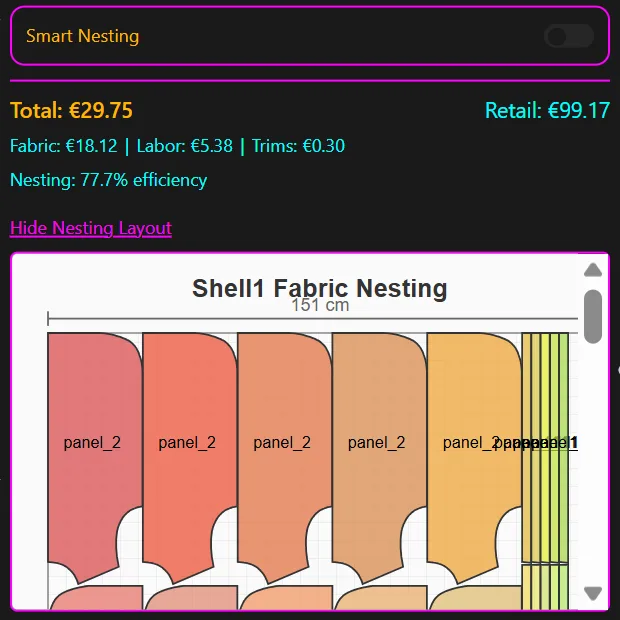
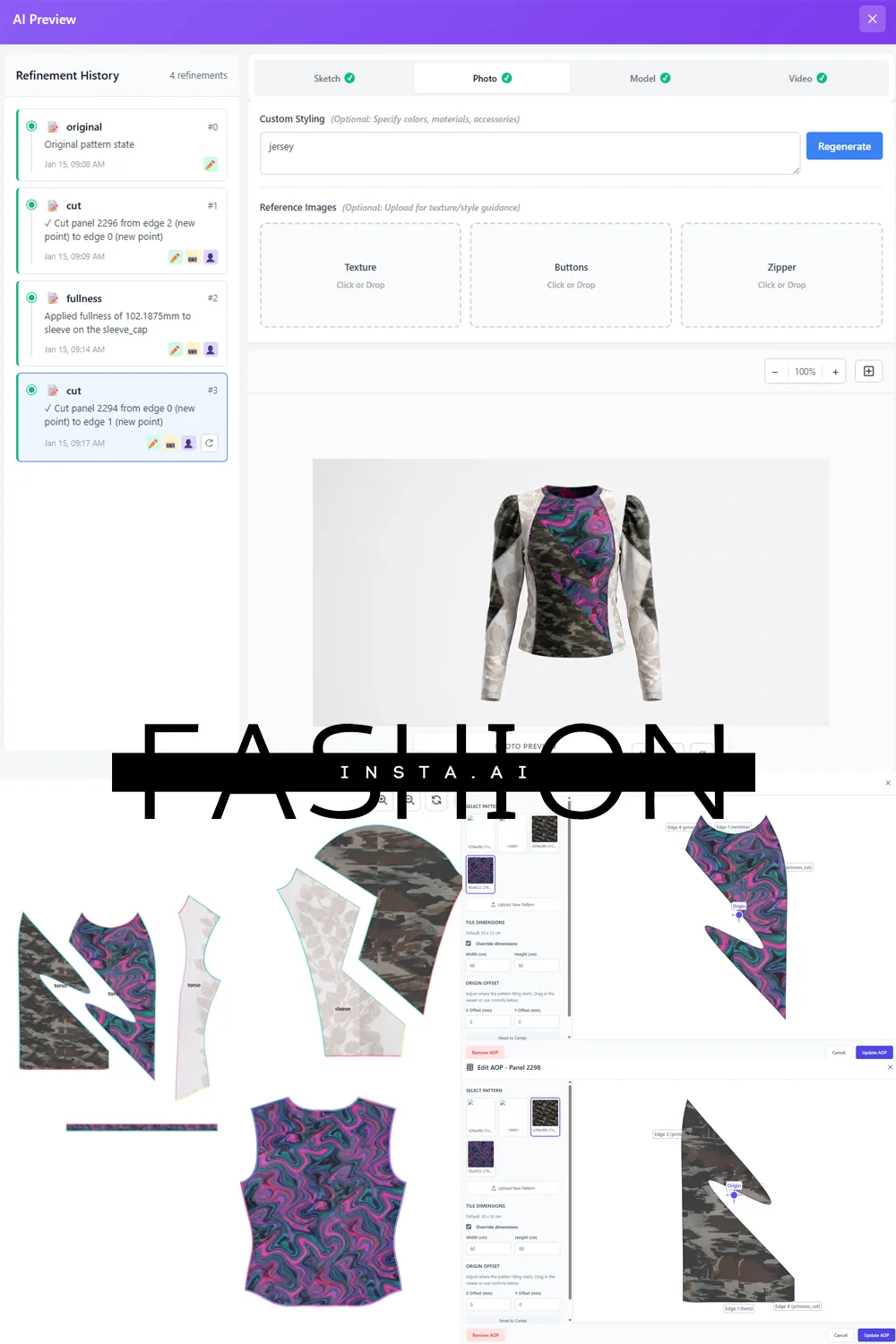
- Pattern and sample workflows are compressing dramatically. AI is cutting the time from sketch to production-ready asset from days into minutes, not just hours.
- Personalization and virtual try-on are moving from novelty to infrastructure. About 62% of leading fashion platforms have integrated virtual try-on tools, per Congruence Market Insights.
- AI has officially entered the supply chain. Demand forecasting, inventory allocation, and fabric sourcing are all running on machine learning in a way they simply weren't three years ago.
Market numbers: the 2026 snapshot
The numbers tell a clear adoption story. According to Research and Markets, the AI in fashion market is valued at $2.47 billion in 2026 and is projected to hit $9.45 billion by 2030, a 39.8% compound annual growth rate. Straits Research puts the 2026 figure even higher, at $3.87 billion.
McKinsey's broader estimate suggests generative AI could add $150–275 billion to fashion's operating profits. That's not speculative futures-thinking. Brands acting on it now are already seeing margin impact.
GenAI's influence on new product launches is growing: reports from early 2026 show that AI-driven design tools now touch more than 40% of the textile market's new releases. The adoption gap between early movers and laggards is widening by the quarter.
Three 2026 case studies with real KPIs
Zara: From 6-month forecasting to 2-week cycles. Zara's AI-powered supply chain has become the industry benchmark. The brand's machine learning models monitor Instagram engagement in real time, detecting viral items almost instantly. With pre-dyed fabric in nearby factories, Zara can move from design to store in as little as two weeks. The result: excess inventory markdowns dropped to 15–20%, compared to the 30–40% industry average, and the brand cut overall waste by approximately 25%.
H&M: Textile recycling at 96% accuracy. The H&M Foundation backed a Smart Garment Sorting System that uses visual AI and hyperspectral analysis to automatically classify post-consumer textile waste. The system achieves 96% classification accuracy, tackling one of fashion's most persistent sustainability problems at scale. Meanwhile, H&M's use of AI-generated digital avatars for virtual fitting is reducing the sample development burden on their design teams.
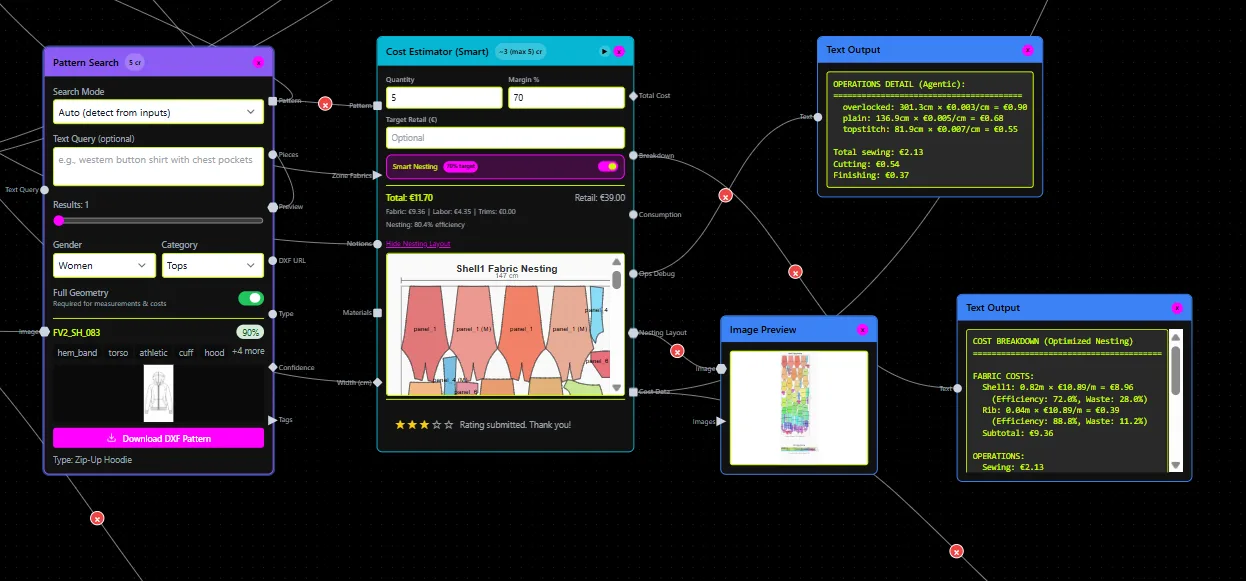
Mid-sized brands with AI pattern intelligence. According to a 2025 Style3D case study, a mid-sized apparel brand using AI-powered prototyping cut costs by 35% and launched collections 50% faster. At platforms like FashionINSTA, pattern creation that once required eight hours now completes in under ten minutes, a 70% time reduction that compounds across every SKU in a collection. For brands producing hundreds of styles per season, that's not incremental improvement; it's a fundamentally different economic model.
Consumer impact: personalization, discovery, and returns
On the consumer side, two things are happening simultaneously: shopping is getting more personalized, and return rates are finally starting to fall.
Virtual try-on adoption is driving return rate reductions of 30–48%, according to multiple 2026 studies including data from Mirrago and StyTrix. Brands deploying AI try-on alongside personalization engines are seeing 15–25% revenue-per-customer increases. Shoppers using these tools are 50% more likely to convert.
As The Business of Fashion reported in June 2026, software provider Swap noted a 20% drop in returns and more time spent on site after deploying virtual try-on. The technology has moved from a nice-to-have to core operational infrastructure because it directly solves fashion e-commerce's biggest profitability problem.
For discovery, conversational AI is now a genuine shopping layer. OpenAI and Google have both embedded shopping directly into AI interfaces, meaning a growing share of fashion discovery starts in a chat window rather than a search bar. Brands without structured product data are increasingly invisible.
Workforce and skills: what's actually shifting
This is where honest conversation gets harder. According to a January 2026 World Economic Forum report, AI and information processing will affect 86% of businesses by 2030. In fashion specifically, New York City has lost roughly 23% of its fashion designer jobs over the past decade, with AI acceleration picking up pace, CBS19 reported continued declines in fashion jobs through June 2026.
Entry-level execution roles (routine pattern drafting, standard spec creation, basic retouching) are being automated at speed. Middle management structures are flattening. But senior creatives, cultural strategists, and technical designers who can work alongside AI are in higher demand than ever.
Istituto Marangoni describes the emerging "Industrial Pattern Maker 4.0" as someone who merges traditional craft with 2D/3D CAD and AI prototyping platforms. The Business of Fashion's State of Fashion 2026 report puts it plainly: brands need professionals who treat AI as a collaborative partner. Designers who resist the shift face real career risk, those who adapt gain significant leverage. For more on what this means for specific roles, AI replacing fashion designers is a question worth examining carefully.
Regulatory, IP, and ethical considerations
IP ownership is genuinely unresolved, and brands need legal awareness here. The U.S. Copyright Office and federal courts currently hold that works generated solely by AI are ineligible for copyright protection. Human authorship must be substantial and original to claim protection. State-level legislation is beginning to fill the gap, per a May 2026 Mayer Brown analysis.
For brands using generative tools in design, the practical risks are:
- Training data scraping that may include protected work without consent
- AI outputs that are "substantially similar" to existing copyrighted designs
- Loss of trademark protection if AI-generated logos or patterns create source confusion
The American Bar Association's January 2026 guidance recommends developing clear internal usage policies, using licensed training datasets, and running reverse image checks on AI outputs before production. Trademarks and trade dress remain protectable because they don't require human authorship, that's where smart brands are focusing their IP strategy while legislation catches up.
A 90-day implementation checklist for brands
If you're planning your AI rollout for the second half of 2026, here's a practical starting framework:
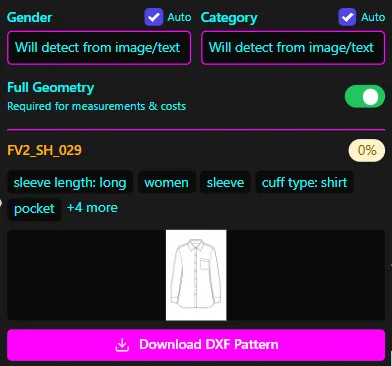
Days 1–30: Audit and prioritize - Map your current design-to-production workflow and identify the three biggest time sinks - Audit your existing pattern archive for size, format (.DXF compatibility), and duplication - Identify which product categories have the most SKU volume, these deliver the highest AI ROI - Assign an internal AI champion to lead the evaluation process
Days 31–60: Pilot one workflow - Select a single category and run a parallel test: AI-assisted vs. traditional pattern creation - Deploy a virtual try-on tool on your highest-return product group - Connect AI to your demand forecasting, even basic ML models on sales history outperform gut-feel allocation - Review IP policy with legal; document your AI tool usage and training data sources
Days 61–90: Measure, train, scale - Measure pattern creation time, sample costs, and return rates against your baseline - Begin training your team on AI-augmented workflows; identify which roles shift rather than disappear - For enterprise brands, evaluate custom AI training on your proprietary pattern archive, AI pattern intelligence platforms can extract your brand's fit philosophy and construction DNA, enabling genuine IP protection through differentiation - Set a 6-month target for at least one workflow running at 50%+ efficiency gain
For brands producing at scale, tools that go beyond image generation to deliver production-ready pattern workflows are the ones actually closing the gap between AI promise and factory floor reality.
The brands that treat 2026 as an infrastructure year, not a marketing moment, are the ones who'll be setting the pace by 2027. The technology is no longer the bottleneck. Organizational willingness to actually change how work gets done is.