AI in Fashion
TL;DR: AI has transitioned from experimental to essential in fashion, driving efficiency across design, production, and retail. This guide breaks down five key areas where AI is actively optimizing workflows in 2026. Read on for practical steps to integrate these technologies into your brand's daily operations.
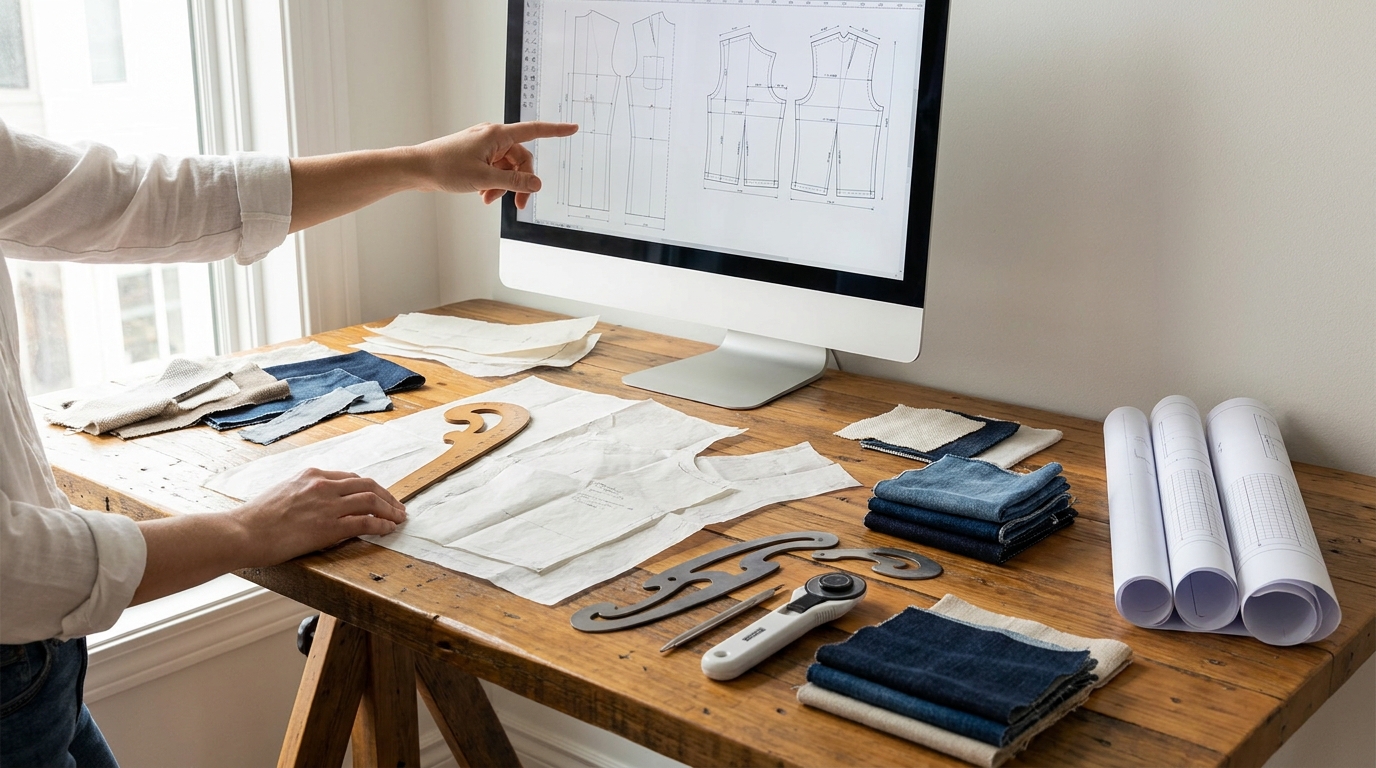
AI has moved past the proof-of-concept stage in fashion. As of 2026, it's embedded infrastructure: pattern generation, demand forecasting, virtual sampling, retail personalization. According to Research and Markets, the global AI in fashion market is valued at $2.47 billion this year and is projected to hit $9.45 billion by 2030, growing at a 39.8% CAGR. The shift isn't coming. It's already here.
This guide breaks down exactly where AI is making a measurable difference across design, production, and retail, and gives you a clear path to start applying each area to your own work.
What you'll accomplish: A working understanding of the five areas where AI is actively changing fashion workflows in 2026, with specific steps to integrate each into your process.
Who this is for: Designers, R&D leads, technical product developers, and brand directors who want to move beyond AI experimentation into real, production-connected workflows.
Prerequisite knowledge: Basic familiarity with apparel product development (sketching, pattern making, sampling, tech packs). No coding skills required.
Estimated time: 20 minutes to read. Each area includes a practical starting step you can act on the same day.
1. AI-assisted pattern making: sketches become .DXF files
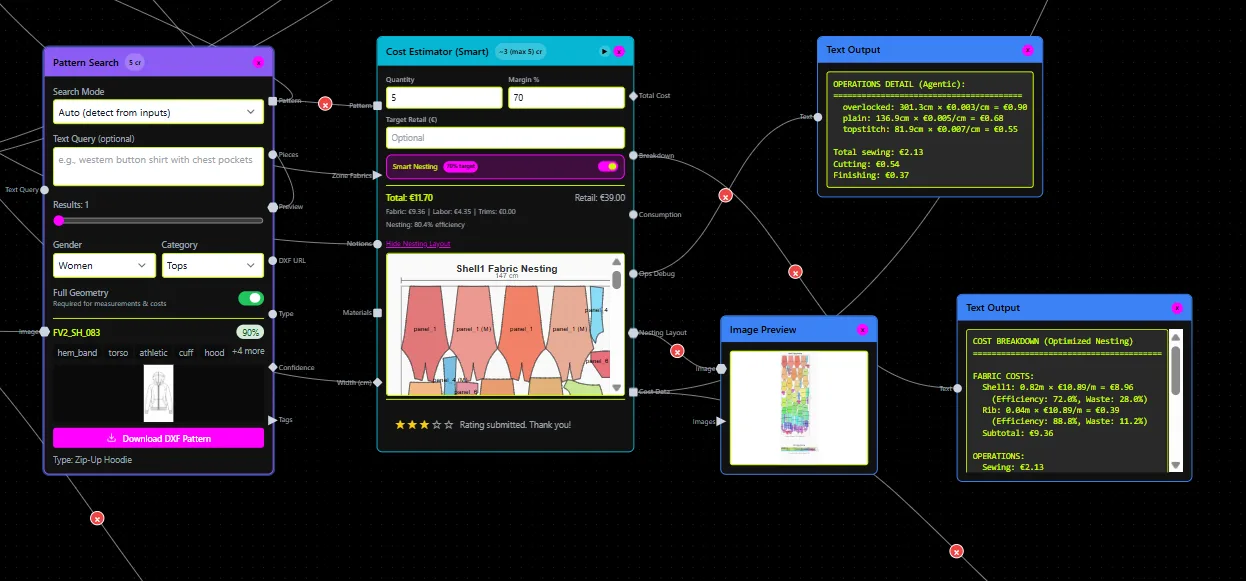
This is where the most concrete time savings are happening. Traditional pattern creation runs 6-8 hours per design. AI platforms compress that window to under 15 minutes.
The key distinction in 2026 is between generative visuals and production-ready geometry. Tools that produce pretty renderings but no downloadable pattern file don't move your workflow forward. What production teams need is a CAD-compatible .DXF output they can hand to a factory.
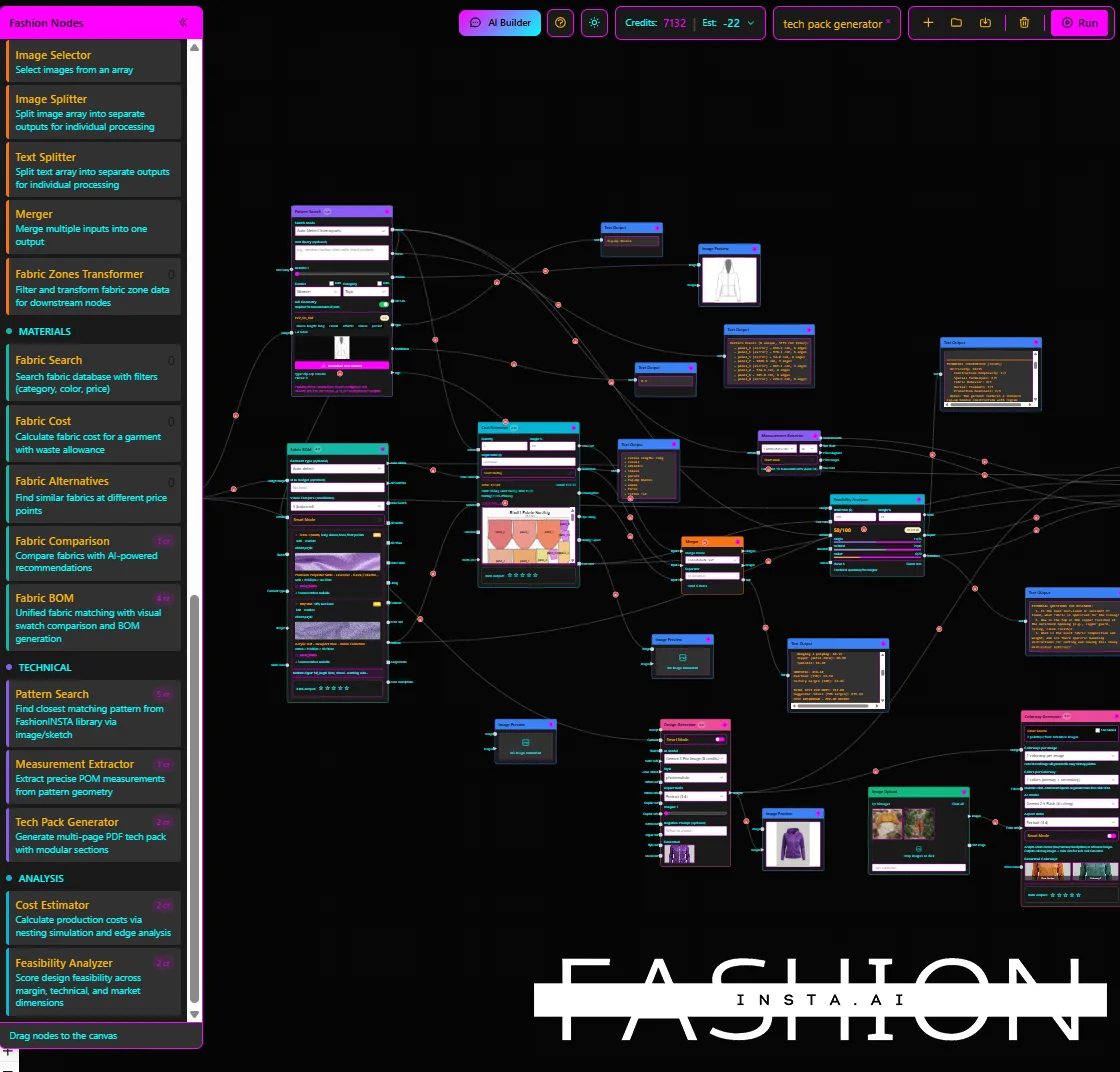
Platforms like FashionINSTA take a different approach. Rather than generating generic patterns from scratch, the system indexes your existing pattern archive, extracting 750+ features per pattern to learn your brand's fit blocks and construction logic. When a new design brief comes in, the closest matching pattern is retrieved and modified, preserving your fit DNA rather than replacing it.
How to start: 1. Audit your current pattern archive. Identify your five most-reused base blocks across product categories. 2. Choose an AI pattern tool that outputs .DXF files compatible with your existing CAD environment (CLO3D, Gerber, Lectra, Optitex, etc.). 3. Run one pilot: take a new sketch and generate a pattern using AI. Compare the output to your existing block. Note where manual intervention was needed. 4. Track time saved per style over three iterations.
Warning: Avoid tools that only offer AI-generated images without a path to a downloadable cut file. Beautiful visuals that can't be manufactured waste more time than they save.
2. Automated BOMs, costing, and feasibility checks
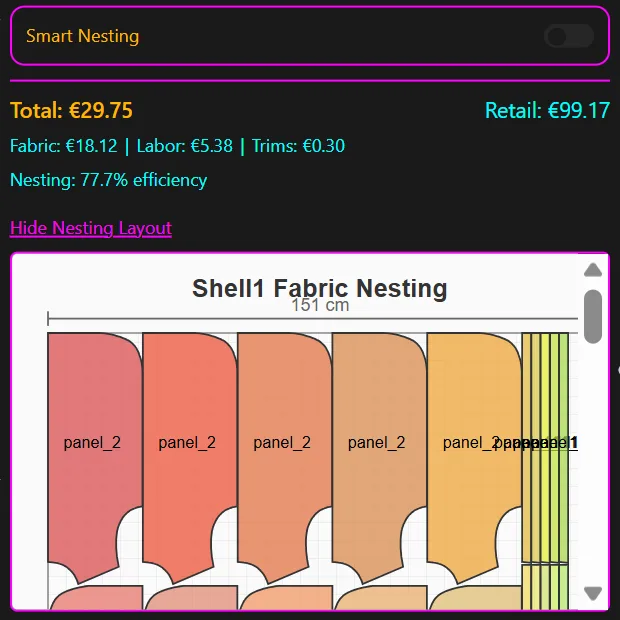
Once a pattern exists, the next bottleneck is costing: sourcing fabric, calculating consumption, estimating labor, checking feasibility at a target price point. In a traditional workflow, this passes through multiple departments over days.
AI agents now handle this in a single step. A BOM agent can connect to verified supplier databases and return actual fabric names, compositions, prices, and MOQs in real time. A cost estimator combines fabric consumption data with construction complexity and labor rates to produce a cost-of-goods figure. A feasibility analyzer flags construction issues before a sample is ever cut.
According to McKinsey data cited by Tommaso Maria Ricci in April 2026, fashion brands that have adopted AI at scale report a 35-45% reduction in inventory costs and a 20-30% improvement in sales forecasting accuracy.
How to start: 1. Map out your current costing workflow. Identify the steps that consume the most back-and-forth time. 2. Test an AI-powered cost estimator on one SKU from a recent collection. Input fabric consumption, trim list, and target FOB price. 3. Compare the AI output to your actual production cost. Document the variance. 4. If variance is within 10%, start using AI costing as a first-pass tool before engaging your factory.
For a deeper look at where these bottlenecks are costing brands the most, the FashionINSTA breakdown of fashion's hidden supply chain crisis is worth reviewing.
3. Generative AI for design iteration and visual development
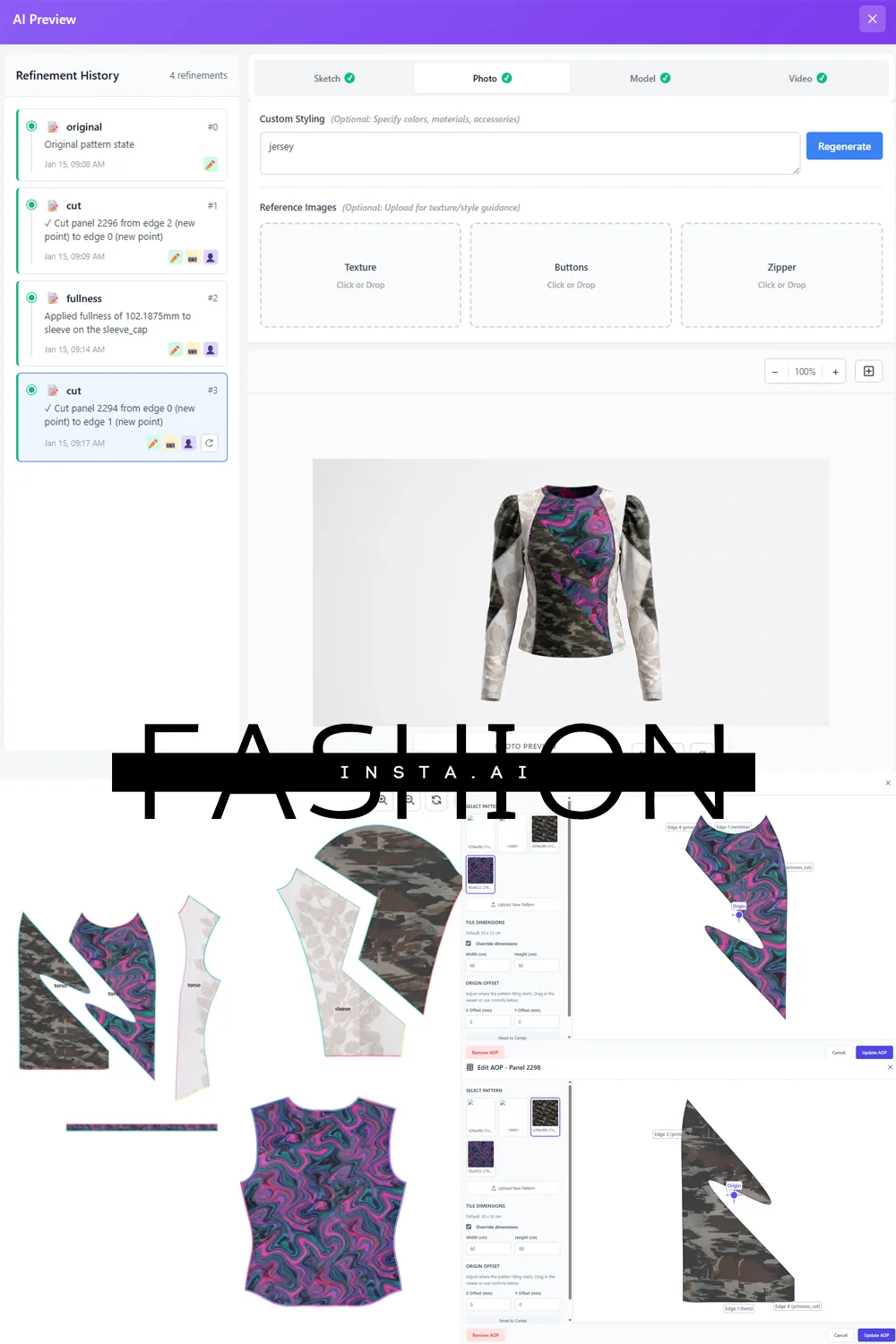
This is the area most people picture when they hear "AI in fashion," and it's genuinely useful, with one important caveat: visuals disconnected from underlying garment geometry create downstream problems.
The right workflow connects AI-generated front/back views, editorial renders, and e-commerce visuals to the actual pattern geometry. That way, changes to the design propagate correctly through to the technical file. Tools that generate standalone images require a separate manual rebuild every time something changes.
For R&D and 3D design roles, platforms that bridge your CLO3D or Browzwear simulations with AI-generated lifestyle and campaign imagery cut the gap between digital prototype and final creative asset. Teams working across time zones can co-create using shared digital files rather than waiting for physical handoffs.
How to start: 1. Pick one upcoming style where you'd normally need at least two physical sampling rounds. 2. Create a 3D simulation first. Validate fit digitally. 3. Use AI render nodes to generate e-commerce and editorial visuals from the 3D file, not from a photo of a physical sample. 4. Send only one physical sample for final fit confirmation.
Checkpoint: if your AI-generated visuals require significant retouching before they're usable, your tool isn't connecting visuals to garment data properly.
4. AI trend forecasting and demand planning
Trend forecasting used to mean expensive subscriptions and 18-month lead times. In 2026, AI systems analyze real-time signals from social platforms, search data, and runway feeds to identify micro-trends at a regional level, months before they peak in sales.
The Business of Fashion and McKinsey's State of Fashion 2026 report (published January 2026) identifies AI automation as one of the primary forces reshaping fashion workforce roles. The brands adapting fastest are connecting trend signals directly to their design briefs and production orders, cutting overproduction rather than just cutting costs.
AI demand forecasting now reduces forecast error by 30-50% compared to traditional methods, according to a 2026 analysis by Tommaso Maria Ricci. That directly affects how many units you produce, how much dead stock you carry, and how much margin you protect.
How to start: 1. Identify your top three losing SKUs from the last season. Were they trend misses or demand miscalculations? 2. Pull social listening data for your core product categories over the past 90 days. Look for sentiment shifts. 3. Compare that data to your current buying plan. Where does the gap exist? 4. Use an AI forecasting tool to run a scenario: what would your sell-through rate have been if you'd produced 20% fewer units of your worst performer?
For a more critical look at how AI fits into fashion trend forecasting workflows, there's a useful perspective on where traditional services fall short.
5. AI in retail: personalization, virtual try-on, and visual commerce
On the consumer-facing side, AI has changed the online shopping experience more visibly than anywhere else in the value chain. Virtual try-on is now standard across major retailers. Personalization engines surface product recommendations based on individual browsing and purchase history, not just broad demographic segments.
Shoppable video, where AI automatically identifies garments in short-form content and links directly to a product catalog, is accelerating the "see it, buy it" cycle. Hyper-realistic AI models allow brands to shoot diverse size and styling combinations without the logistics of a physical production.
For brands building these capabilities, AI virtual try-on technology is worth evaluating carefully: the ones that generate visuals untethered from garment geometry tend to distort prints and branding, which creates trust issues with shoppers.
How to start: 1. Audit your current product photography process. Calculate time and cost per SKU. 2. Test one AI visual generation tool on five new styles. Use the outputs for one product category in a live environment. 3. Measure conversion rate for AI visuals vs. traditional photography for 30 days. 4. If results are comparable, shift that category entirely to AI-generated visuals for the next season.
Where to focus first
If you're a small studio or independent designer, start with pattern generation and AI costing. The time savings are immediate and don't require large infrastructure changes.
If you're in an R&D or technical design role at a mid-size brand, the highest-leverage area is connecting your 3D simulation workflow to AI visual generation, reducing physical sampling rounds.
If you're at an enterprise brand running 1,000+ SKUs, the supply chain and demand forecasting layer offers the biggest financial return, alongside pattern archive indexing to eliminate duplicate development work.
AI isn't replacing the judgment, fit expertise, or creative sensibility that experienced designers bring. What it's doing is eliminating the repetitive, time-consuming technical work that slows everything down. For professionals willing to understand how AI and pattern making actually work together, the practical advantage is significant.
The next step is picking one area from this guide and running a single pilot. Measure what changes. Then scale what works.