Artificial Intelligence in Fashion 2026
TL;DR: In 2026, artificial intelligence has evolved from an experimental tool into essential infrastructure for the fashion industry. By accelerating generative design, automating pattern development, and optimizing supply chains, AI is drastically reducing production times and waste. Brands that integrate these technologies are experiencing significant gains in efficiency, sustainability, and retail personalization.
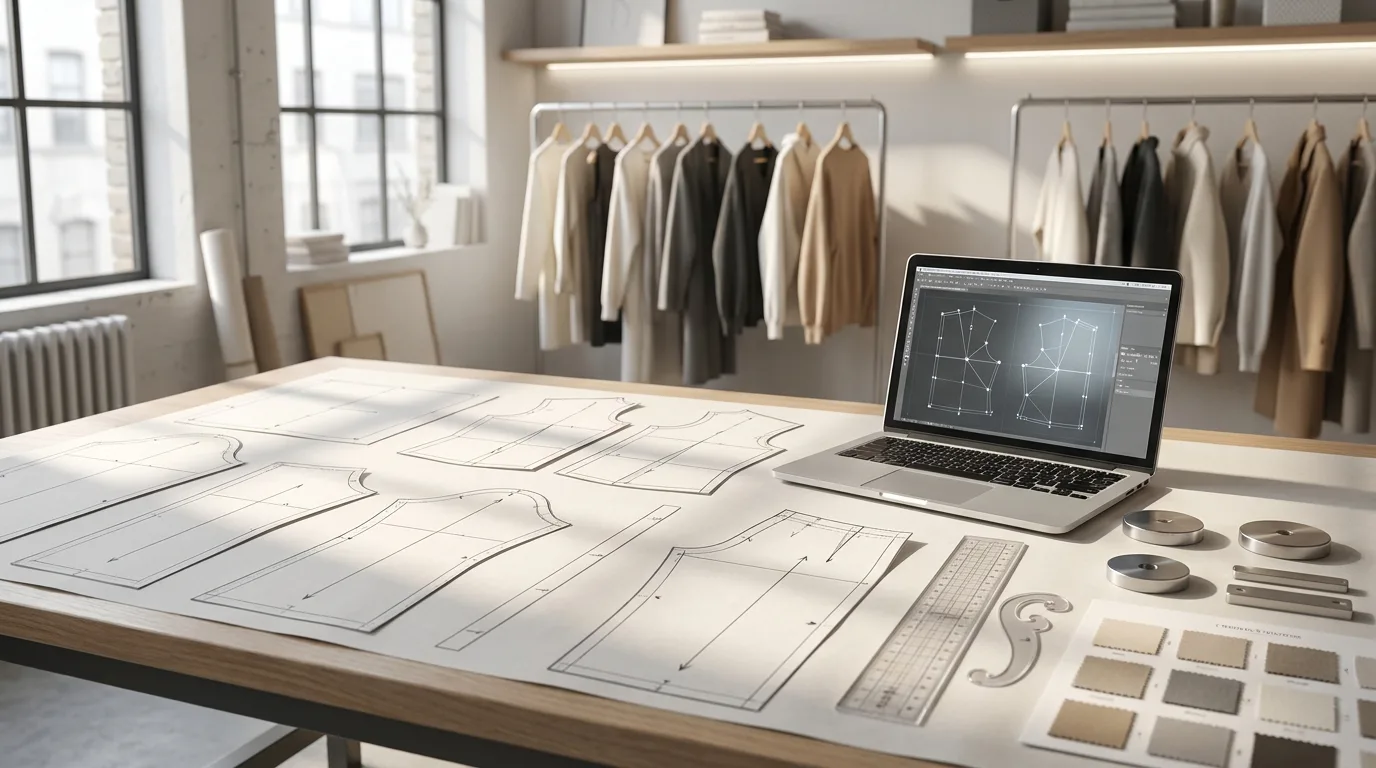
Artificial intelligence has moved from an experimental add-on to a core operating layer across the fashion industry. In 2026, the shift is measurable: the global AI in fashion market is valued at approximately $2.47 billion and projected to reach $9.45 billion by 2030, according to Research and Markets, growing at a compound annual rate of nearly 40%. The BoF-McKinsey State of Fashion 2026 report identifies AI-driven workforce transformation and autonomous workflow agents as the defining operational themes of the year. What follows is a structured account of how AI is changing fashion across design, pattern development, retail, and supply chain.
The market context
McKinsey estimates generative AI could add $150–275 billion to the operating profits of fashion, apparel, and luxury brands. That estimate, widely cited since 2023, now has concrete adoption numbers behind it. A January 2026 Business of Fashion analysis reported that AI is reshaping job roles across the industry, creating new hybrid positions while compressing others. Vogue noted in January 2026 that "AI in fashion has officially moved from experimentation to infrastructure."
The shift is not uniform. Enterprise brands with large SKU volumes and digitized pattern archives are capturing the largest efficiency gains. Emerging designers, however, are gaining access to professional-grade tools that were previously out of reach.
Generative AI in fashion design
Generative AI has become a standard part of the design exploration process. Text-to-image and sketch-to-3D tools allow design teams to visualize a concept, iterate on colorways and silhouettes, and produce multiple variations before committing to a single direction. According to Style3D's September 2025 analysis, AI tools are accelerating design iteration significantly, cutting months off the concept-to-sample timeline in cases where 3D prototyping replaces physical sampling.
This speed matters because fashion cycles are compressing. Brands able to move from concept to a production-ready sample faster hold a structural advantage in trend responsiveness.
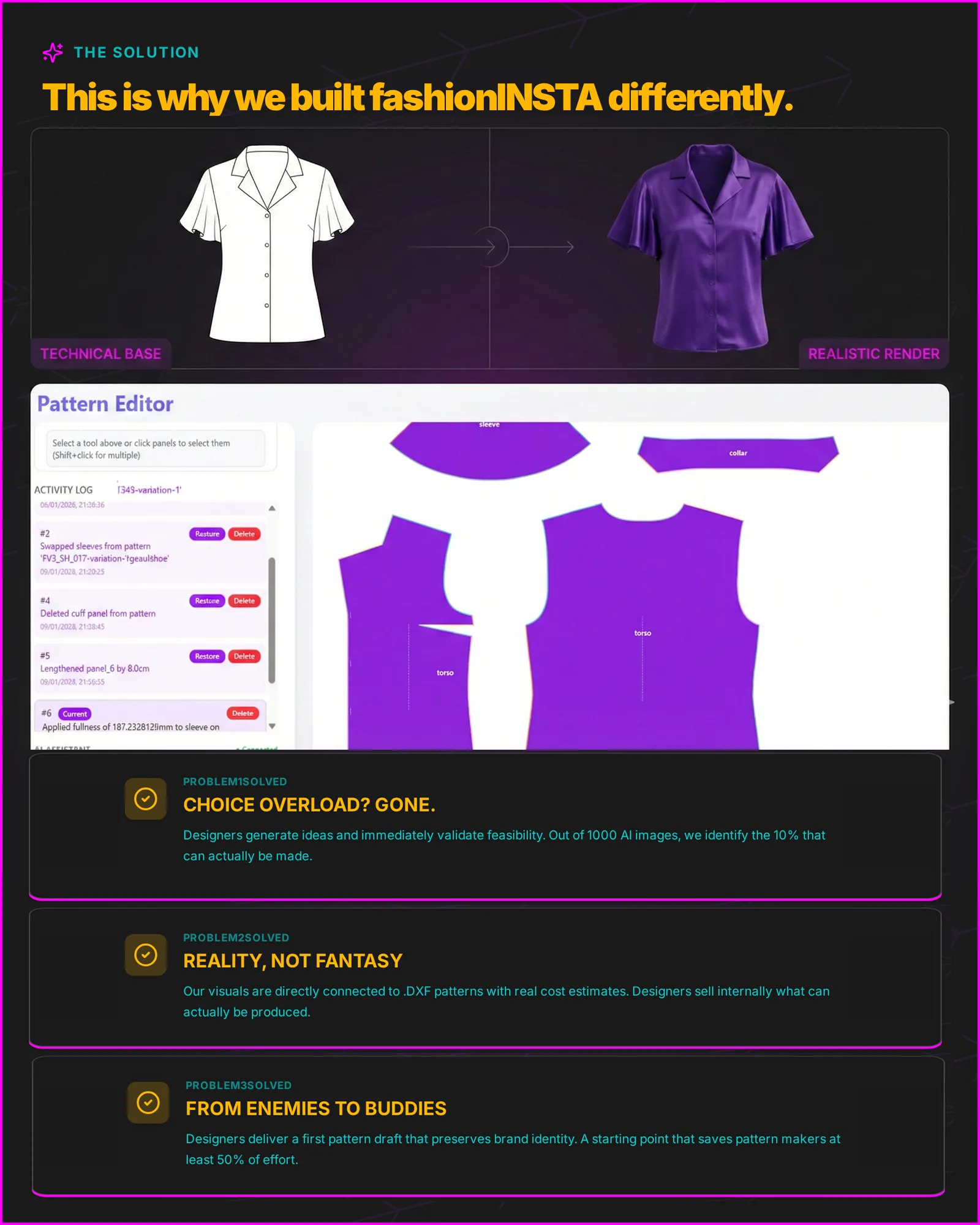
A critical distinction has emerged in 2026 between tools that generate fashion imagery and tools that generate manufacturable assets. Most AI image generators produce visuals that look accurate but cannot be directly translated into cut-and-sew instructions. The more consequential category is AI pattern making, which produces the technical geometry needed for factory production.
Pattern development and the production gap
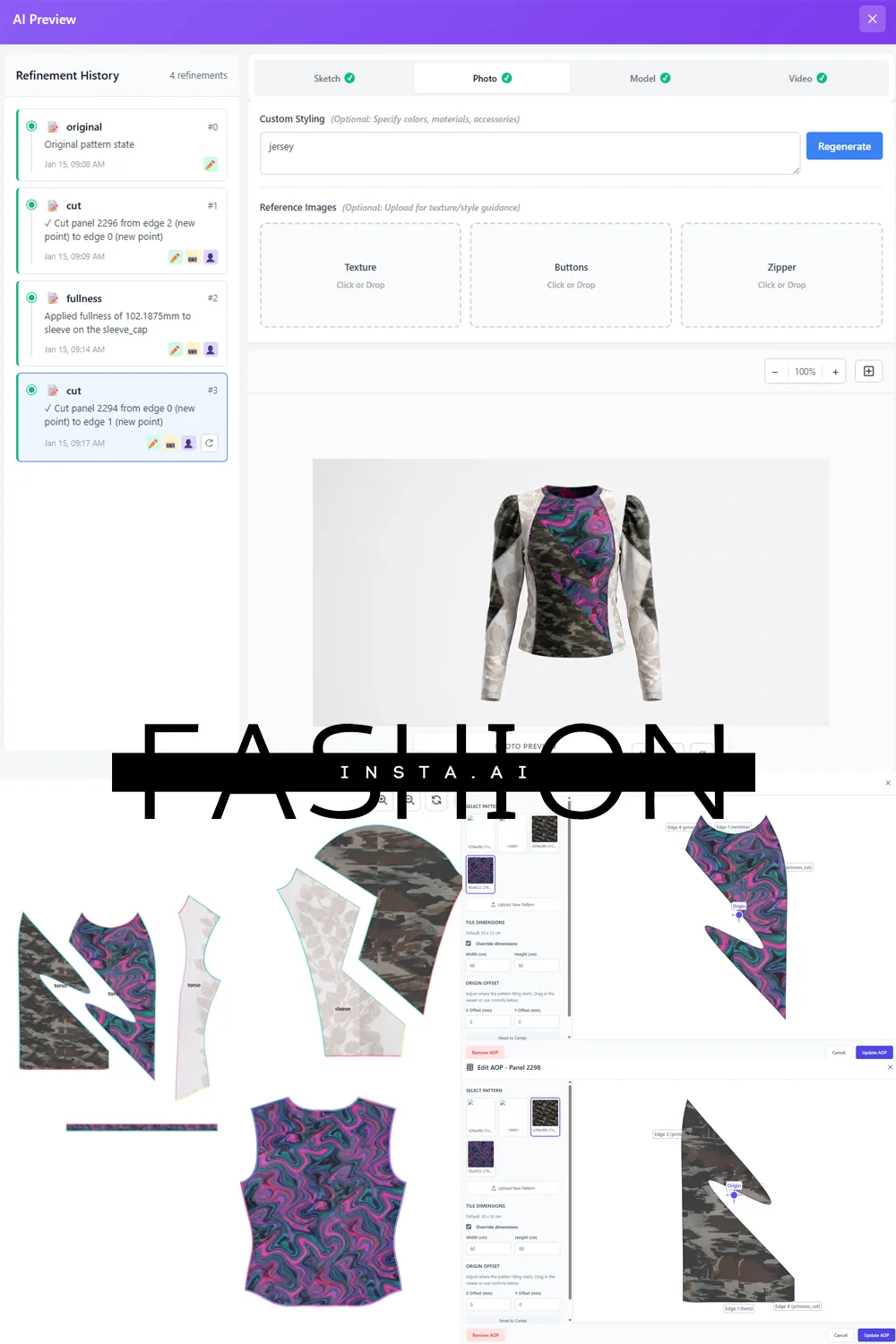
Pattern making is the stage where design intent meets physical reality, and historically it has been one of the most time-intensive bottlenecks in product development. Manual pattern development typically takes 8–12 hours per style. AI pattern intelligence platforms have reduced that to under 30 minutes in documented cases, representing a 70% or greater time reduction.
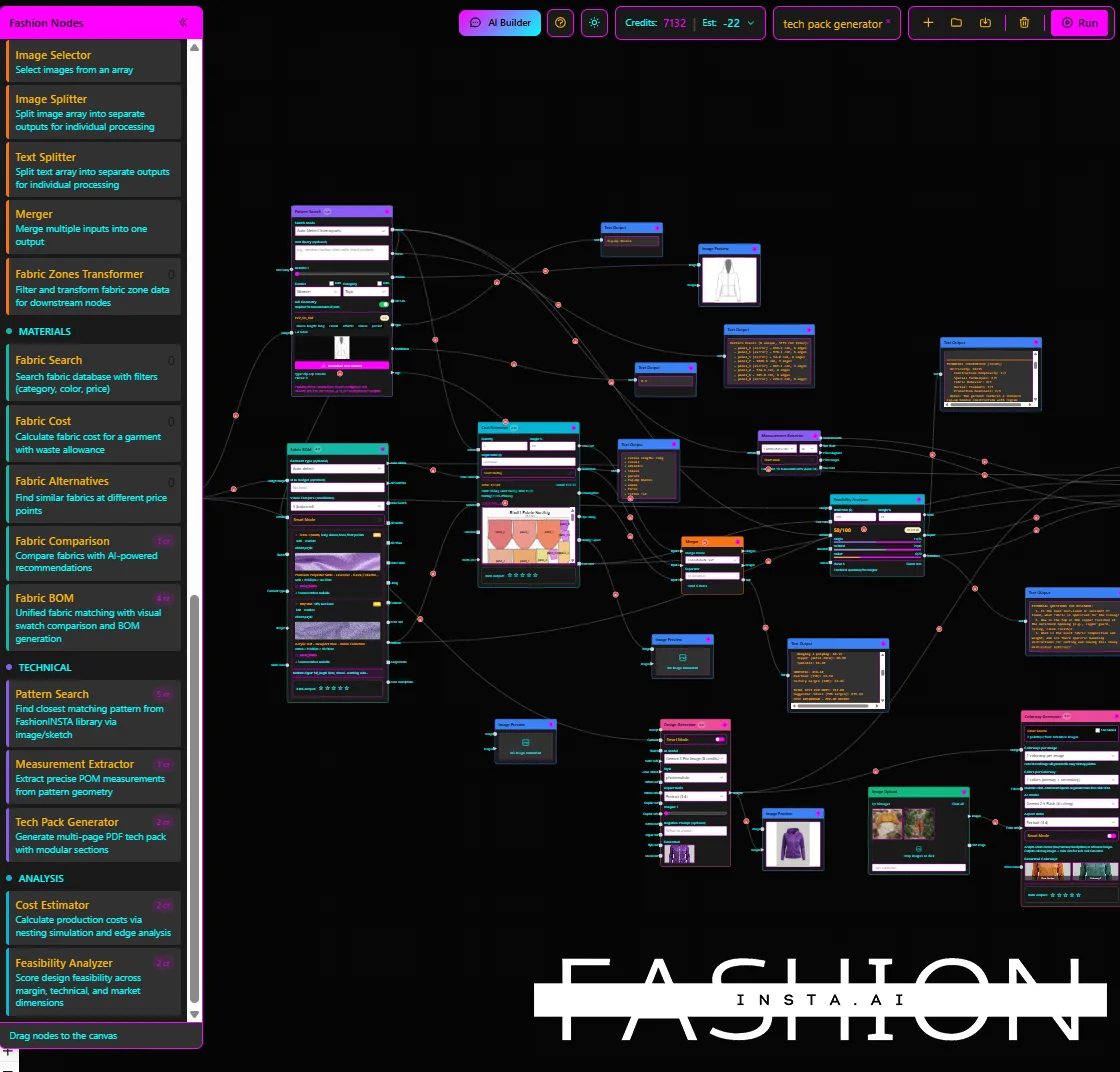
FashionINSTA is an AI pattern intelligence platform that addresses this gap directly. It indexes and scores a brand's existing pattern archive by extracting 750+ features per pattern, including seam geometry, ease settings, grading rules, and construction details. The system learns a brand's "fit philosophy" from its existing archive, then generates new .DXF patterns consistent with that DNA. The output files are CAD-compatible with CLO3D, Gerber, Lectra, Browzwear, and other industry-standard systems. Brands using the platform have reported annual savings of $60,000–$80,000 from reduced pattern development time and better pattern reuse, with some enterprise users reporting significantly higher savings.
The platform also addresses pattern duplication, a common problem in brands that have produced hundreds of SKUs over many seasons. By scoring pattern similarity across an archive, it surfaces redundant blocks and reduces the wasted effort of re-drafting patterns that already exist. You can see how AI pattern extraction addresses brand identity inconsistencies that accumulate over multiple seasons.
Virtual prototyping is closely related. Platforms like CLO3D, Browzwear, and Style3D use AI-assisted simulation to model how fabric behaves in a garment before any physical sample is cut. According to a March 2026 StyTrix analysis, AI-powered digital sampling platforms now yield up to 95% first-time-right sample accuracy, reducing the number of physical iterations required.
AI in retail: personalization and virtual try-on
On the retail side, AI is changing how consumers discover and purchase clothing. AI-powered recommendation engines analyze browsing behavior, purchase history, size data, and style preferences to surface relevant products. Platforms using advanced personalization report 15–35% increases in click-through rates and 20–40% increases in average order value, according to an April 2026 industry guide from Tommaso Maria Ricci.
Virtual try-on (VTO) has reached mainstream adoption. Early adopters of VTO technology report 20–40% increases in conversion rates for featured products, along with 15–35% reductions in online return rates. Returns are one of fashion e-commerce's largest cost drivers, so even modest improvements carry significant financial impact. According to a February 2026 WifiTalents analysis, 67% of Gen Z shoppers prefer brands that offer AI-powered virtual try-ons. For context on how virtual try-on interacts with brand consistency, the two are not always aligned, and the most effective implementations connect visual fidelity to the underlying product data.
Agentic AI is an emerging shift in retail. Rather than passively surfacing recommendations, agentic systems can complete transactions on behalf of shoppers. OpenAI and Google have integrated shopping directly into AI interfaces, creating what Vogue's January 2026 analysis called "a new discovery, search and commerce layer" for fashion.
Supply chain and demand forecasting
AI's impact on the fashion supply chain is most visible in demand forecasting and inventory optimization. Traditional forecasting models relied on historical sales data and buyer intuition. AI systems now process real-time inputs from social media, search trends, weather data, and regional sales signals to generate demand predictions at a granular level.
The relevance to sustainability is direct. Fashion produces approximately 100 billion garments annually, with an estimated 92 million tonnes ending up in landfills each year. Overproduction is a structural cause of that waste, and accurate demand forecasting reduces the gap between production volume and actual demand. Brands like Zara and H&M have documented AI-assisted forecasting programs that analyze multiple real-time signals to reduce excess inventory.
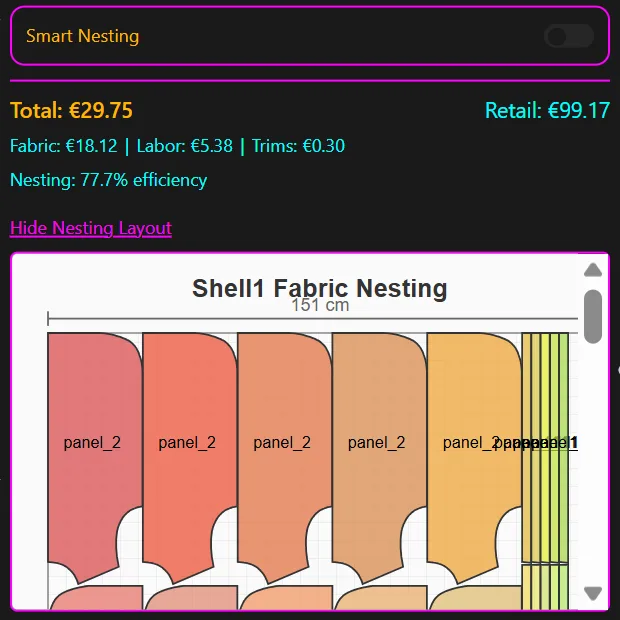
AI also improves marker efficiency in pattern layout. According to a March 2026 StyTrix analysis, AI algorithms reduce fabric waste by 3–8% compared to manual marker-making, a seemingly small margin that compounds significantly at scale. The fashion supply chain's complexity in 2026 requires these kinds of layered optimizations across multiple stages.
The EU's Digital Product Passport regulation, now in effect, is accelerating supply chain traceability adoption. Fashion brands must now track and report material provenance and sustainability credentials at the product level, a requirement that AI-assisted tracking systems are built to support.
Workforce and skill evolution
The BoF-McKinsey State of Fashion 2026 report documents how AI is transforming existing roles while creating new ones. The most in-demand hybrid profiles combine traditional craft knowledge (pattern making, construction, fit expertise) with technical fluency in 3D tools, AI platforms, and data systems.
The consensus across industry sources in 2026 is that AI does not replace designers; it reallocates their time. Technical tasks that previously consumed hours, including grading, spec documentation, and pattern matching, are automated or accelerated. The designer's attention shifts toward creative and judgment-intensive decisions. Whether or not AI will replace fashion designers is a question the evidence addresses clearly: the roles changing fastest are those built primarily around repetitive technical execution.
Human oversight remains necessary. Purely AI-generated tech packs, without expert review, have documented failure modes in factory handoff situations. The effective model is human-AI collaboration, where AI handles volume and speed while human expertise handles quality control and brand judgment.
Key concepts and terminology
Agentic AI: AI systems that can autonomously execute multi-step tasks, such as managing supply chain logistics or completing purchase transactions, without requiring a human to prompt each step.
Digital Product Passport (DPP): An EU regulatory requirement for fashion products to carry verifiable data about material composition, provenance, and environmental impact throughout the product lifecycle.
Pattern Intelligence: A category of AI tooling that analyzes existing garment patterns to extract technical features, score similarity, flag duplication, and generate new patterns consistent with a brand's established fit standards.
Virtual Sampling / 3D Prototyping: The use of AI-assisted simulation software to model how garments will look and behave before physical samples are produced, reducing the number of physical prototyping rounds required.
Tech Pack: A factory-ready document specifying all construction details, measurements, materials, colorways, and tolerances for a garment. AI tech pack compilers can auto-generate these documents from sketch inputs and existing pattern data.