Why Fashion AI Pilots Fail Before Production: 5 Key Gaps
TL;DR: Most fashion AI pilots fail because their outputs cannot integrate into real-world manufacturing pipelines, often breaking down at the pattern grading or tech pack stages. By understanding and addressing these five critical gaps, apparel brands can move beyond sandbox demos and implement scalable, production-ready AI workflows.
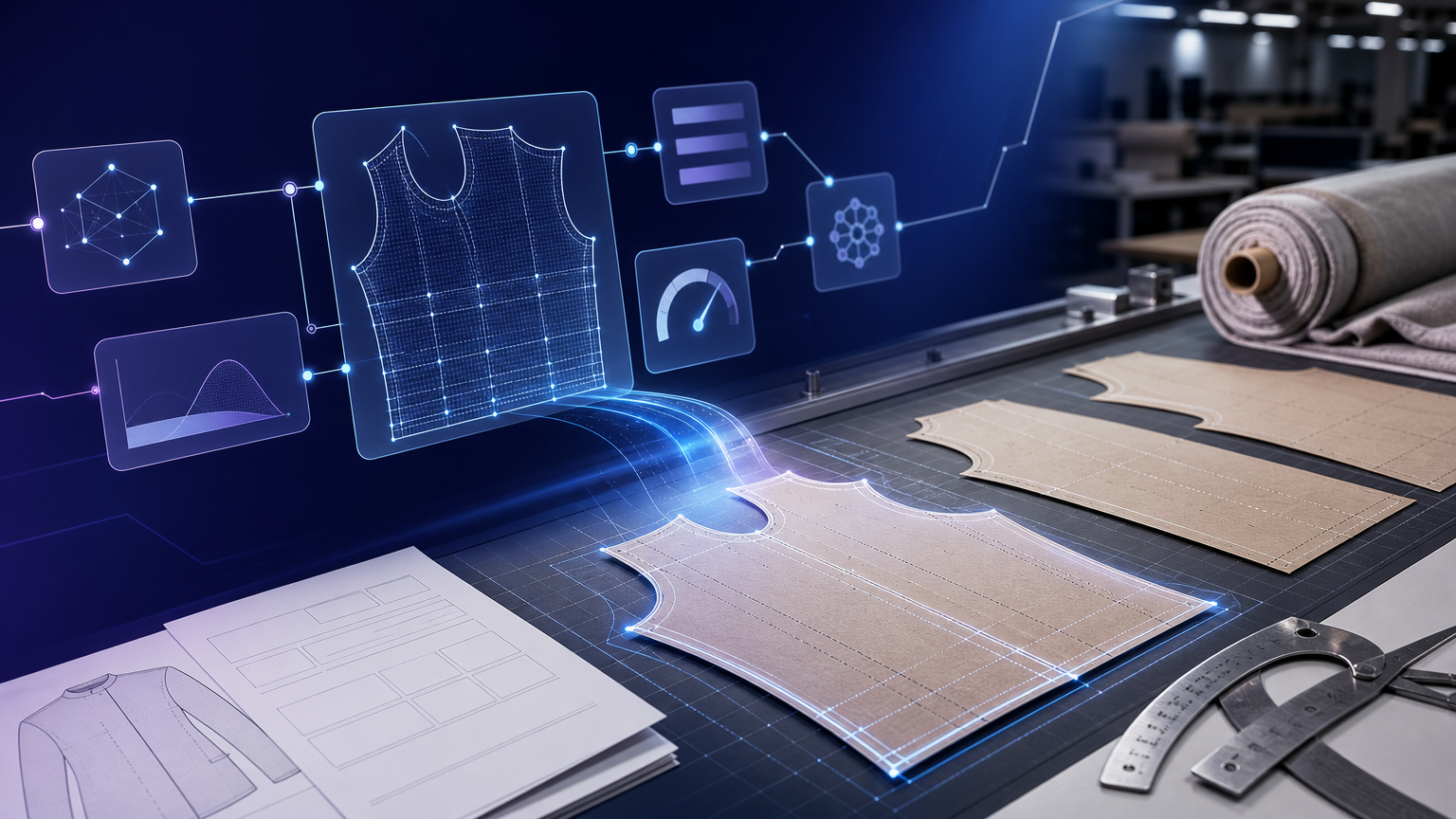
Most fashion AI pilots don't fail because the model is bad. They fail because outputs can't survive contact with the real production pipeline. A pattern that looks perfect in a demo can break down the moment it hits a factory floor: wrong shape for a gradeable DXF, tech pack fields that don't map to the brand's existing Excel templates, costing assumptions that don't match real fabric yields. The problem, reliably, is not the AI, it's the five gaps between the pilot sandbox and the production floor.
According to McKinsey & Company, nearly two-thirds of AI initiatives remain stuck in "pilot mode" and fail to scale into full production. Gartner puts a sharper point on it: through 2026, organizations will abandon 60% of AI projects unsupported by AI-ready data. In apparel, both dynamics hit simultaneously, because the data problem and the output-quality problem are inseparable.
This article maps those five failure modes in order of where they tend to kill pilots, then gives you a copy-paste checklist and a measurement framework to run a production-ready pilot instead of a demo-only one.
Failure #1: The pattern archive isn't production-ready
Before any model runs, the training data has to be clean. In fashion, it usually isn't.
Pattern archives at most brands contain years of styles, but the files weren't maintained with AI ingestion in mind. Piece names are inconsistent across seasons. Notch positions and edge types differ between pattern makers. Size charts have gaps at the extremes. Construction context (facings, linings, pocket bags) is missing from the file set or lives in a disconnected PDF. When you train on that, you get a model that reflects the inconsistency, not one that corrects it.
The practical fix is a scoped data readiness step before model training begins, not after a failed tryout. FashionINSTA's enterprise PoC structure treats this as its own dedicated phase: weeks 1-2 cover data collection, weeks 3-4 cover training and cleanup, with 70-150 patterns per category as the working range. Starting with a single category (rather than the full archive) keeps the data problem tractable and gives teams a clean signal on quality before scaling.
One early-detection signal: if your team can't answer "which of our DXF files are production-validated vs. working drafts?" before the pilot starts, you're training on noise. That's the first gate to pass.
Explore how AI pattern library management can turn a messy archive into a structured training asset.
Failure #2: "Close but not cuttable" DXF geometry
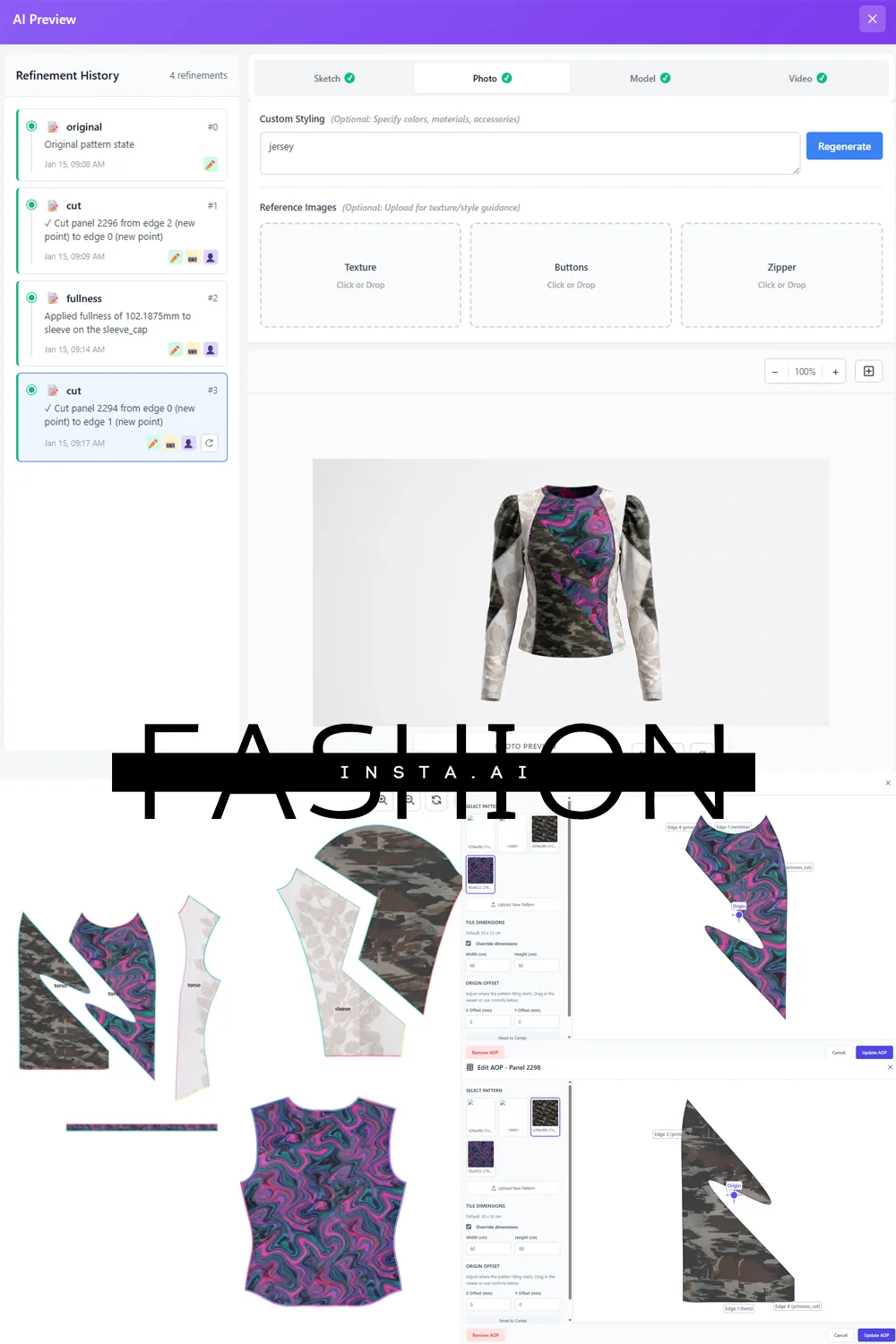
This is the most common apparel-specific failure mode, and the hardest to spot in a demo. The outputs have correct measurements. They look right in a screenshot. But the actual DXF has gaps in curves, non-manifold geometry, or seam lines that don't close, meaning it can't be graded or cut in the target CAD toolchain.
Grading is the detail most pilots skip: it's not just scaling curves. Each grading point and construction anchor (notches, dart legs, pocket marks) must move according to the brand's size rules. A model that generates geometry without encoding those rules produces a pattern that's usable only at the sample size, requiring a manual grading session that swallows the time savings the pilot was supposed to create.
FashionINSTA's approach to this is to train specifically on the brand's production .DXF archive, encoding the fit and construction geometry from patterns that have already survived sampling and grading. As their team puts it directly: "Everything else was just parametric patterns that had right measurement but wrong shape." The exports are intended to open cleanly in Gerber AccuMark, Lectra Modaris, CLO3D, V-Stitcher, Style3D, and other standard toolchains without conversion or manual cleanup.
Early detection signal: ask the vendor to export a test pattern from your own blocks and open it in your current CAD system before signing off on the pilot scope.
See how the AI vs. traditional pattern grading comparison breaks down where grading time actually gets lost.
Failure #3: AI outputs don't fit the real workflow
A pilot that generates correct patterns in a sandbox is still a failed pilot if those patterns land in the wrong format, in the wrong system, or with fields that don't match the brand's existing tech pack templates.
This is the integration failure. Pilot teams run the model in a chat interface or a vendor's demo environment. Technical designers need outputs inside Gerber, Lectra, or their PLM. The factory needs a tech pack in the exact Excel template they've been using for three seasons. The BOM needs fabric composition, MOQ, and price fields the vendor's output doesn't include. The handoff between AI output and real workflow requires either custom integration work (expensive, slow) or the output is already structured to match the existing pipeline.
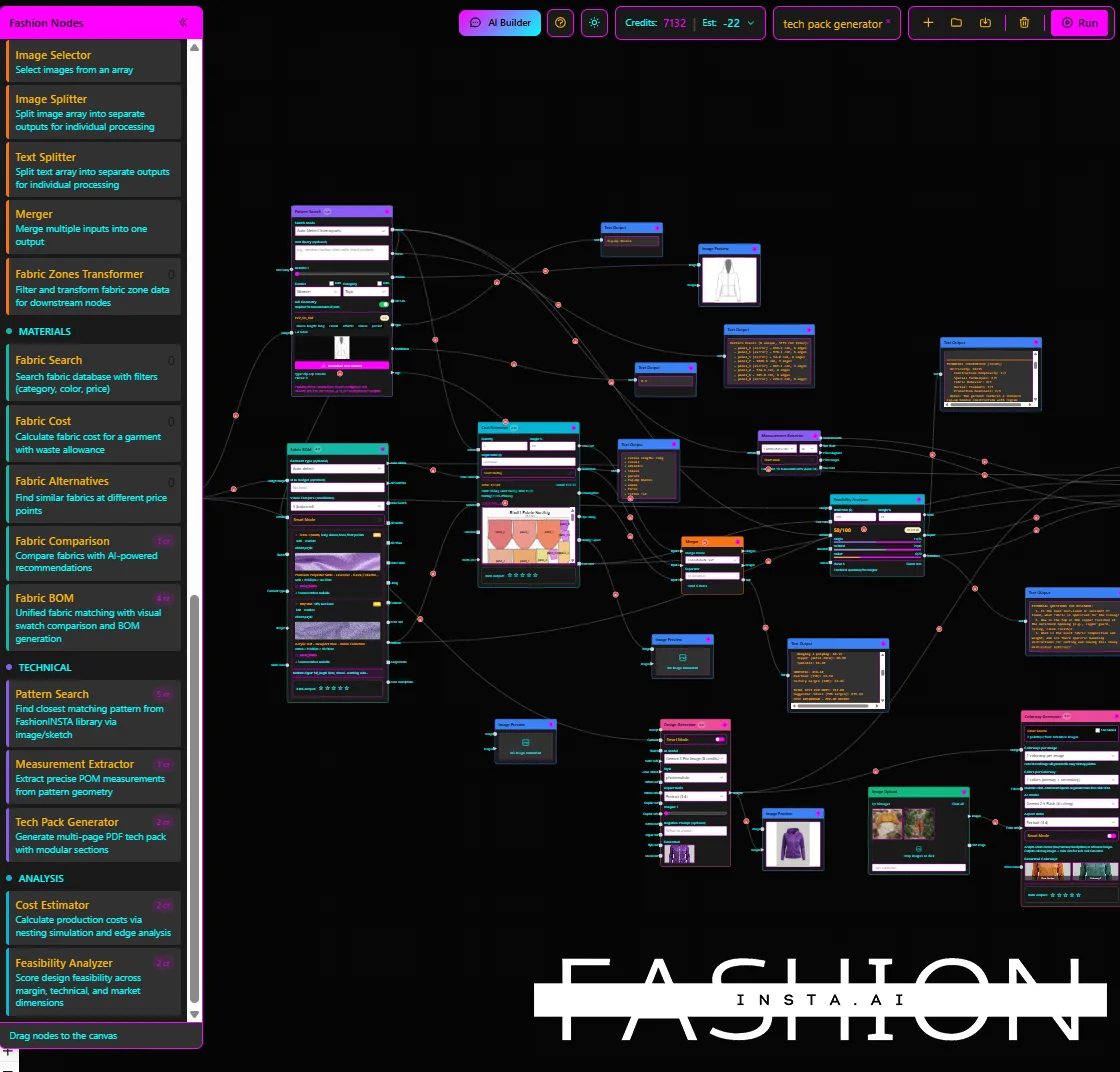
FashionINSTA's workflow is node-based and production-shaped by design: the Pattern Generator connects to a Tech Pack Compiler, which connects to a BOM Agent (returning actual fabric names, compositions, prices, and MOQs from verified suppliers), which connects to a Cost Estimator and Feasibility Analyzer. Outputs are meant to move through the pipeline without format translation. The DXF exports target compatibility with major CAD systems out of the box.
The integration test should happen before the model performance evaluation. Ask: where exactly does this output go after generation, and does it arrive in the format the next person in the workflow needs?
For a detailed look at how garment production workflow integration stacks up against legacy tool chains, the comparison is instructive.
Failure #4: Feasibility and costing aren't validated until it's too late
This failure mode is almost invisible during a pilot because pilots rarely sample. Teams generate outputs, review them visually, and call the pilot successful. Then they go to production and discover the design isn't feasible at the target price point, the fabric consumption assumptions were off, or a construction detail adds 20 minutes of labor per unit.
Feasibility and cost validation need to be treated as pilot KPIs, not as things to sort out post-pilot. If the pilot can't demonstrate that outputs are manufacturable at the brand's target margin, the pilot hasn't proven production-readiness.
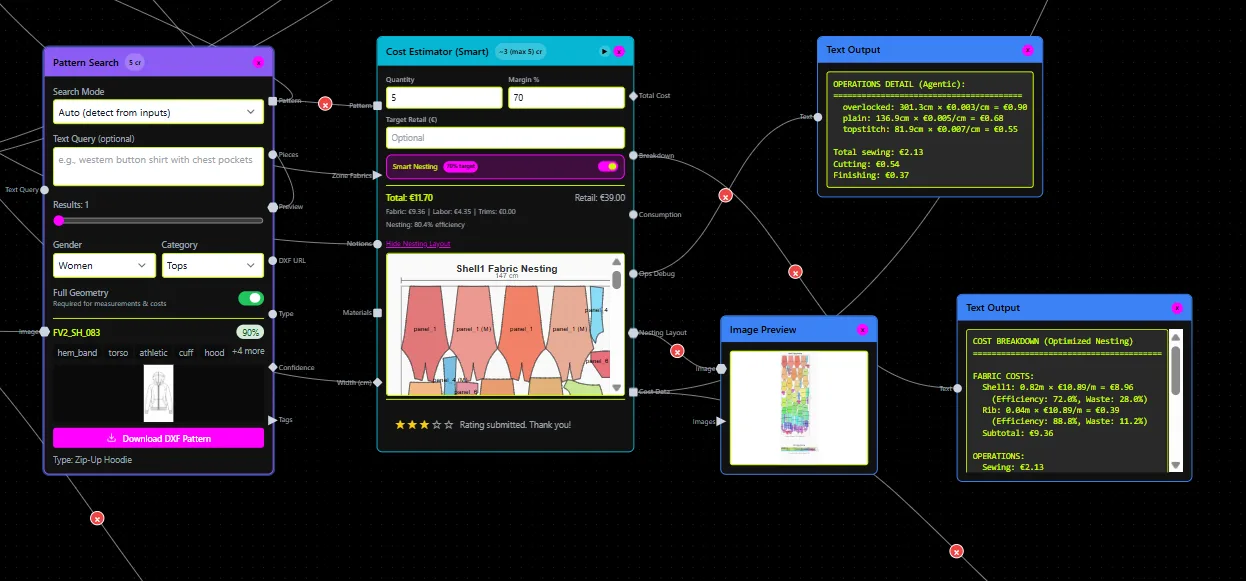
FashionINSTA's platform includes a Feasibility Analyzer that checks manufacturability at a target price point and flags construction issues before sampling, and a Cost Estimator that calculates cost-of-goods using fabric consumption, construction complexity, trims, and labor. When connected to accurate input data, cost estimates run at approximately 80% of real-world production cost, according to their internal validation. That's a useful pilot benchmark: if the estimator's output disagrees with known production benchmarks by more than 20-25%, the input data needs work before the cost model is reliable.
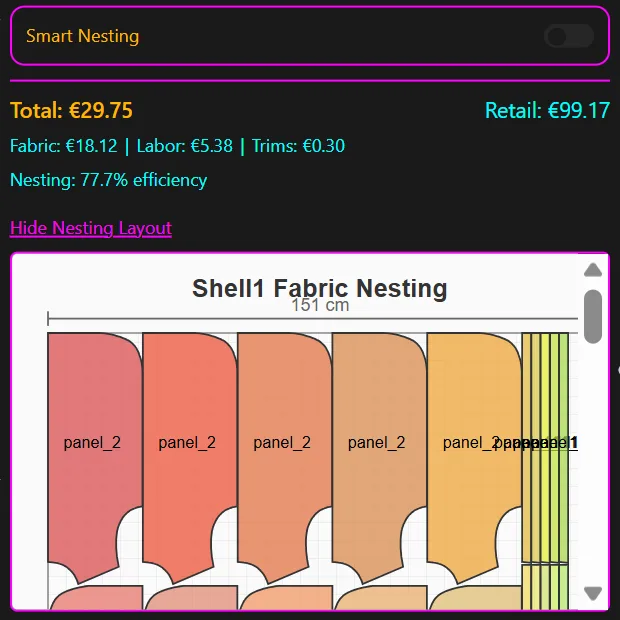
The nesting and marker yield check matters too. An AI-generated pattern that has great aesthetics but poor marker efficiency will cost more per unit to cut than a manually drafted equivalent. That's a production KPI that purely demo-focused pilots never surface.
Read more about how patterns hide cost data most brands never extract.
Failure #5: No governance, no quality guardrails, no one owns the output
The fifth failure is the one that kills pilots that have passed the first four gates. The model works. The outputs are gradeable. The integration is clean. But six weeks into the active trial, output quality drifts, bugs accumulate, and no one has a clear ownership structure for fixing problems, retraining on corrections, or deciding when the pilot should stop.
Operationalization in apparel means: who validates each output before it goes to the factory? What happens when the pattern is wrong? Is there an audit log? Who has access, and at what permission level? What's the retraining cadence when new styles are introduced or a new category is added?
Gartner notes that approximately 20% of AI failures are driven by initiatives that are overly ambitious or poorly scoped, which in practice often means no defined owner and no clear success criteria.
FashionINSTA's enterprise PoC structure addresses this with a 10-week scoped timeline: weeks 5-10 are an active trial with the team, including weekly calibration calls with the founder. Week 10 is a formal KPI check and go/no-go decision. Enterprise controls include a dedicated AWS tenant per customer (no cross-training of pattern IP between brands), SSO/RBAC, and audit logs. The three-KPI scorecard at week 10 is the governance artifact that prevents "perpetual pilot" syndrome.
The key operationalization question to ask before launch: "What happens when output #47 is wrong, and who is responsible for fixing the root cause, not just the output?"
For context on why enterprise AI training at scale requires a different structure than a standard software rollout, the distinction is worth understanding before you scope your pilot.
A production-ready pilot charter (copy-paste checklist)
Run this before approving any AI pilot in your apparel product development workflow:
Objective gate
- One objective only: first sample readiness, tech pack completeness, or feasibility at target margin. Not all three at once.
- KPIs must map to production: % valid gradeable DXF exports, tech pack field completeness rate, cost estimate vs. benchmark variance, turnaround time reduction.
Data readiness gate
- Identify and tag production-validated DXF files separately from working drafts.
- Select one category with 70-150 clean patterns as the training set.
- Confirm size chart completeness across the full size run.
Integration test gate (before model evaluation)
- Export a test pattern into your actual CAD system (Gerber, Lectra, CLO3D, V-Stitcher).
- Map tech pack fields to your existing template format.
- Confirm BOM outputs include composition, MOQ, and price fields your team uses.
Feasibility and costing gate
- Require a cost estimate for at least 10 pilot outputs and compare against known production benchmarks.
- Flag any pattern with nesting yield below your category threshold.
- Treat a cost variance above 25% from benchmark as a data input problem, not a model problem.
Governance gate
- Assign one internal owner for output quality validation.
- Confirm IP isolation: dedicated tenant, no cross-training with other brands.
- Establish a weekly calibration cadence during the active trial period.
- Set a formal go/no-go review at week 10 with a written scorecard.
If any gate is unresolvable before the trial begins, the pilot isn't ready to start.
How to measure success without getting fooled by renders
The most common source of false confidence in fashion AI pilots is a beautiful render. 3D visuals and editorial images look like proof of production-readiness. They're not. A render can show a perfect jacket on a model while the underlying DXF has unclosed seams.
Production KPIs to actually validate:
- Can the output DXF be graded across your full size chart without manual reconstruction?
- Does the pattern export to your factory CAD in a format the factory accepts without a conversion step?
- Are pocket bags, facings, and lining pieces included and correctly labeled?
- Does the tech pack's measurement extraction match the physical spec sheet within tolerance?
- Does the cost estimator output agree with your pattern room's known benchmark for the category?
Questions to put to any AI vendor before scoping a pilot:
- Can you show us a DXF graded from your output across our size run in our CAD system?
- What's the first-sample pass rate across your existing enterprise customers for this category?
- How does your system handle construction geometry (notches, grainlines, pocket positioning) in graded exports?
- What's the retraining process when we add a new category next season?
Vendors who can't answer question 1 with a live demonstration are selling renders, not patterns. That distinction is exactly the gap that kills pilots after sampling.
FashionINSTA describes its positioning clearly: "make real garments, not just pretty pictures." With 50,000+ patterns ingested and 750+ features extracted per pattern, the platform's intelligence is built from production geometry, not from image generation. A 4x faster product development cycle and 10x faster first draft only matter if the drafts are cuttable. That's the standard every fashion AI pilot should be held to.
The production pipeline runs one direction: pattern room to DXF to tech pack to costing to cutting. An AI pilot that can't move fluently through all five stages isn't a pilot. It's a demo. Use the checklist above to tell the difference before the sampling budget runs out.
If you're evaluating where your own workflow stands before starting an AI pilot, the brand AI readiness quiz is a practical starting point. And for teams already deep in pattern development bottlenecks, the sketch-to-DXF workflow guide shows what a production-integrated AI output actually looks like at each stage.