The real cost of discovering problems at the sample stage
TL;DR: Discovering errors during physical sampling costs fashion brands significant time and money. FashionINSTA's automated manufacturability workflow catches pattern, grading, and tech-pack issues before the first sample is cut. By validating designs digitally, brands can reduce sample iterations, cut costs, and shorten their production calendar.
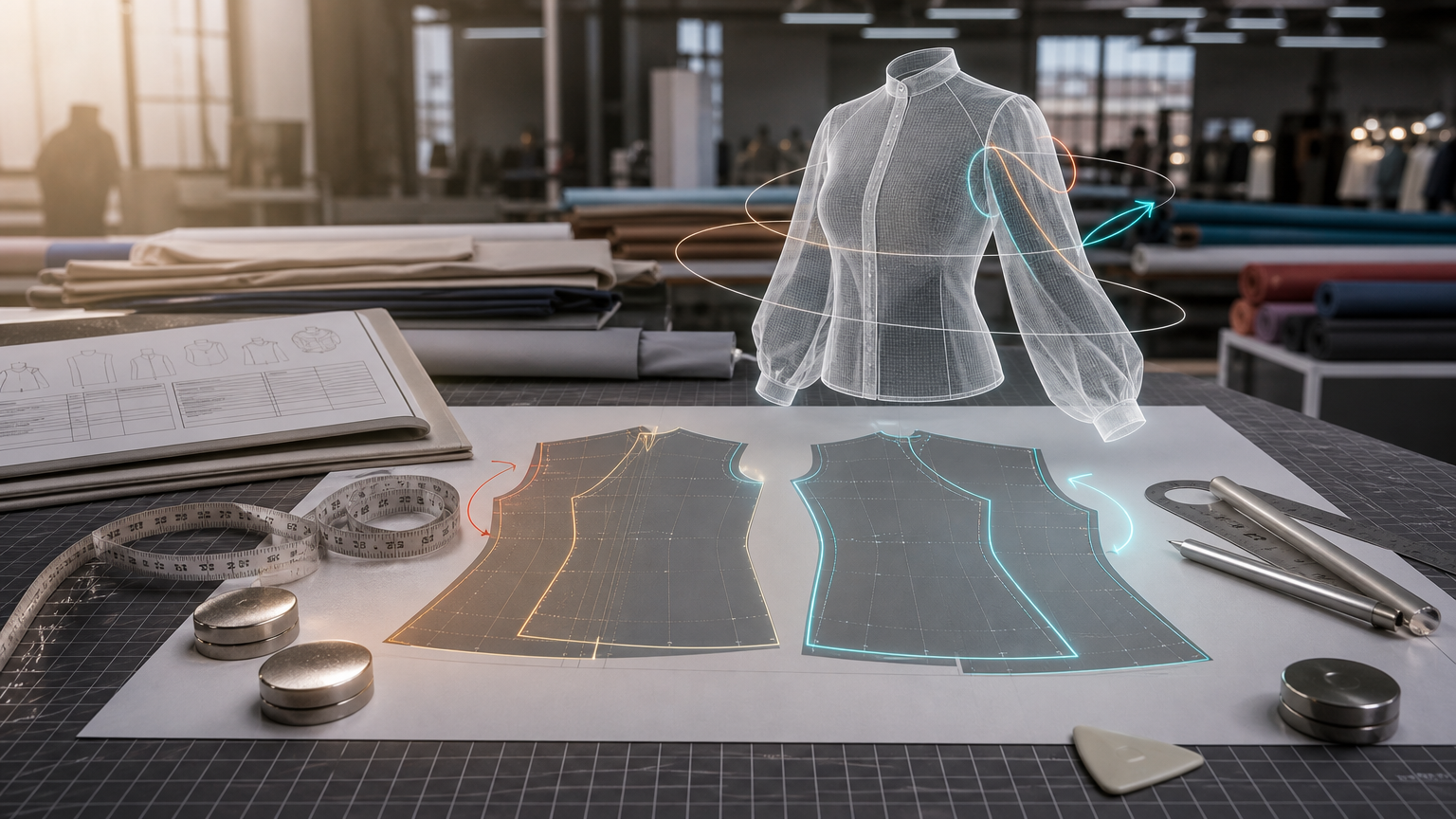
Most physical sampling cycles run four to five rounds before a style is signed off. Each iteration consumes fabric, lab hours, courier fees, and calendar days that brands rarely budget for at the start of a season. The problem is structural: design intent, pattern geometry, grading logic, and production documentation all travel through separate tools and separate people, and the gaps between them show up only when the first physical sample arrives from the factory.
That is the moment a brand discovers that the sleeve cap gathers in the wrong direction, that a seam line misalignment means re-cutting, that the bill of materials is missing the correct interfacing specification, or that size grading breaks at the extreme ends of the range. By then, the cost of a fix has already multiplied several times over.
"Manufacturable before sampling" means something precise: the design has been cleared for factory handoff not just visually but technically, including pattern geometry, grading consistency across the full size range, construction logic, complete and correct tech-pack data, and DXF-ready pattern files. This is distinct from fit simulation on an avatar. A garment can drape beautifully on a digital model and still fail at the cutting table.
The goal for this workflow is straightforward: reduce sample iterations from four or five to one or two, shorten the calendar span from sketch to first acceptable sample, and prevent the class of errors that come from incomplete or inconsistent handoff packages.
Workflow: sketch to FashionINSTA manufacturability report
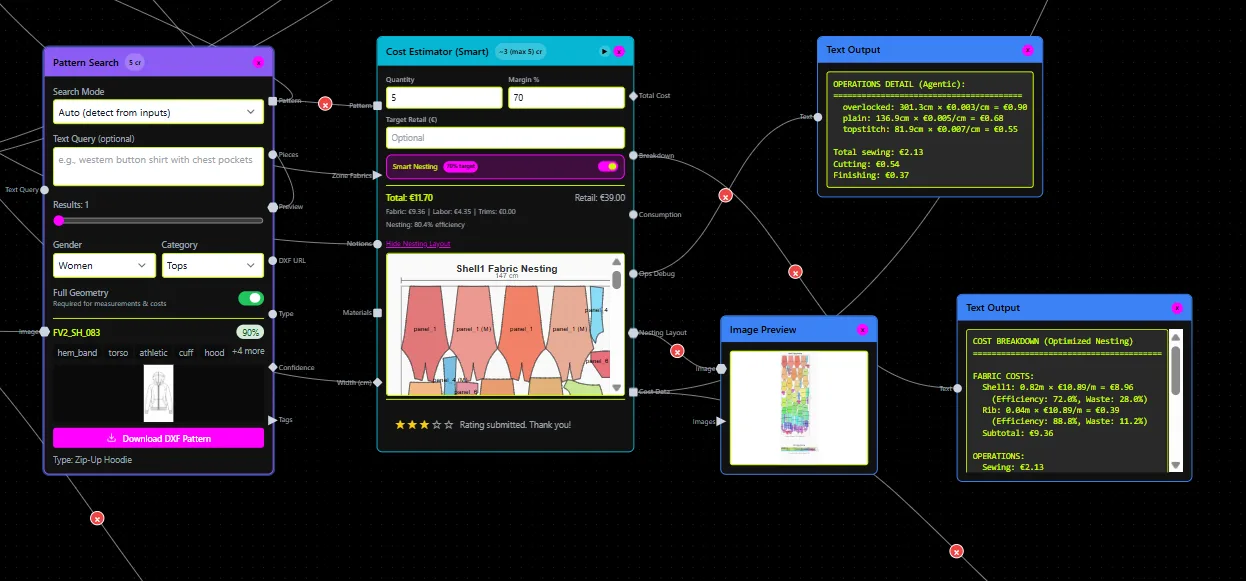
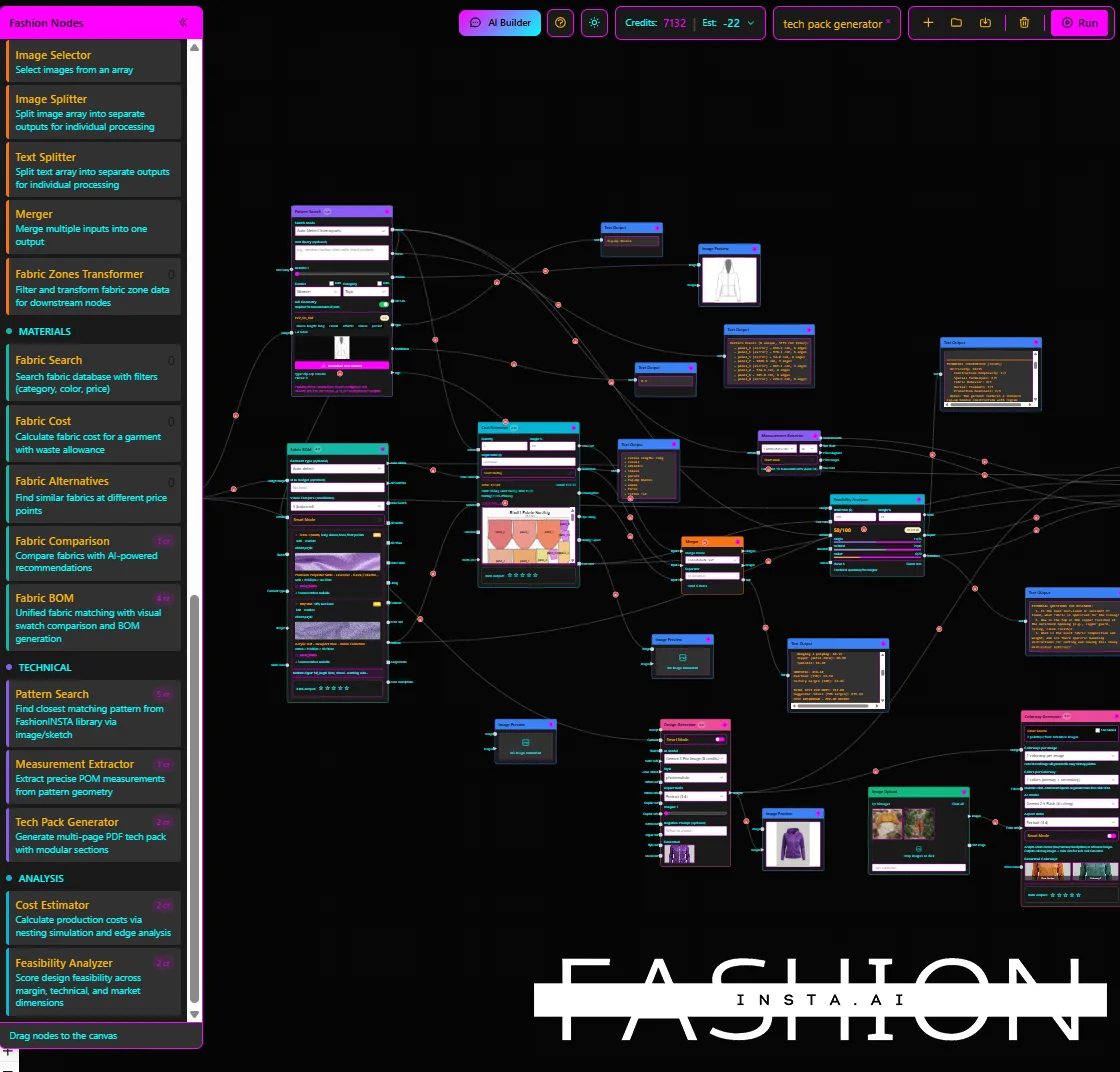
The workflow runs in five connected steps, each producing a discrete output that feeds the next.
Step 1: Design inputs. The designer submits a sketch or style description along with the target size range, fabric behavior assumptions (woven vs. knit, stretch percentage), and any existing brand fit standards. These parameters define the search and generation boundaries for the pattern step.
Step 2: Pattern retrieval or generation. FashionINSTA's Pattern Intelligence is trained on a brand's existing .DXF archive, extracting 750+ geometric features per pattern piece to encode the brand's fit philosophy and construction logic. When a new style enters the workflow, the Pattern Generator searches the indexed archive for the closest matching block, scores it for similarity, and retrieves it with fit-critical geometry intact. If no sufficiently close block exists, the system generates a new DXF pattern from the brand's own building blocks. This step alone compresses what would otherwise be four to eight hours of manual drafting into minutes, with documented speedups of approximately 70% compared to traditional CAD workflows. You can explore the full end-to-end approach in the sketch-to-DXF in 9 minutes guide.
Step 3: Automated manufacturability report. Once the pattern is generated or retrieved, FashionINSTA's Feasibility Analyzer runs an automated check across five categories:
- Geometry and fit-critical risks (seam length mismatches, notch misalignment, curve radius errors)
- Grading and range consistency (grade increments checked across every size in the run)
- Construction logic gaps (stitch sequence conflicts, facing/interfacing placement issues, sleeve cap height vs. armhole depth)
- Tech-pack completeness (missing POM callouts, undefined colorways, absent trim specifications)
- DXF export readiness (file compatibility checks for DXF-AAMA and DXF-ASTM, the standard formats used by Gerber AccuMark, Lectra Modaris, CLO, Optitex, and Browzwear workflows)
Each flagged item carries a severity rating and a plain-language description of the production risk it would create if left unresolved. This report is the pass gate: the design does not proceed to sampling until every high-severity flag is cleared.
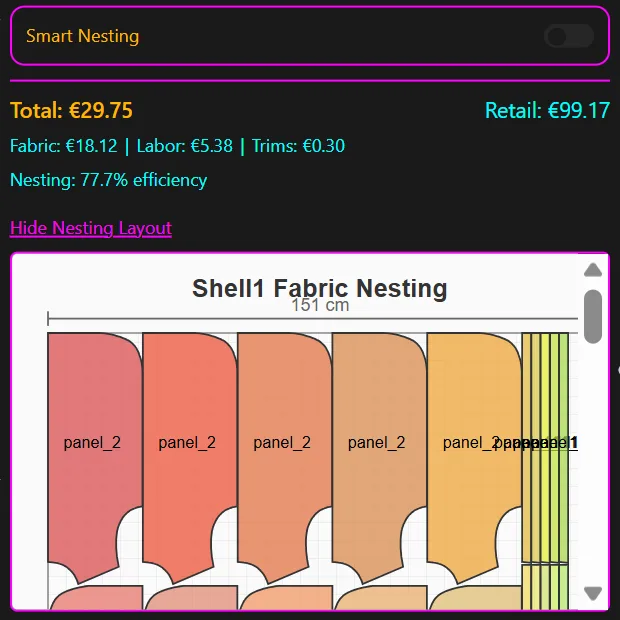
Step 4: Output artifacts. The workflow produces four concrete files: the DXF-ready pattern set, the manufacturability report with flagged issues marked, a draft tech pack compiled by the Tech Pack Compiler node (measurements, construction notes, fabric specs, colorways), and a BOM from the BOM Agent node (real fabric names, compositions, prices, and MOQs from verified suppliers). The Cost Estimator node calculates a cost-of-goods figure using fabric consumption, construction complexity, trims, and labor. The automated tech pack generation process that feeds this output is documented separately.
Issues detected and remediation actions
The following six flags are representative of what the manufacturability report surfaces on a structured woven blouse style run through the workflow.
Flag 1: Sleeve cap height exceeds armhole depth by 1.4 cm. In a physical sample, this would produce unwanted drag lines and sleeve rotation issues requiring a complete sleeve re-cut. Fix: the Pattern Generator adjusted the cap height and redistributed ease across the front and back sleevehead before any fabric was allocated.
Flag 2: Side seam length discrepancy of 2 mm between front and back bodice. Minor at this scale but sufficient to cause a puckered seam at assembly. Fix: the rear side seam curve was corrected in the DXF before export, eliminating the mismatch.
Flag 3: Grading increment inconsistency at size XL-XXL transition. The grade step at the waist increased by 6 mm beyond the brand's standard tolerance, which would produce a fit break at the upper end of the size run. Fix: the grading logic was re-applied from the brand's archived grade rules, normalizing the increment. The AI pattern grading workflow addresses this class of error in detail.
Flag 4: Interfacing specification absent from BOM. The front placket required a woven fusible interfacing, but no trim line existed in the tech pack BOM. Without this, a factory would either substitute incorrectly or pause production to query the brand. Fix: the BOM Agent appended the correct fusible grade, weight, and MOQ sourced from the verified supplier network.
Flag 5: POM callout missing for back neck depth. The tech pack had 14 of 15 required measurement points specified. The missing callout for back neck depth would result in factory queries or a non-conforming sample. Fix: the Tech Pack Compiler inserted the measurement drawn from the retrieved pattern block's geometry.
Flag 6: Grain line notation absent on facing piece. Without a grain line, the factory cutter cannot orient the facing correctly, risking bias-cut facings that distort under wash. Fix: the grain line was added to the DXF pattern piece prior to export.
Once all six flags were resolved, the report ran a re-check pass. All items cleared the pre-defined manufacturability thresholds, and the design was released for physical sampling. The decision gate is binary: no partial clearances, no informal overrides.
Quantified results: before and after
The table below represents projected outcomes based on FashionINSTA's documented workflow parameters and the class of errors addressed above. Brands collecting their own baseline data should define "iteration" as each round of physical sampling requiring a re-cut or corrected sample, and "cycle time" as calendar days from sketch sign-off to first acceptable sample.
| Metric | Before (traditional workflow) | After (FashionINSTA validation) | Change |
|---|---|---|---|
| Physical sample iterations per style | 4-5 | 1-2 | -60 to 70% |
| Calendar days, sketch to first accepted sample | 18-28 days | 7-10 days | -55 to 65% |
| Sampling material and lab cost per style | $800-$1,200 | $200-$400 | -65 to 70% |
| Rework cost from handoff errors (BOM/tech pack) | $300-$500 | $0-$50 | -85 to 90% |
| DXF pattern creation time per style | 4-8 hours | 1-2 hours | ~70% reduction |
Savings should be tracked in three buckets: sampling materials and lab hours (fabric, thread, trims consumed per iteration); expedited shipping (rush courier costs when iteration timelines compress the production window); and rework from handoff errors (factory queries, correction rounds, and re-sampling triggered by incomplete BOM or tech pack data). For a brand producing 100 styles per season, the cumulative savings across these buckets are substantial.
To build a baseline, record the number of iterations per style for the prior two seasons, the calendar span per style from design freeze to golden sample, and an itemized sampling cost log including materials, internal labor, and external shipping. Apply the FashionINSTA workflow to a pilot category of 30-50 styles and measure the same variables. The gap is the verifiable ROI. The PLM-adjacent workflow that connects pattern creation to production documentation provides a useful framework for structuring that measurement plan.
Artifact guide for this workflow
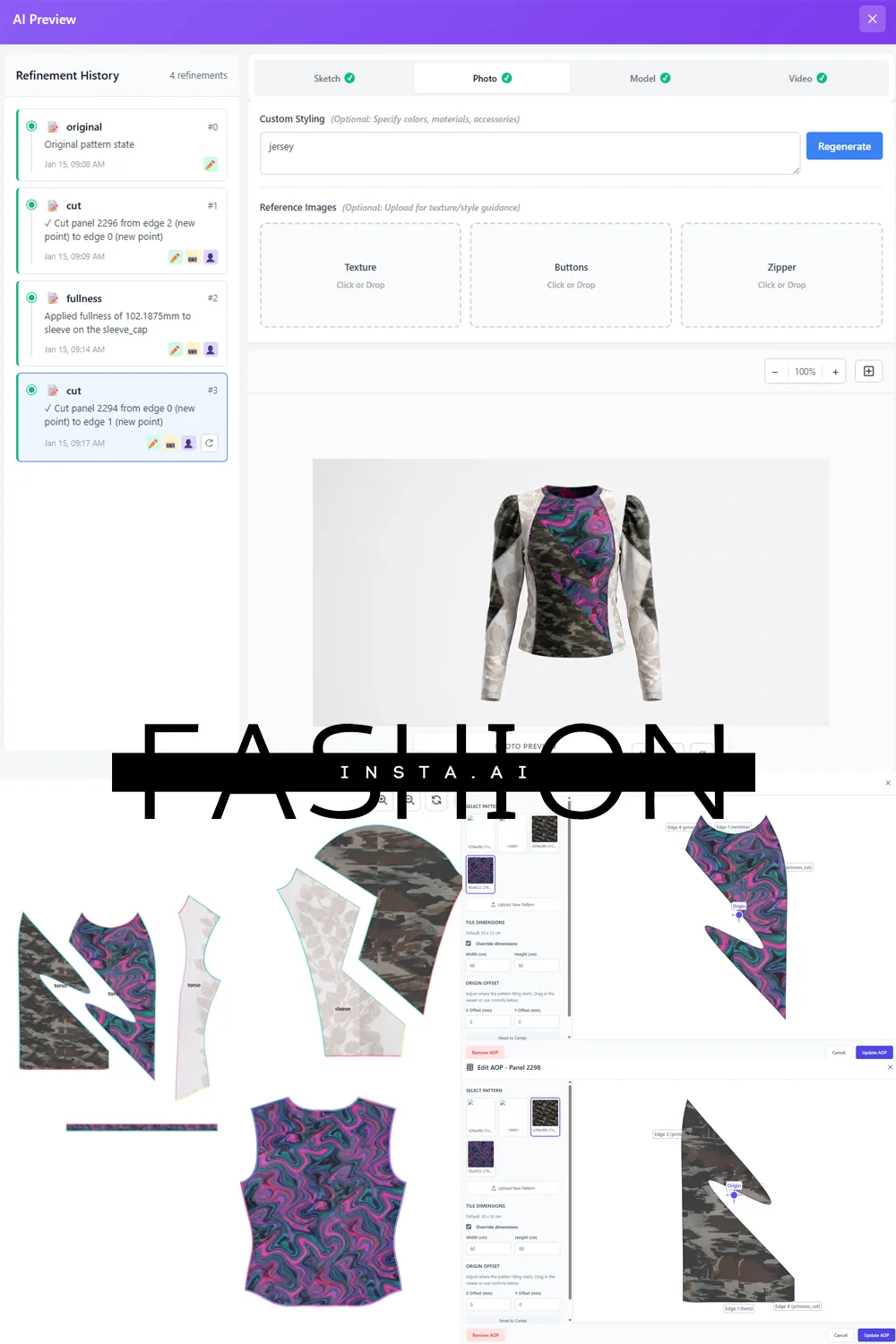
The manufacturability validation workflow produces four artifact types. Teams running this for the first time should capture and retain each one as documented evidence of pre-sampling clearance.
Pre-fix DXF pattern screenshot. The pattern as initially retrieved from the archive or generated, before remediation. This establishes the baseline and makes the scope of each fix traceable. Caption: "Pattern prior to manufacturability report; sleeve cap height flag visible."
Post-fix DXF pattern screenshot. The same pattern after all six flags were resolved. Each modified piece should be annotated with the flag number it addresses. Caption: "Revised pattern cleared for sampling; all high-severity flags resolved."
Manufacturability report screenshot. The report output with flags highlighted by severity (red for high, amber for medium). This document is the formal pass/fail record and should travel with the tech pack to the factory. Caption: "Automated manufacturability report; six flags identified and resolved before first sample cut."
Tech pack output screenshot. The compiled tech pack showing measurement table, construction notes, BOM summary, and colorway specifications. Caption: "Factory-ready tech pack generated from validated pattern geometry; all 15 POM callouts confirmed."
A comparison table of all fixes applied is also recommended as a standalone reference document. For each flag: issue description, severity, production risk if unresolved, remediation action, and re-check status. This table makes the value of pre-sampling validation legible to both technical and non-technical stakeholders, including sourcing managers and factory QA teams.
Downloadable artifacts recommended for distribution alongside this case study: (a) DXF pattern pack in both pre-fix and post-fix versions, (b) tech pack in PDF and Excel formats, and (c) BOM export sample showing fabric names, compositions, prices, and MOQs. These files give procurement and factory teams a complete, self-contained handoff package. For brands evaluating the full workflow before committing, the FashionINSTA FAQ resource covers the onboarding and training process in detail.
The distinction that matters operationally: 3D fit simulation, as offered by tools such as CLO, Browzwear, and Audaces, validates visual drape and proportion on a digital avatar. That is a necessary check, but it does not verify that the DXF geometry is factory-ready, that grading is consistent across the full size run, or that the tech pack contains every required input for production. Manufacturability validation covers all three. Brands that conflate the two will still encounter avoidable errors at the sampling stage. For a closer look at how AI pattern tools address garment development end to end, the workflow documentation is available on the FashionINSTA platform.